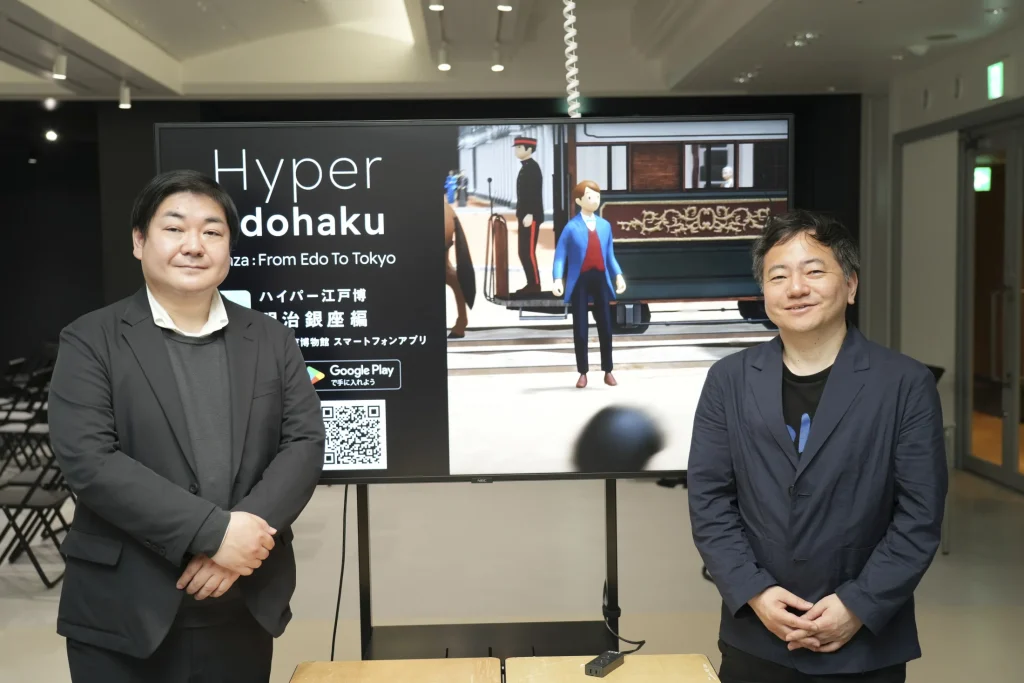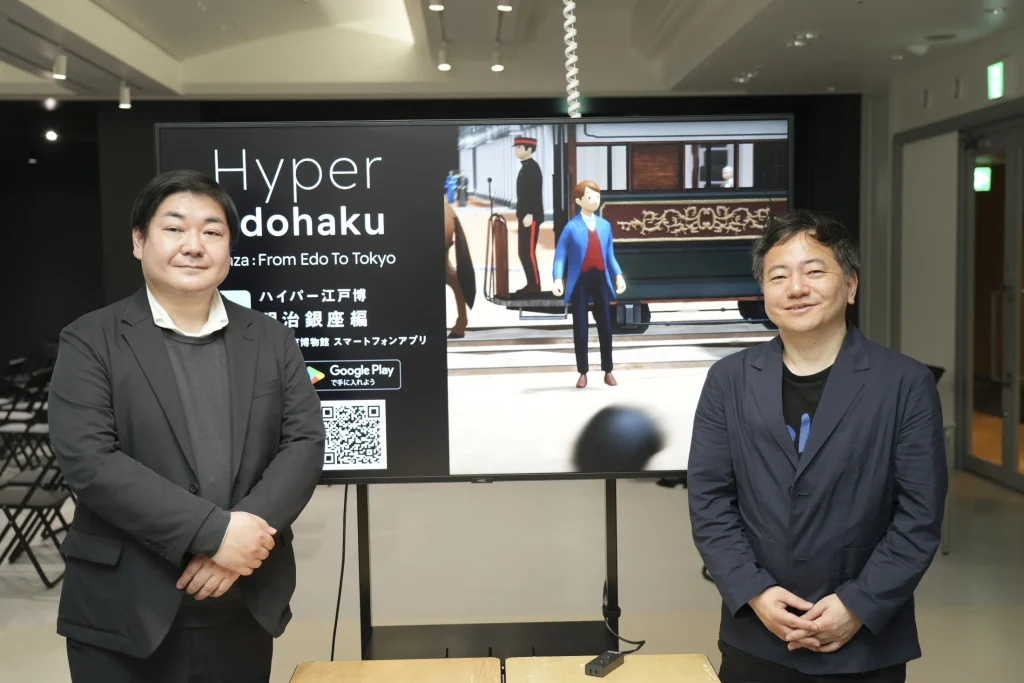
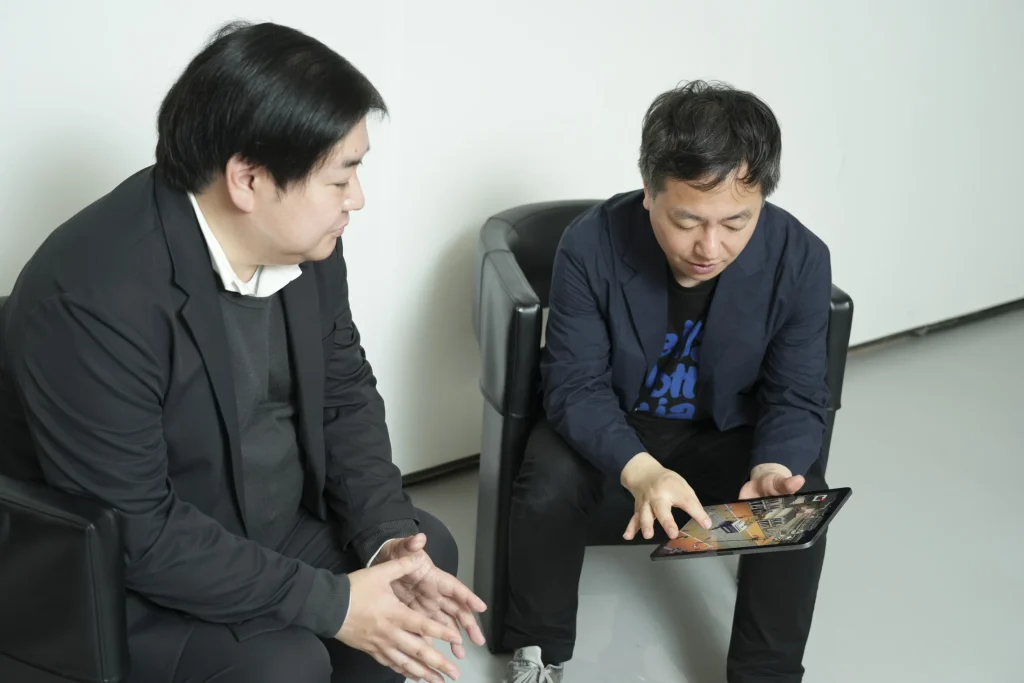
The Edo-Tokyo Museum has been closed for a long time since 2022 due to large-scale renovations. The "Hyper Edohaku" smartphone application was developed to allow visitors to enjoy the museum's collections and the history and culture of Edo-Tokyo while the museum is closed. About 50,000 downloads have been achieved. The first "Edo Ryogoku Edition" on April 26, 2023, followed by the second installment, Meiji Ginza Edition is released. What kind of world can we see this time in Tokyo Ginza during the civilization and enlightenment period? We interviewed Hiroyuki Kutsuzawa, curator of the Edo-Tokyo Museum, who planned and supervised "Meiji Ginza Edition," and Katsuya Taniguchi, developer and producer of "Meiji Ginza Edition."
The Meiji Era filled with culture and customs that continue today
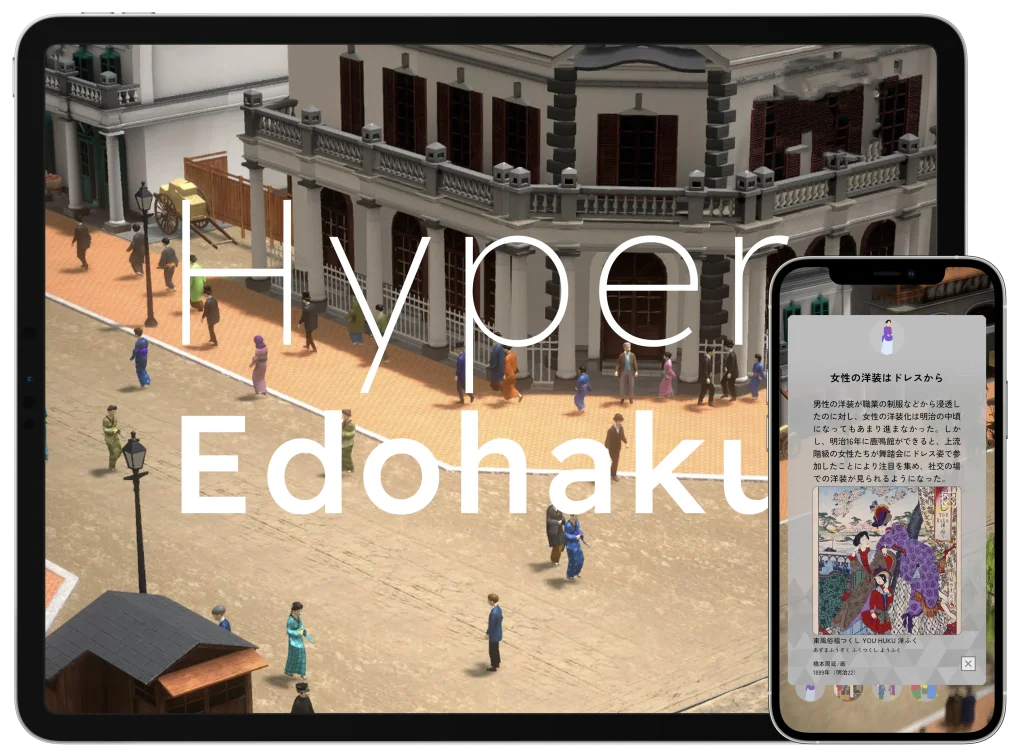
The theme of the newly released “Meiji Ginza Edition ” is“ Time Travel Encountering the Beginning of Tokyo ”. Users explore the streets of Ginza in the Meiji era while looking for 100 items selected from the approximately 350,000 items in the collection of the Edo-Tokyo Museum. Why was Ginza in Meiji chosen this time?
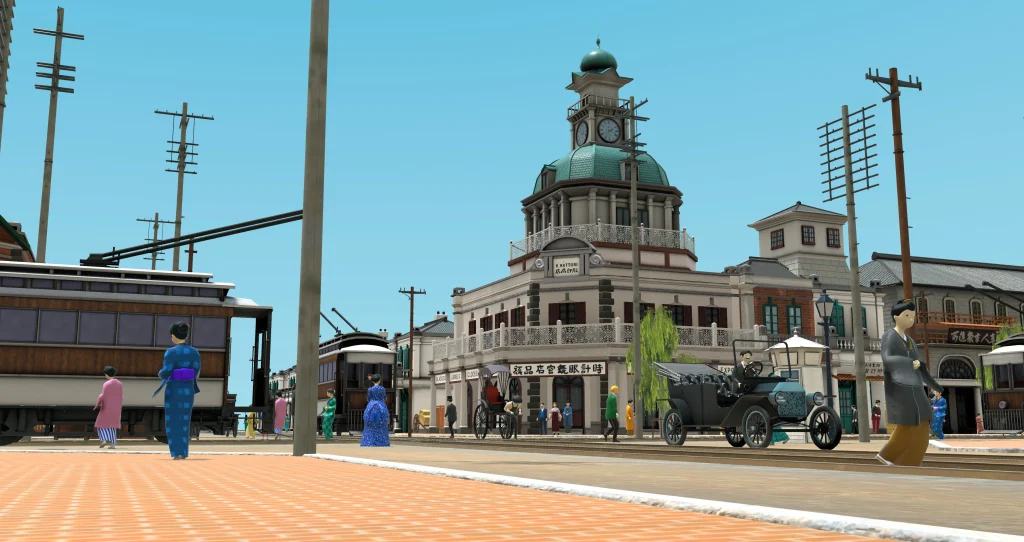
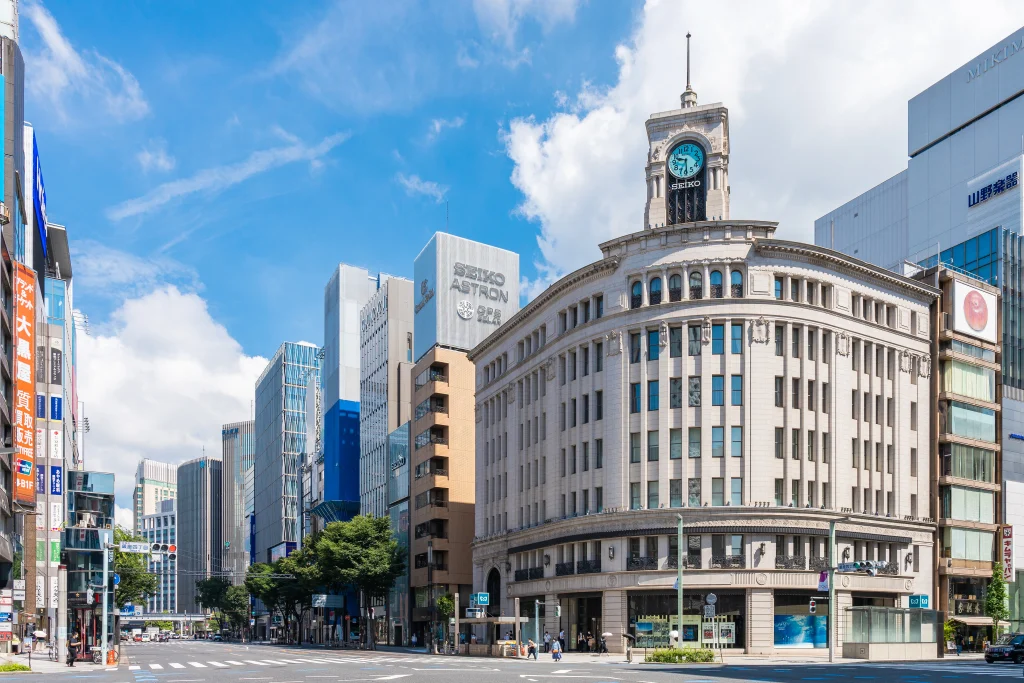
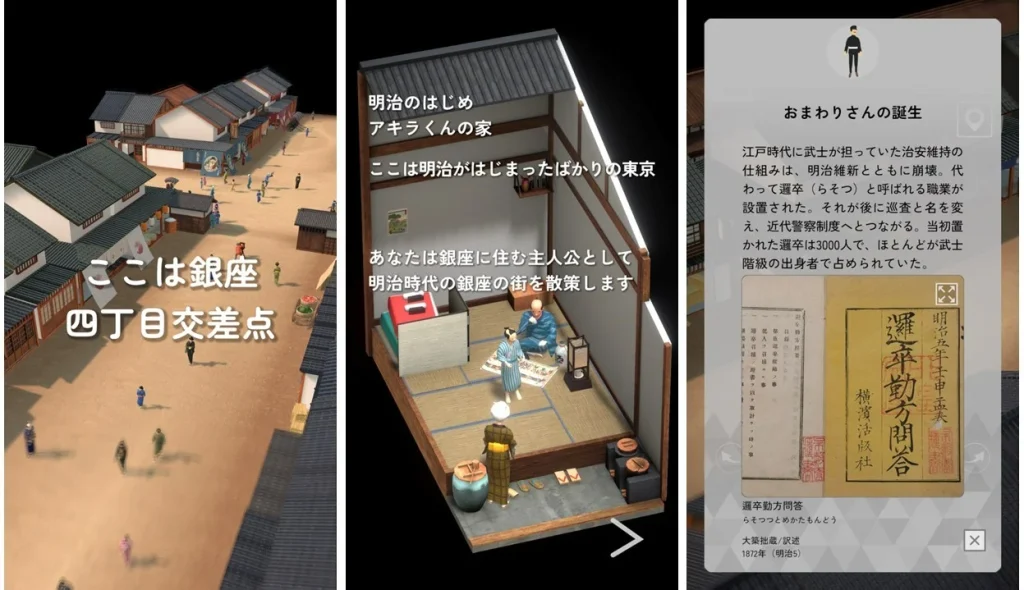
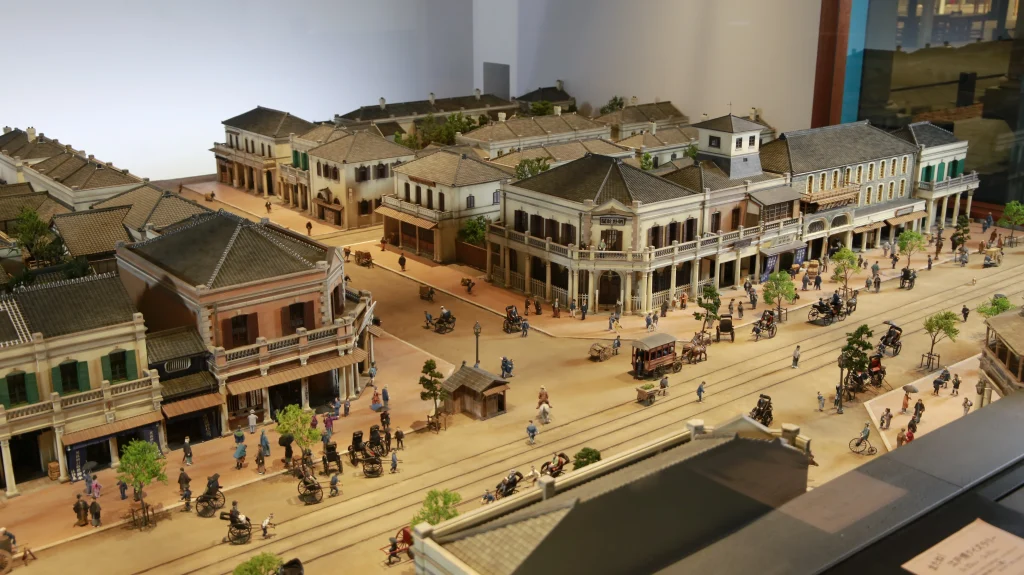
Kutsuzawa “First of all, one of the reasons is that there is a model of Ginza brick street in our building. As the 150 year anniversary of the opening of the railway became a hot topic last year, the modern currency system in which the unit of currency is the yen, the postal system (1871: 1871), the school system (1872: 1872), the solar calendar and the regular time system (1873: 1873), and various other cultures and systems that continue today started exactly 150 years ago in the Meiji period.
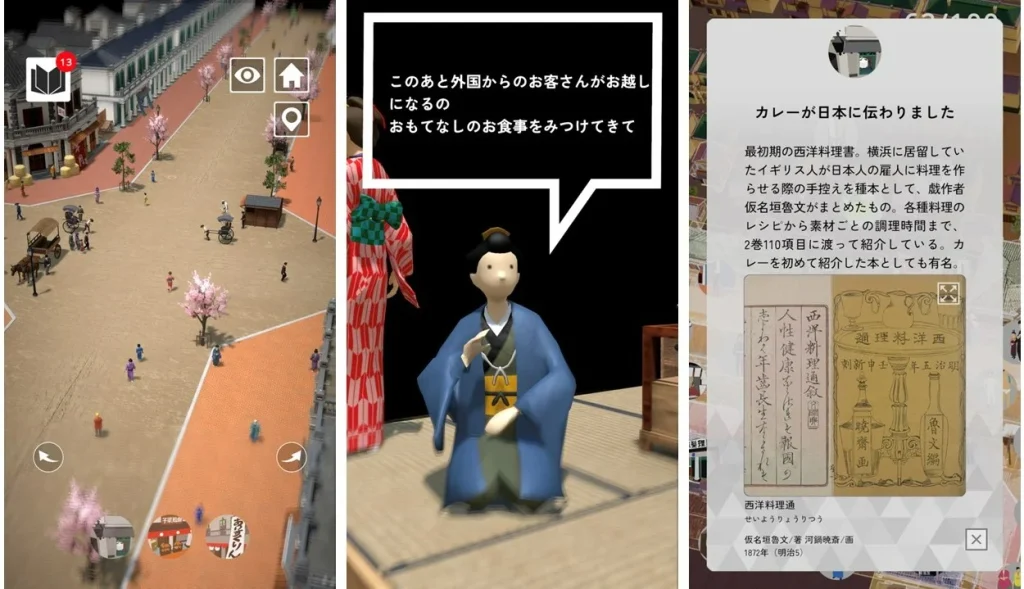
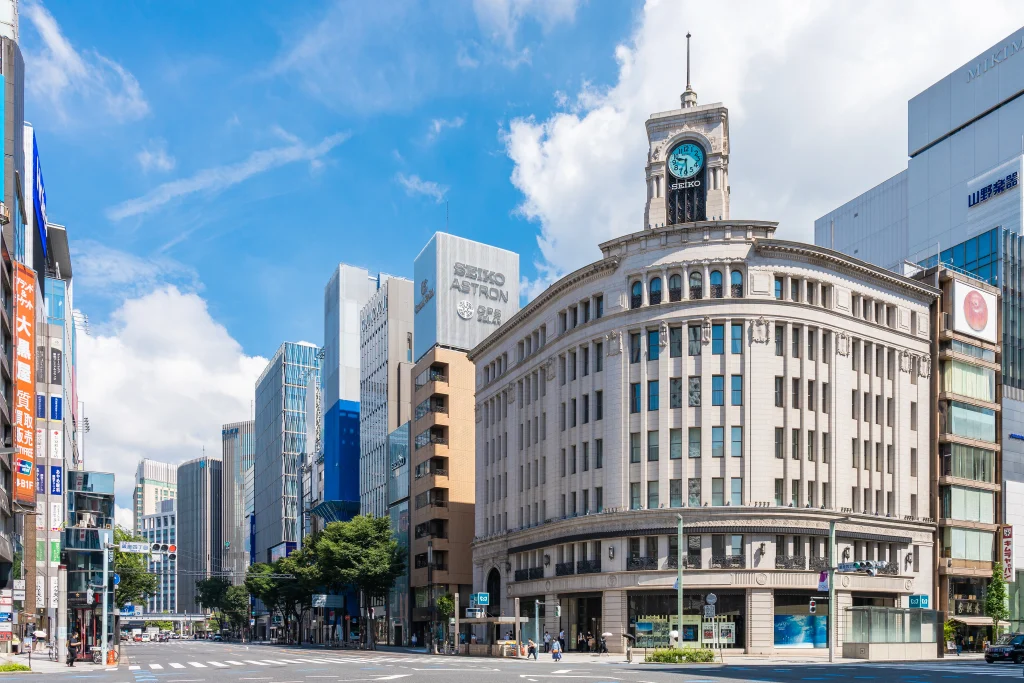
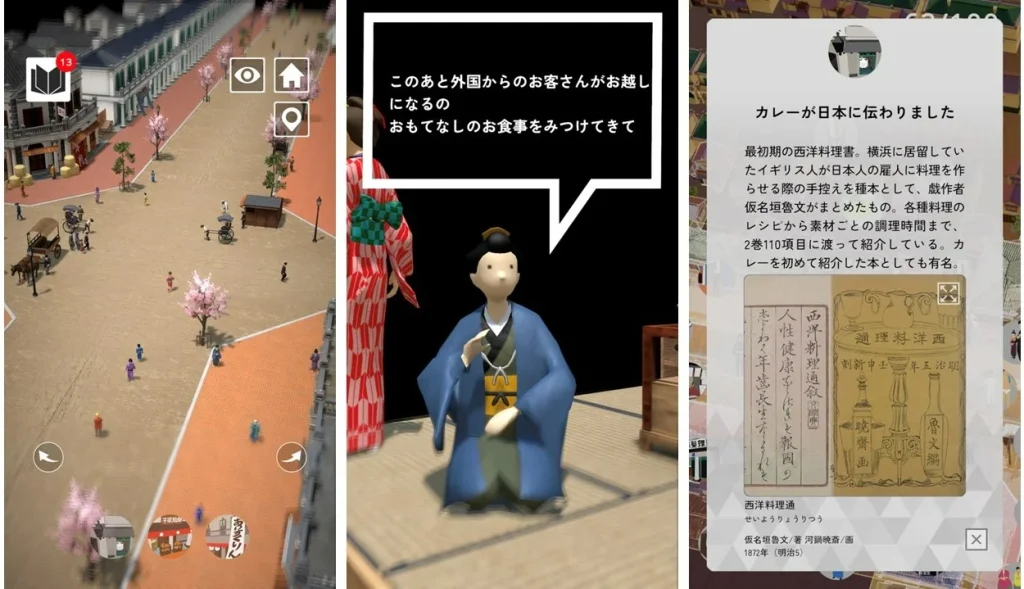
It was the great fire that broke out in 1872 that caused Ginza to undergo a major transformation. The Meiji government promoted the development of fire-resistant cities, and Ginza Rengagai, a Western-style street, was built at this time. In 1895, the first clock tower of the Hattori Watch Store (now Ginza Wako), which is familiar to us, was built in what is now Ginza 4-chome. Western-style clothing was also introduced, introducing Western foods such as curry and high-color foods such as ice cream and ramune soda, and changing people's lives. I thought Ginza in the Meiji period was a perfect setting to learn and discover the beginnings of things that lead to today. 」
"Time Traveling" through Four Ages to Experience the Transition of Times Realistically
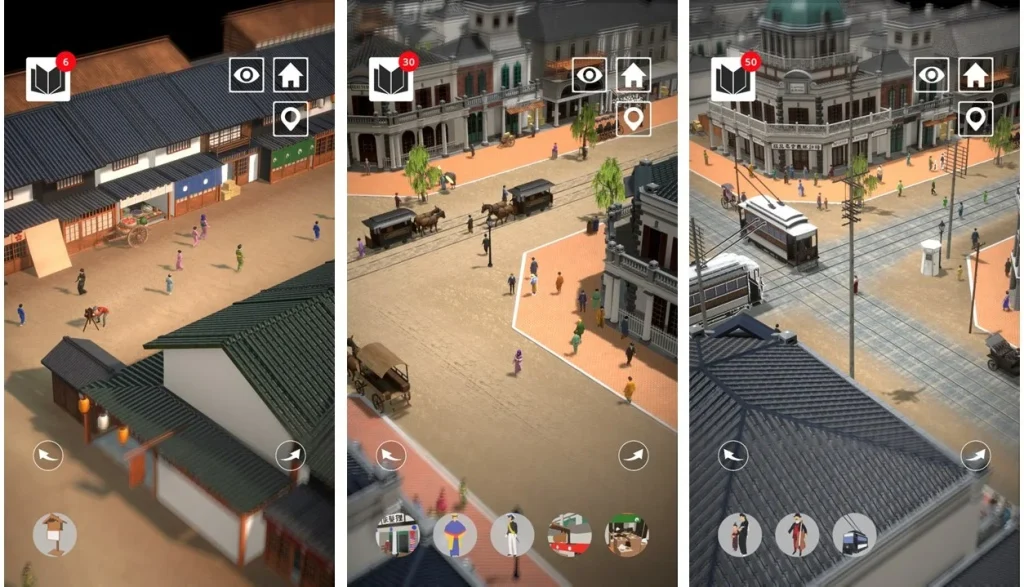
While the previous edition of the "Edo Ryogoku Edition" focused on the day of the opening of the Sumida River, this edition is divided into 4 stages over the 45 years of the Meiji era. The story of a family who lived through the Meiji era of civilization and enlightenment unfolds against the backdrop of various changes in society.
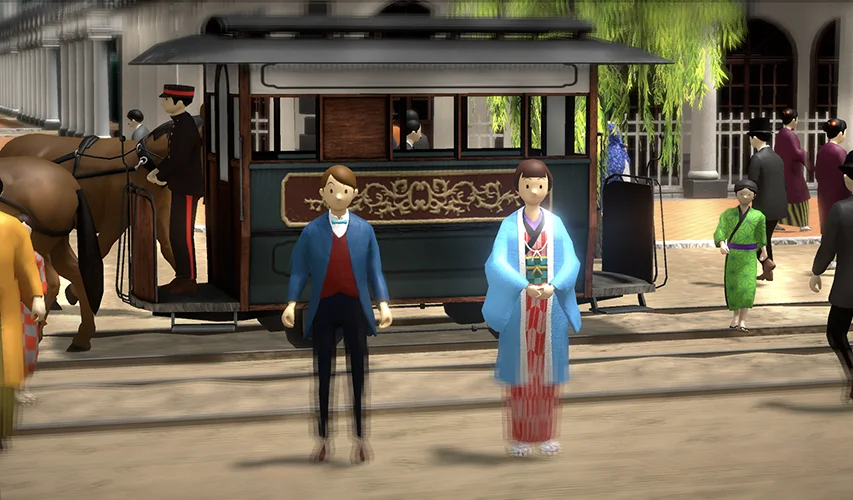
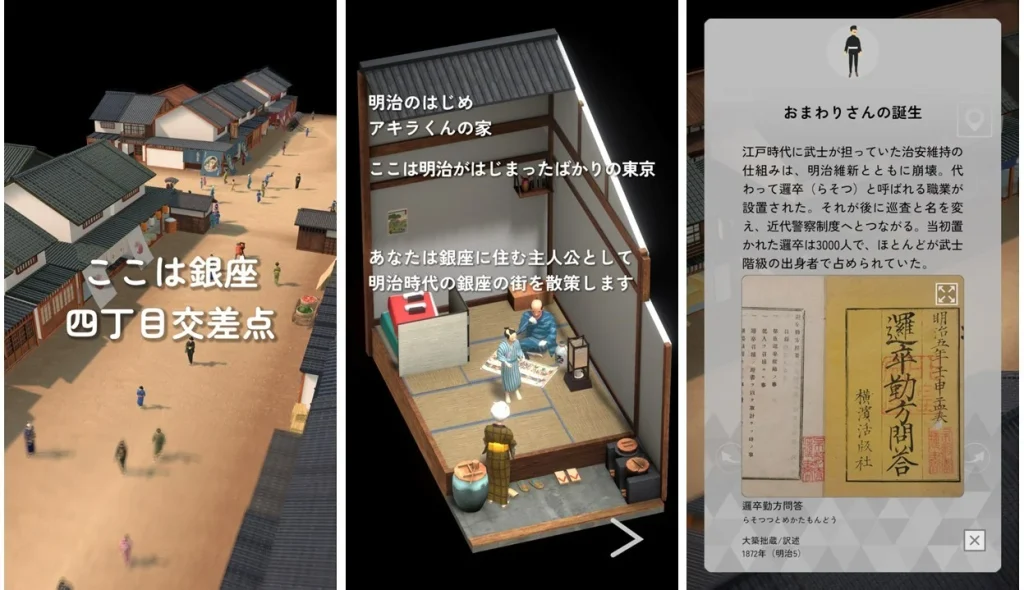
After launching the app, users can take a time trip to Ginza in the early Meiji era, when Edo was renamed Tokyo. Akira, a young boy who lives in a tenement with his parents, takes on the role of avatar as he searches for items related to the various systems that began in the early Meiji period, such as the postal service and the police, in the town of Ginza, where traces of Edo still remain.
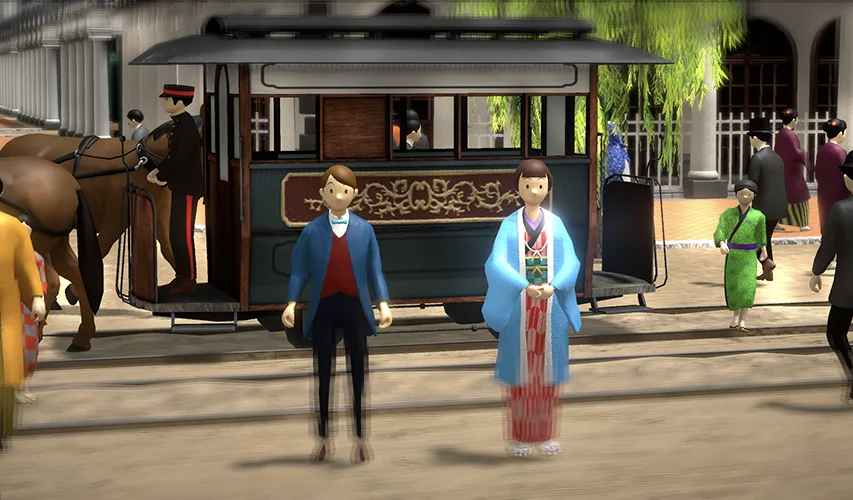
The next stage, around 1877, is Ginza, where stylish brick buildings flank a wide street. Akira's childhood friend Haru-chan collects trendy food for foreigners visiting Japan and researches the latest transportation.
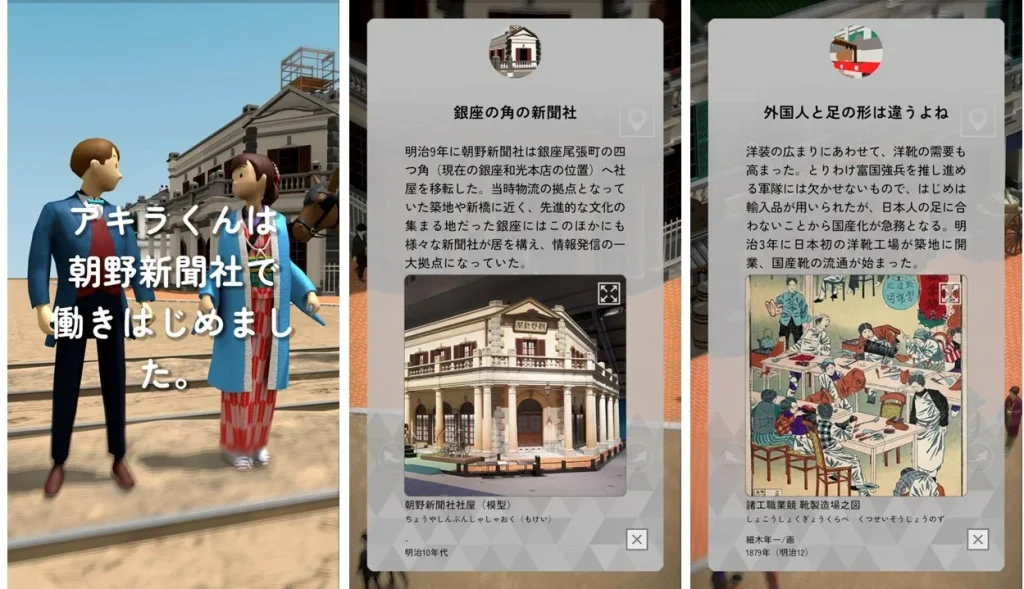
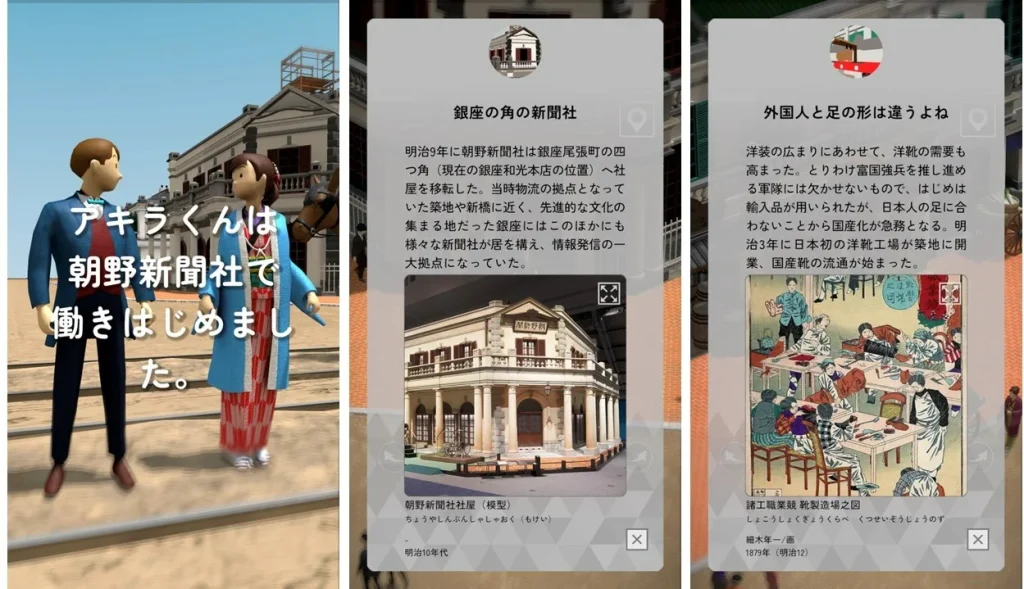
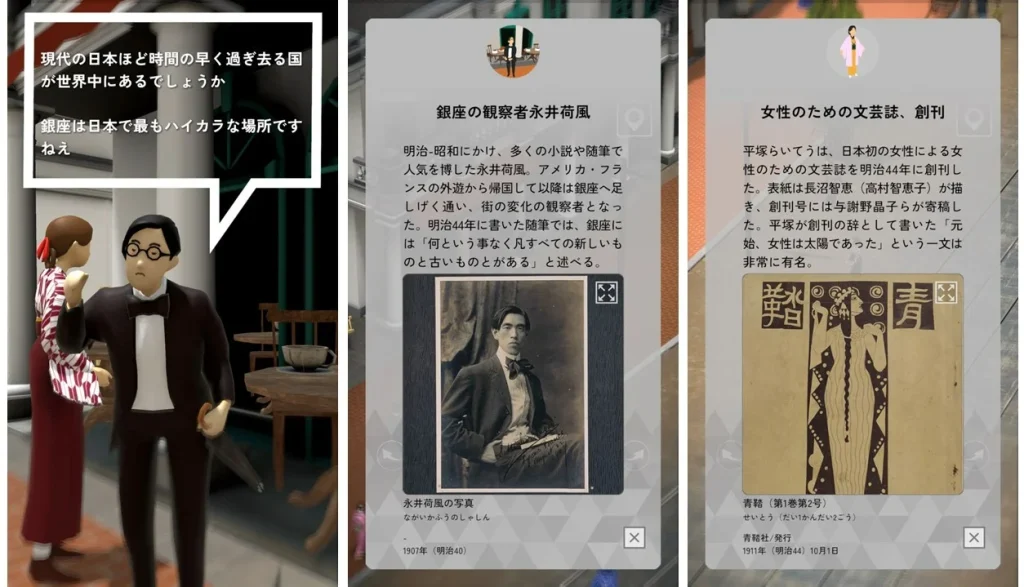
In the Meiji 20s, when people and towns became westernized and the city became a center of commerce and information transmission, Akira, who grew up to be a fine young man and started working for a newspaper company, which was a major base for information transmission at that time, investigates the latest fashion items such as hats, shoes, umbrellas, and Western music that came to be played at that time. In the Meiji 40's, Gin-chan, Akira and Haru-chan's daughter, appeared on the scene. He met the great writer Nagai Kafu, who frequented Ginza, and collected materials related to literature at the time, such as Natsume Soseki and Hiratsuka Raicho. After completing 4 stages and collecting 60 items, you can freely move between stages and enjoy time travel.
idea of "time travel" developed in the process of production
The biggest feature of the “Meiji Ginza Edition ” is that you can truly experience the rapid transformation of Tokyo's Ginza during the Meiji era as the characters grow in each of the four stages. Where did the idea of users "time traveling" come from?
Taniguchi "At first, I tried to make it as if it was an incident of one day in the Meiji period, just like the Edo Ryogoku Edition. However, during the meeting, it was mentioned that the modernization of the Meiji era did not start suddenly, but gradually changed from the Edo era to the Meiji era. We, the production side, proposed that. I think it was a challenge for Hiroshi Edo, but as we discussed it, we decided that it would be easier to create a story."
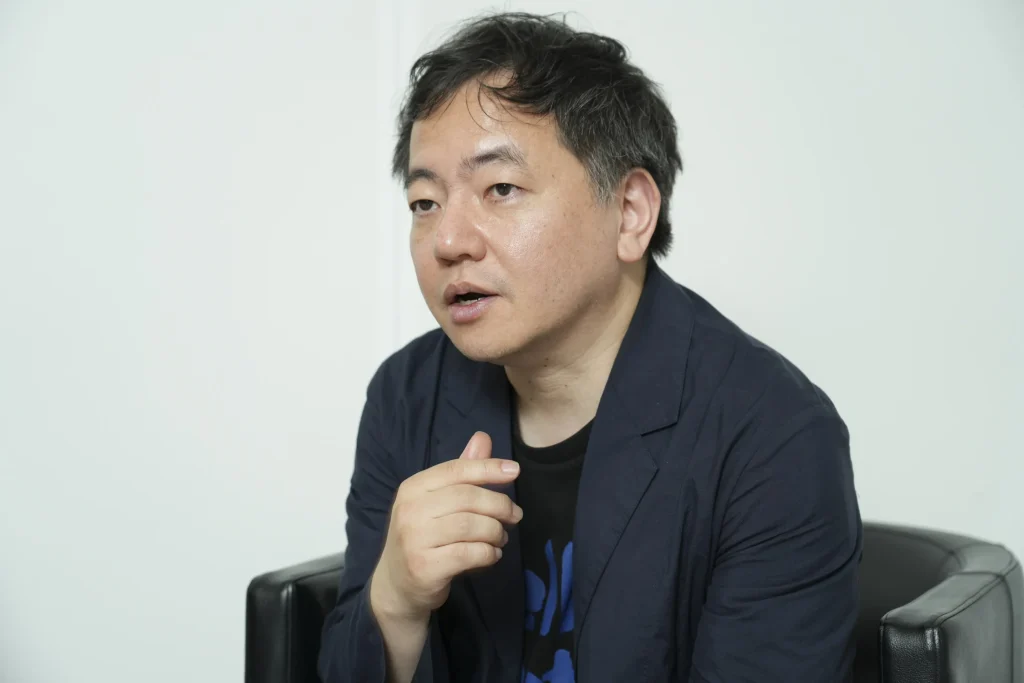
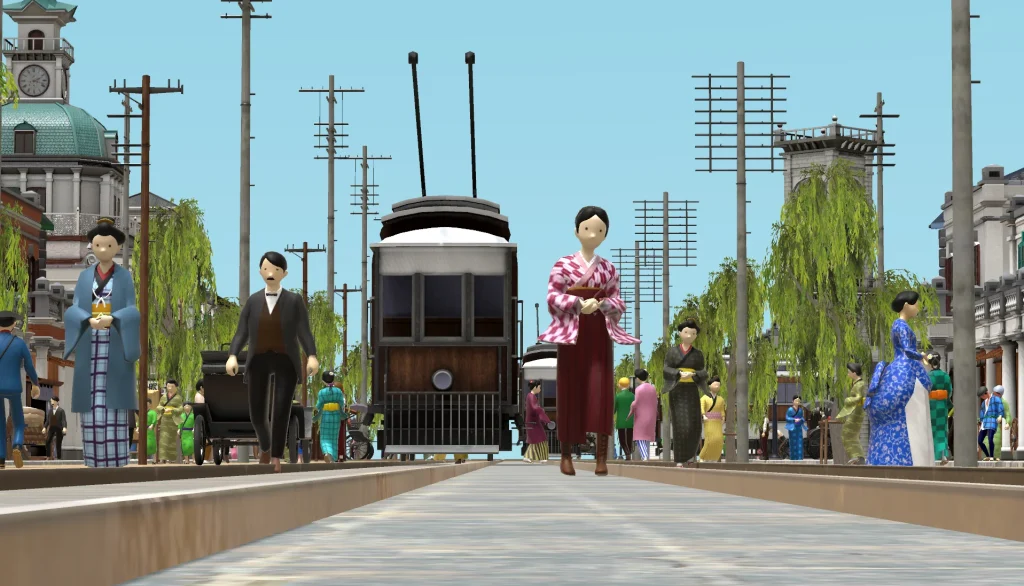
Kutsuzawa "Actually, even in the same Meiji period, the townscape and people's lives are completely different between the period close to Edo and the period close to Taisho. For example, in the Meiji period, I think you have a rough idea that everyone wears western clothes, but in fact, even at the end of the Meiji period, the people who wear western clothes are mainly wealthy people and men in uniform, and most women wear kimono. However, at the beginning of the Meiji period, kimono was worn over shirts to protect against the cold, and at the end of the Meiji period, girls wearing haori hakama and boots appeared, and western clothing was adopted as an accent, and fashion changed considerably during the 45 years of the Meiji period. Such detailed historical research is abundantly reflected in the main story."
Attention is also paid to the details! Recreation of Ginza Rengagai
The streets around Ginza 4-chome and 5-chome, the setting of the story, were 3D scanned based on the Ginza Rengagai Model, a collection of the Edo Expo. Taniguchi says that it took a lot of effort to precisely reproduce the changes that the town had undergone over the course of 45 years.
Taniguchi "As the times change, it was really hard to make city limits while keeping consistency. It's made in units of maybe 100 or 200, combining museum models, photos and maps. But there are definitely people like Akira and Haru-chan, the main characters, who grew up feeling the changes of that era firsthand. So I wanted users to try to simulate that feeling in the app, but it was quite difficult ....... The reason is that unlike the jumbled streets of Edo Ryogoku, the scenery of Ginza Renga-gai, which is lined with similar buildings, is surprisingly boring if you make it according to historical evidence. So, while checking with Mr. Kutsuzawa one by one, I added small elements to create variations, such as vivid colors and adding signs, to the extent that it did not go beyond the realm of historical research."
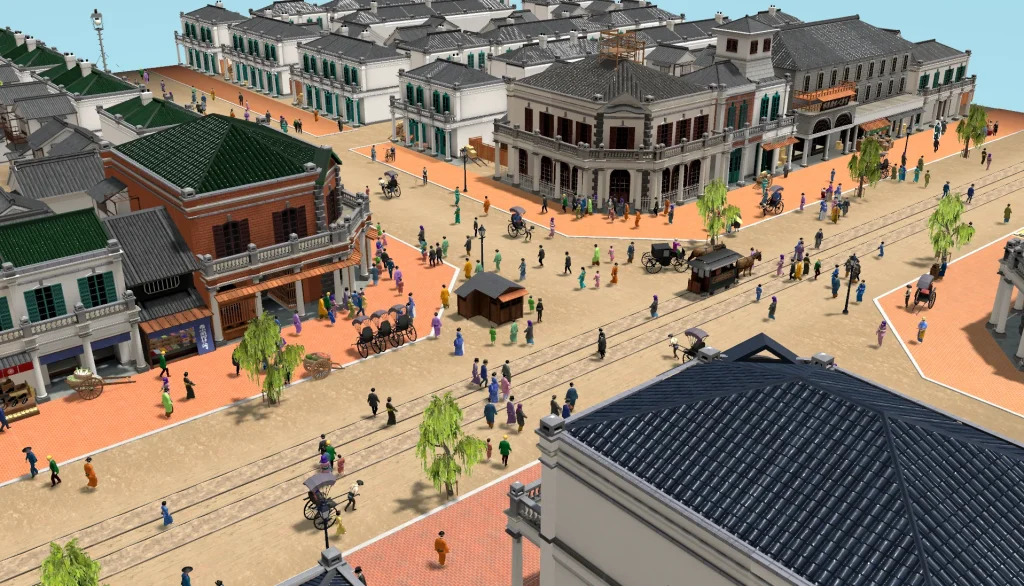
Kutsuzawa "From the perspective of historical investigators, even though there were photographic materials in the Meiji period, they naturally only took photos of photogenic parts, so they could see the front, but what about the back of this building? or what's the view in the other direction of this street? and all kinds of questions. In addition, it is relatively easy to find information about old stores in Ginza, but it is difficult to trace small stores that have no records. In such cases, we used not only photographs but also newspaper descriptions and advertisements of the time to construct the cityscape."
AR function fuses Meiji-era items into the real world
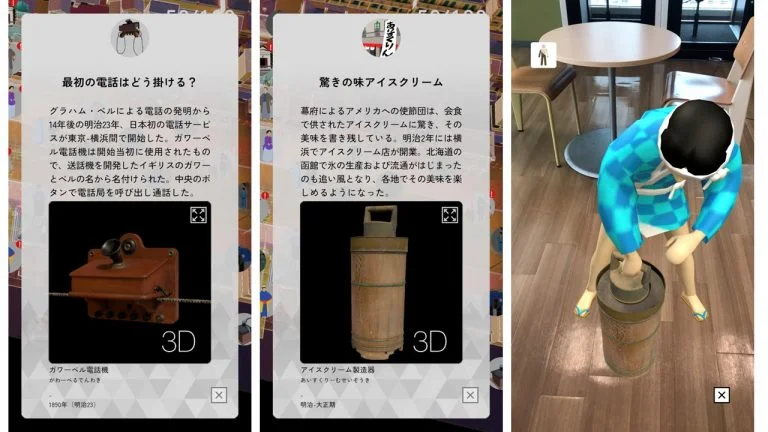
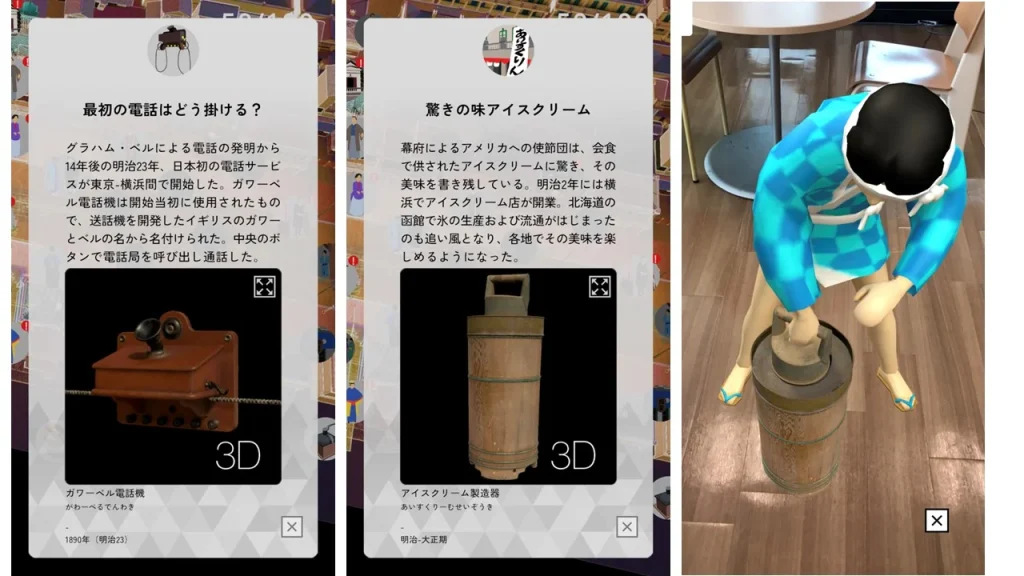
A new feature from the Meiji Ginza edition is an AR function that uses 3D data from the collection. Of the 100 hidden items in the collection, 6 can be projected into the real world using this function. You can move them around and see every detail from every angle, giving you a sense of how the actual products of the time were actually used.
Kutsuzawa "In order to make it 3D, it has to be three-dimensional, and I chose six of them that still exist today, but have a slightly different shape and use. For example, bicycles with large front wheels and small rear wheels, and ice cream machines, which are rare nowadays. It's equipped with an AR function, so you can take pictures and post them on social media. Personally, I'd love to see some of the earliest phones used in Japan. It's the same phone, but it's completely different from today."
"Hyper Edo Expo" was released successively with "Edo Ryogoku Edition" in 2022 and "Meiji Ginza Edition" in 2023. In the next fiscal year 2024, they are planning to produce "Edo Nihonbashi Edition (tentative)" with the world theme of Edo's commerce on the stage of Nihonbashi where goods and people come and go. In addition, it is being considered to be used as a teaching material for learning history, and to be used as a permanent exhibition at the Edo Expo after the 3DCG space is renovated and reopened.
The Hyper Edo Expo is a place where visitors can relive the history and culture of the Edo and Meiji periods by entering into a digital model instead of viewing it from the outside. Please download it now, and enjoy "time travel" by comparing it with the city of Tokyo and our daily lives.
Reporting/Text: Setsuko Kitani
Photo: Tsuki Minamoto
Photo Gallery