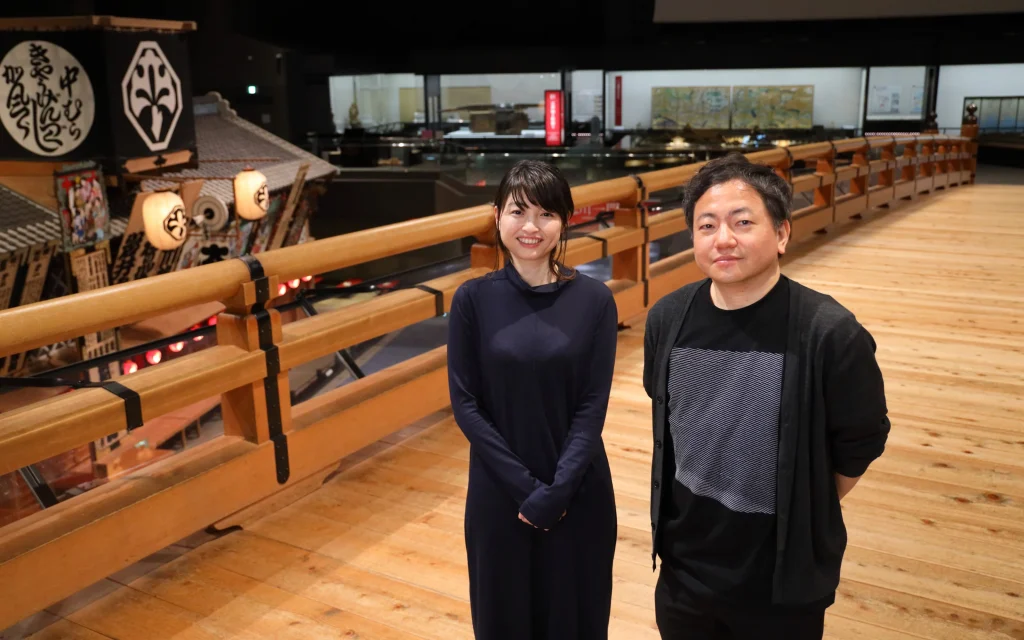
Approximately 30 years have passed since the museum opened in 1993. Due to large-scale renovations, Tokyo Metropolitan Edo-Tokyo Museum is closed for an extended period of time, from April 1, 2022, through the end of fiscal year 2025. To allow people to enjoy the history and culture of Edo-Tokyo online during the closure, the museum and a game development company jointly released the experiential app "Hyper Edohaku" on Friday, April 22. We spoke with Akiko Haruki, curator at the Edo-Tokyo Museum who planned and supervised the app, and Katsuya Taniguchi of Rhino Studios, Inc., which developed and produced it, about the project.
Content dedicated to "only the Edo Expo"
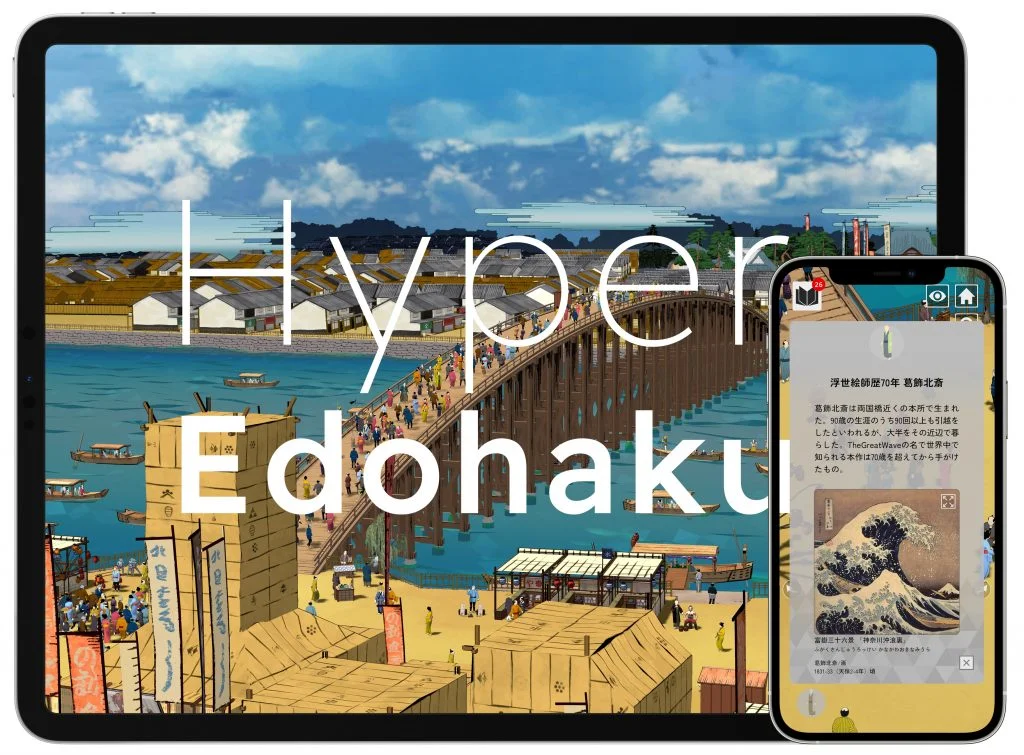
"Hyper Edohaku" is an official smartphone application of the Edo Tokyo Museum where you can learn the history and knowledge of Edo Tokyo like a game. While the museum was closed for a long period of time, the project was launched to actively promote the museum, but Haruki says that the biggest challenge was to "How can we create content unique to the Edo-Tokyo Museum?."
Haruki "When I think of digital content, I think of things like 360 degree VR, which is a 3D scan of the exhibition space, or a digital archive where you can see the materials of the institution on the website, and our building already offers those things, and various other museums do. So, if I were to create a virtual space, I wanted to create content that would allow people to experience life in the Edo period using elaborate models at the Edo Exposition, so I contacted several production companies. At that time, it was Rhino Studio that showed us a surprising video in the project competition."
The "startling image" was a CG image of the imposing Ryogoku Bridge reproduced from the model of the Ryogoku Bridge Nishizume, which is representative of the permanent exhibition of the Edo-Tokyo Museum.
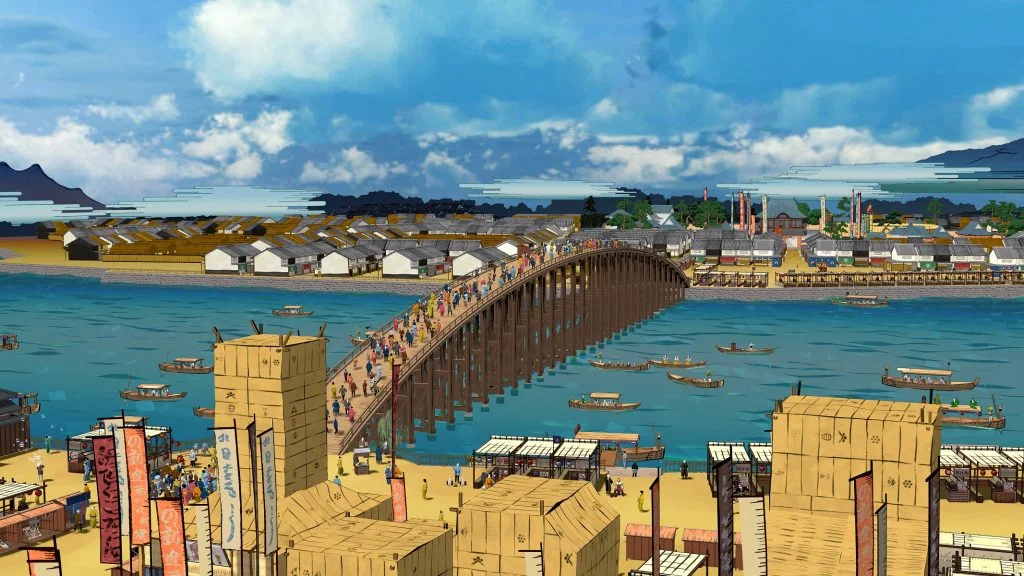
Taniguchi "At the time of the competition, Ryogokubashi was the only one I presented, but the company I work for, Rhino Studio, was founded by members who originally made games. So why don't we make an app that lets you enjoy this kind of Edo space like a game? and I suggested,."
The idea was to walk around Ryogokubashi and look for and collect items from the Edo Exposition. Taniguchi says what's new about the app is that it "With the full-scale use of the game engine, there is a play to keep the user interested before reaching the museum materials."
Let's take a look at the new application.
What is the Hyper Edo Expo?
When you open the app, the first thing that appears is an eagle with its wings spread wide, reminiscent of the 100,000 tsubo of Fukagawa Suzaki in "One Hundred Famous Views of Edo," a masterpiece of ukiyo-e artist Utagawa Hiroshige's later years. With the sacred peaks of Mt. Fuji and Mt. Tsukuba in the distance, the great eagle flies over Hirokoji, the west end of Ryogoku Bridge, which is lined with playhouses, show houses, and tea houses in Edo, the 1 million largest city in the world at the time.
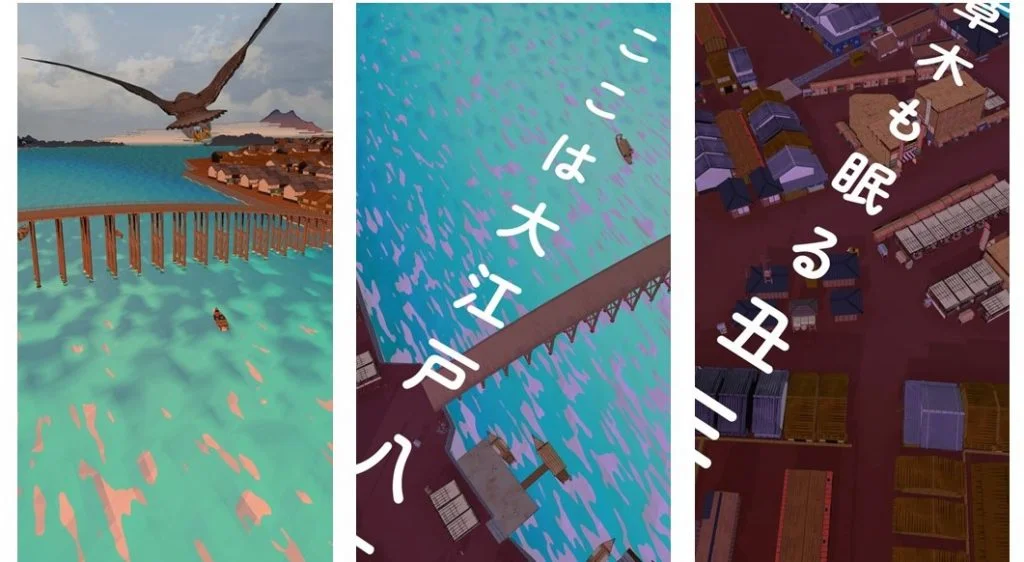
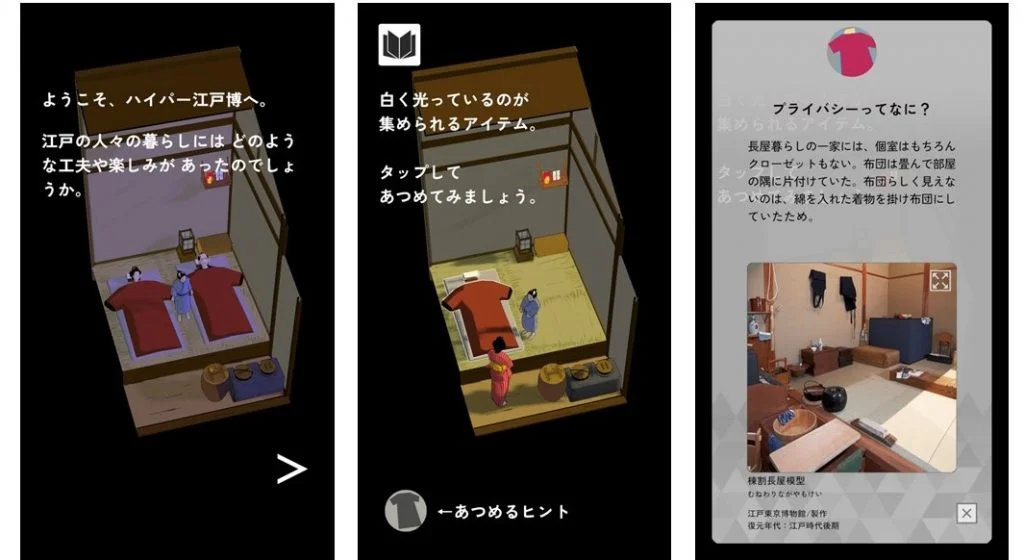
Before you know it, you're looking down at the room where your avatar, Edohakun, lives with his parents. When you touch a futon or kamado (furnace) in the room according to the icons, the collection of items at the Edo Exposition appears on the screen with explanations, and you can collect them one after another.
After collecting items related to daily life in the nagaya area, "Edohakun" finally goes to the main area. At the bustling Nishizume, you can see elephants and camels at a show house, or collect items for a menu at a street stall asked by the owner of a picture paper shop while you collect items from each area. On the way, he encountered famous historical figures such as Katsushika Hokusai and Hiraga Gennai, and finally crossed the Ryogoku Bridge over the Sumida River to the east end of Ryogoku Bridge where the Edo Tokyo Museum is now located. At Ekoin, you can see the sumo tournament which is very crowded.
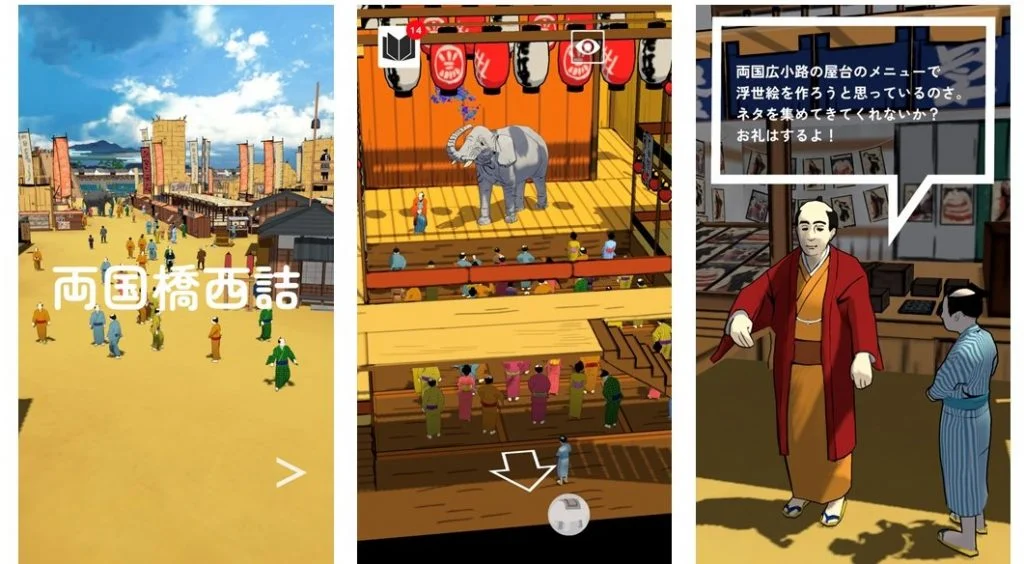
Attention to a sense of reality, from the scale of the scenes to the gestures of the characters
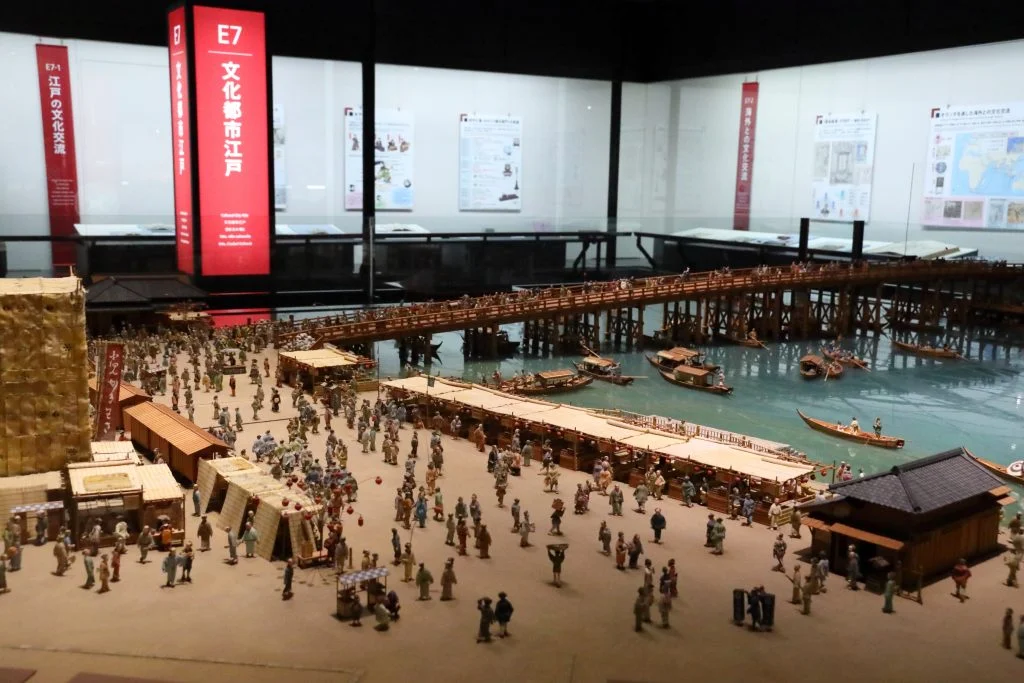
This app immerses you in the city of Edo and is enjoyable for everyone from elementary school students to the elderly. It is impressive with its touch reminiscent of ukiyo-e and various viewpoints. In particular, you will be surprised by the vast area of Nishizume Hirokoji, which was established as a "fire prevention area" to prevent fires. This festive space lined with playhouses and show houses was not created by imagination, but was accurately reproduced at the scale of the Ryogoku Bridge Nishizume model exhibited at the Edo Expo.
Haruki "In fact, all of these models were created by drawing plans and elevations from materials such as ukiyo-e prints and printed books from the Edo period. We had the landscape of Ryogoku Bridge Nishizume created based on these materials and drawings. So I think you can literally immerse yourself in the area around Ryogokubashi Bridge, which was the most exciting place in Japan in the late Edo period, and experience the town at that time."
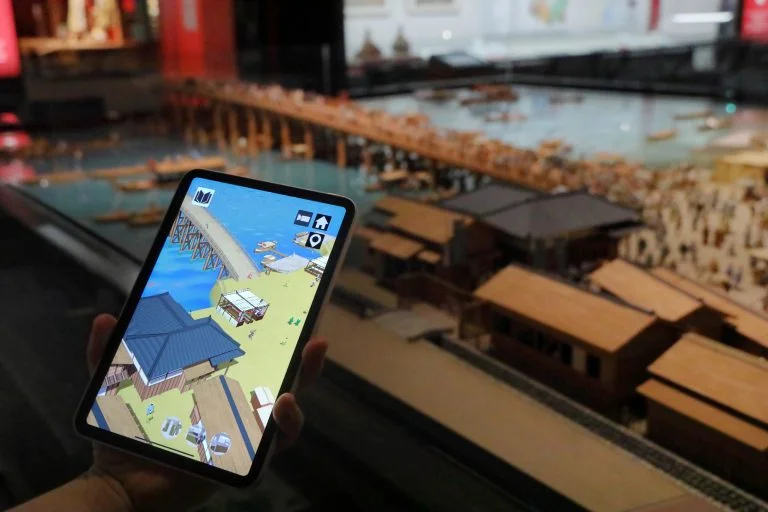
Taniguchi "If it's a fantasy world in a game, you can just fantasize about it, but by recreating the townscape based on documents and experts ’ stories, it looks like the main street of the west end is connected to the back row houses where the common people lived. and the feeling of the dots being connected by lines was refreshing. In movies and period dramas, landscapes are cut out by scenes, but of course they are connected to the ground, and I think it's very interesting to see that they spread out like this."
In addition, Taniguchi says he sought realism in the actions of the characters.
Taniguchi "In order to recreate the behavior of people in the Edo period who lived in kimono, Japanese dancer Ryotaro Fujima participated in the motion capture of the characters. Fujima-san plays various characters in the app with sensors. I think the gestures of various people, young and old, have become natural."
Starting with Ryogoku and expanding to Ginza and Nihonbashi
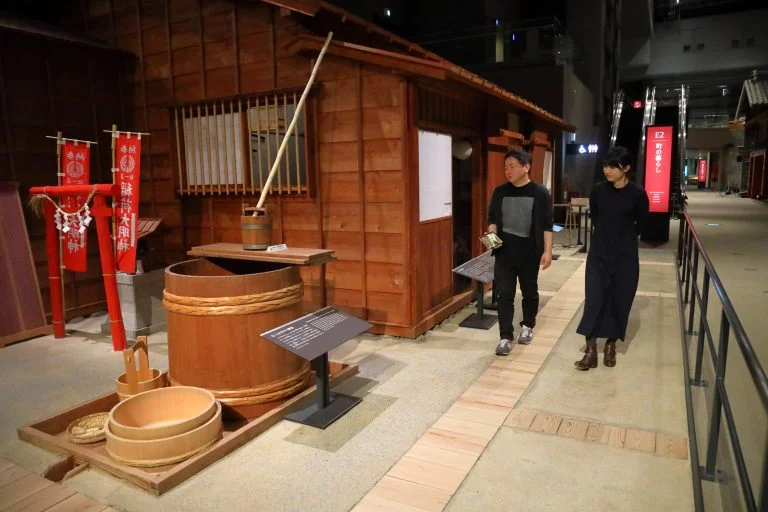
This is exactly what the Edo-Tokyo Museum is all about, but they were careful not to get too tied up in historical research.
Haruki "At any rate, I have a strong desire to have people look at the materials from the Edo Exposition, but if I get too hung up on that, the story and the materials don't work together, and all of a sudden it becomes a forced and unnatural thing. It is only when the collection materials and the story are combined organically while maintaining the entertainment value that people appreciate the content as good."
Taniguchi "I really think so. Wouldn't it be more fun for us in the game world if we could make content like "Pokemon Go!" where users can freely move around the museum and collect items? I tend to think that. However, if that were the case, we would not be able to receive any learning or awareness from the valuable materials at the Edo Expo. The purpose of this project is to encourage users to enjoy the materials of the Edo Exposition and become interested in the history and culture of Edo, so we were careful not to lose sight of this point."
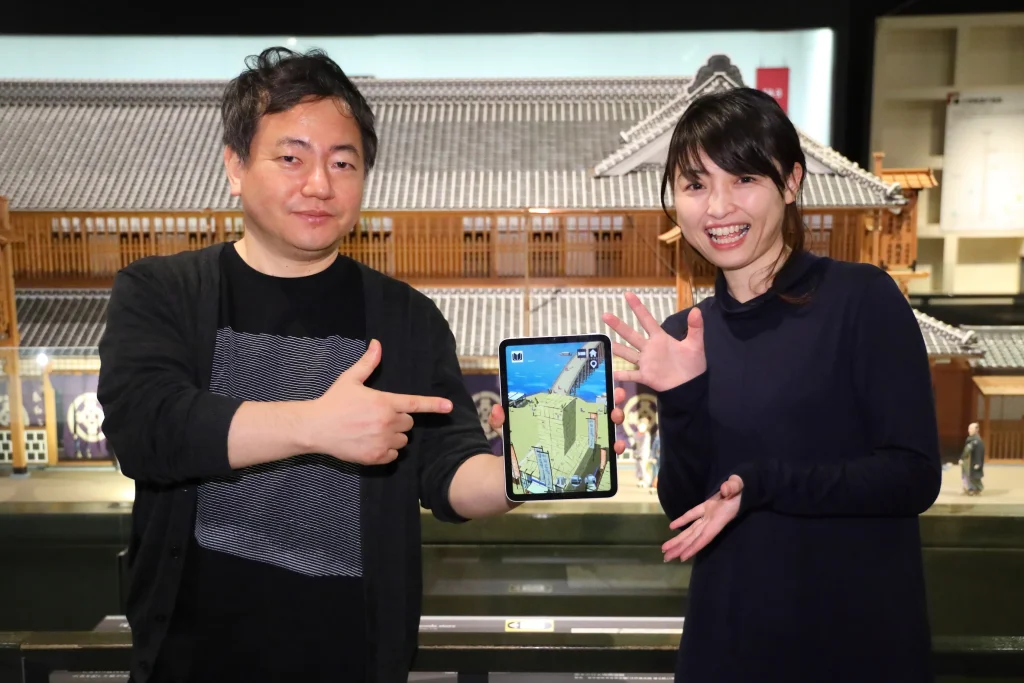
Haruki "It was a lot of trial and error, but I can say with confidence that we've created a revolutionary museum app. By using this application, I would be happy if users become interested in Edo and Tokyo even a little."
The series released this time is "Ryogoku, the center of Edo," but in the future, contents such as "Ginza, the birth of Tokyo" will be added that will allow you to learn about the life of people in Tokyo beyond time and space, not only in Edo but also in each area after the Meiji period. Why don't you take this opportunity to deepen your knowledge and history of Edo and Tokyo by playing with the app?
Press release/Setsuko Kitani
Photo by Yosuke Hoshino
Photo Gallery