
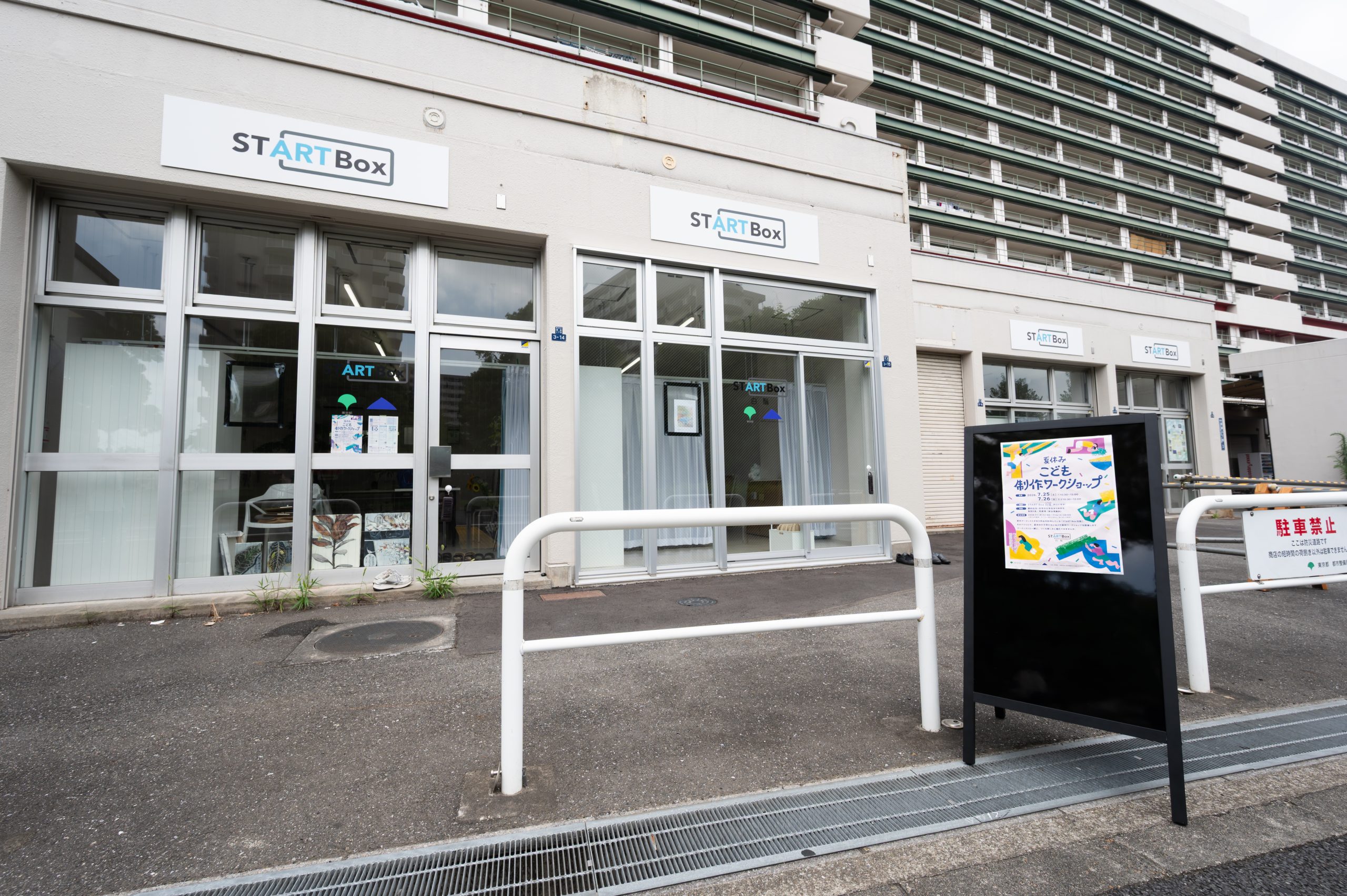
The "START Box" provides young artists with a place to create, exchange, and present, and supports their ongoing activities. We rent out our atelier at a reasonable rate. Starting with START Box Sasahata Hatsu, which opened in 2023 using an empty store in Tokyo public housing along the Sasazuka and Hatagaya waterways, START Box Odaiba was opened using an empty store in the Tokyo Metropolitan Housing Supply Corporation in Odaiba, and START Box Shirahige was opened in 2026 using an empty store in the Tokyo Metropolitan Shirahige Higashi Apartments in Tsutsumidori, Sumida-ku.
For artists who use the facilities, we provide not only support for individual creative activities, but also opportunities for exchange among local communities and artists, as well as opportunities for the presentation of works. Several times a year, we have been planning "Open Atelier," an opportunity to open our atelier and interact with artists. In July 2026, we held a "Summer Vacation Children's Production Workshop" in Shirahige as the first trial of "Start Box." During the summer vacation, the children were invited to the artist's studio where the artist usually works, and worked with the artist through three workshops over two days.
Workshop (1) "Let's make the only Sumidagawa dye goods in the world!!" - Tie-dyeing - (Lecturer: Toru Ishii)
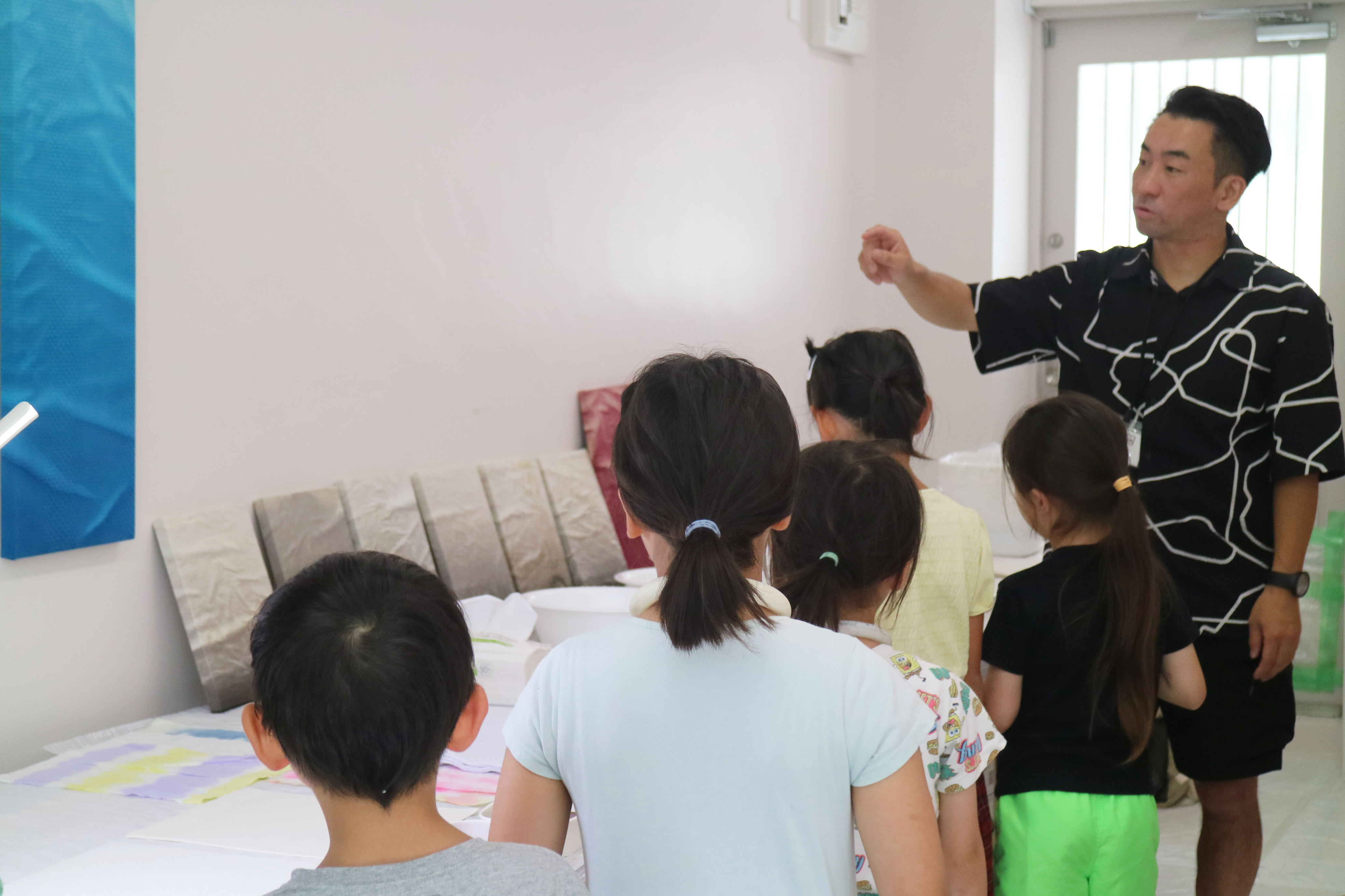
At the studio of dyer Toru Ishii, they tried tie-dyeing using the water (tap water) of Sumida Ward where their studio is located. We worked on creating a unique tote bag. Ishii has tried dyeing with local water in New York and London. "Even if the same dye is used, the way it is dyed is completely different depending on the local water, so let's have fun and see what happens with the water in Sumida Ward!" he says to the children.
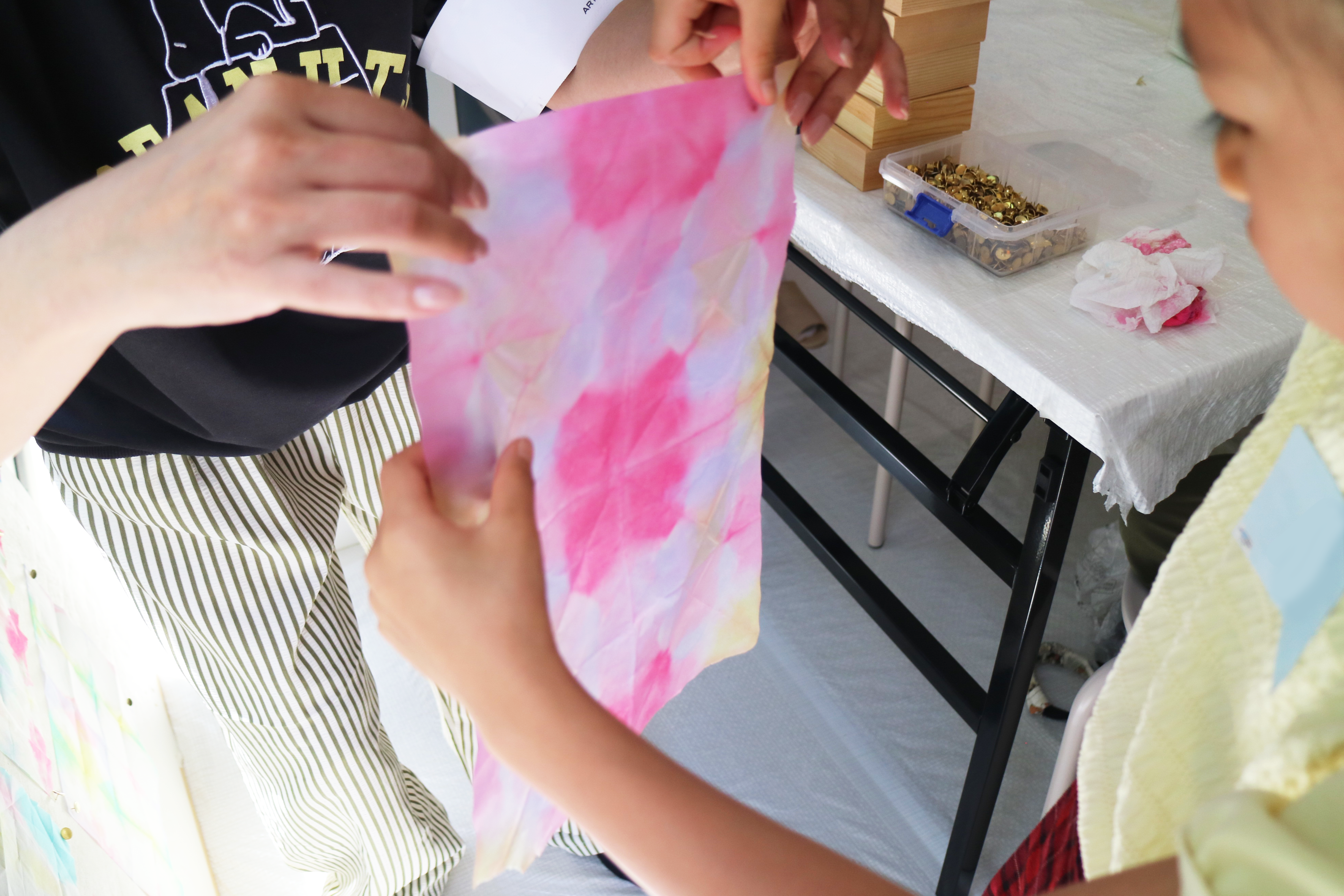
First, to get an idea of dyeing, I decided to try "orizome" using hanshi and colored water. Children can choose how to fold and what color water they want. When you soak it in colored water, you can apply it only to the corners, or you can soak it completely. It was impressive to see the children who got involved in what they wanted to do next as they tried it out, and created many more pictures.
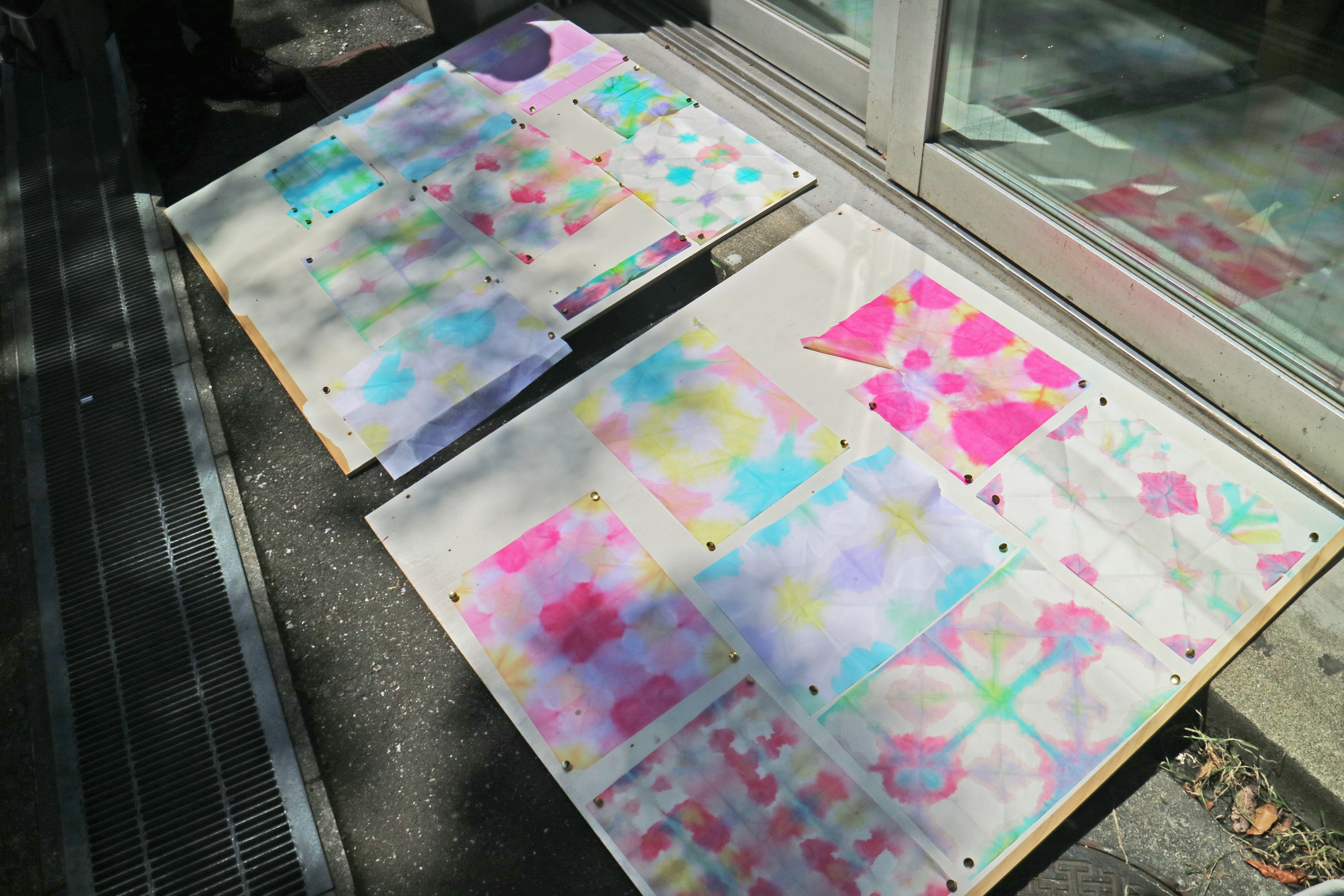
And finally, tie-dyeing, the main part of the workshop. This original tote bag is made by dripping (a technique used by Pollock to paint a canvas by dripping paint from a can or brush) inspired by the American painter Jackson Pollock and by tie-dyeing.
Tie the parts where you don't want the dye to be applied with rubber bands, soak them in salt water for a while, and then apply the three colors of red, yellow, and blue dye from above.
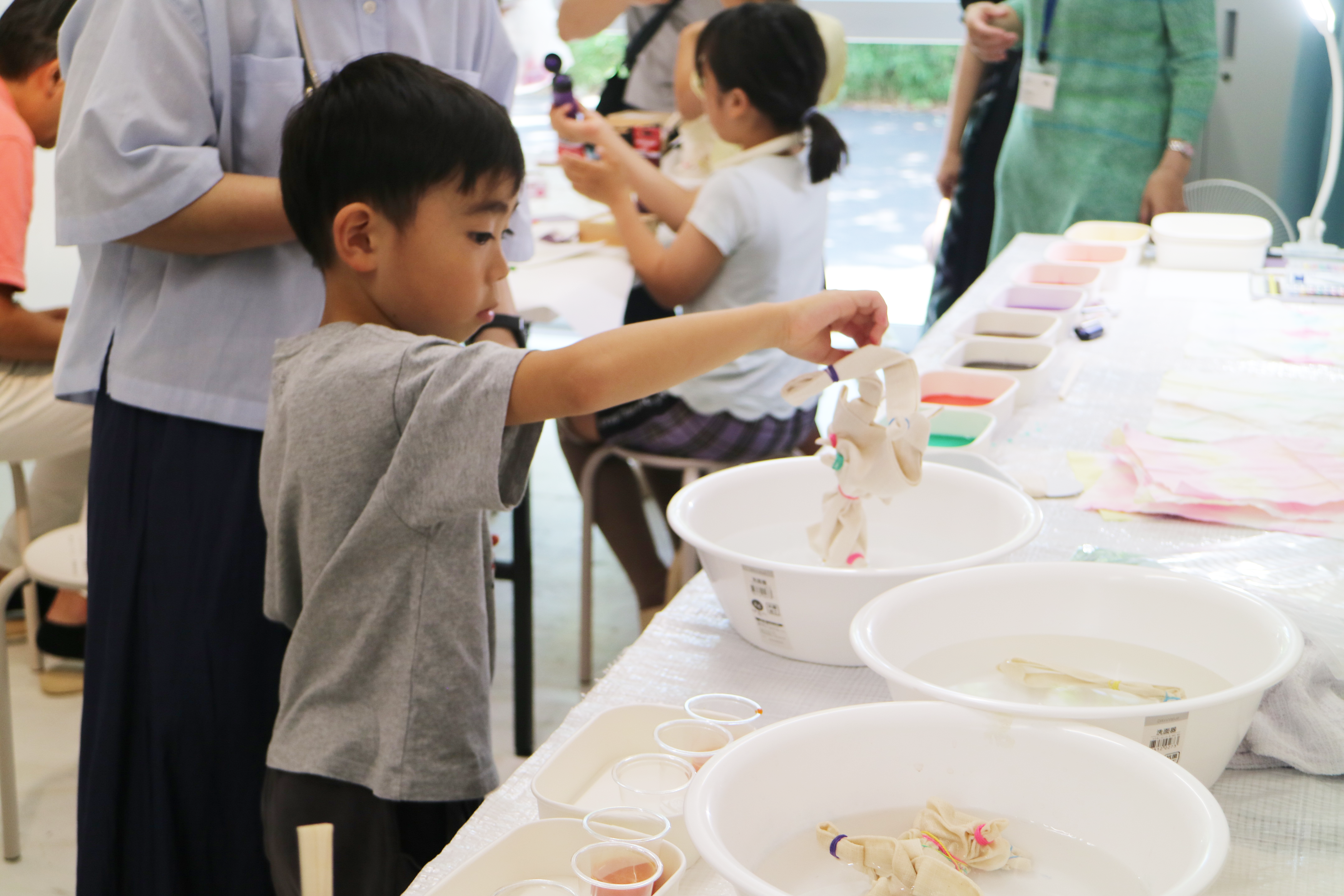
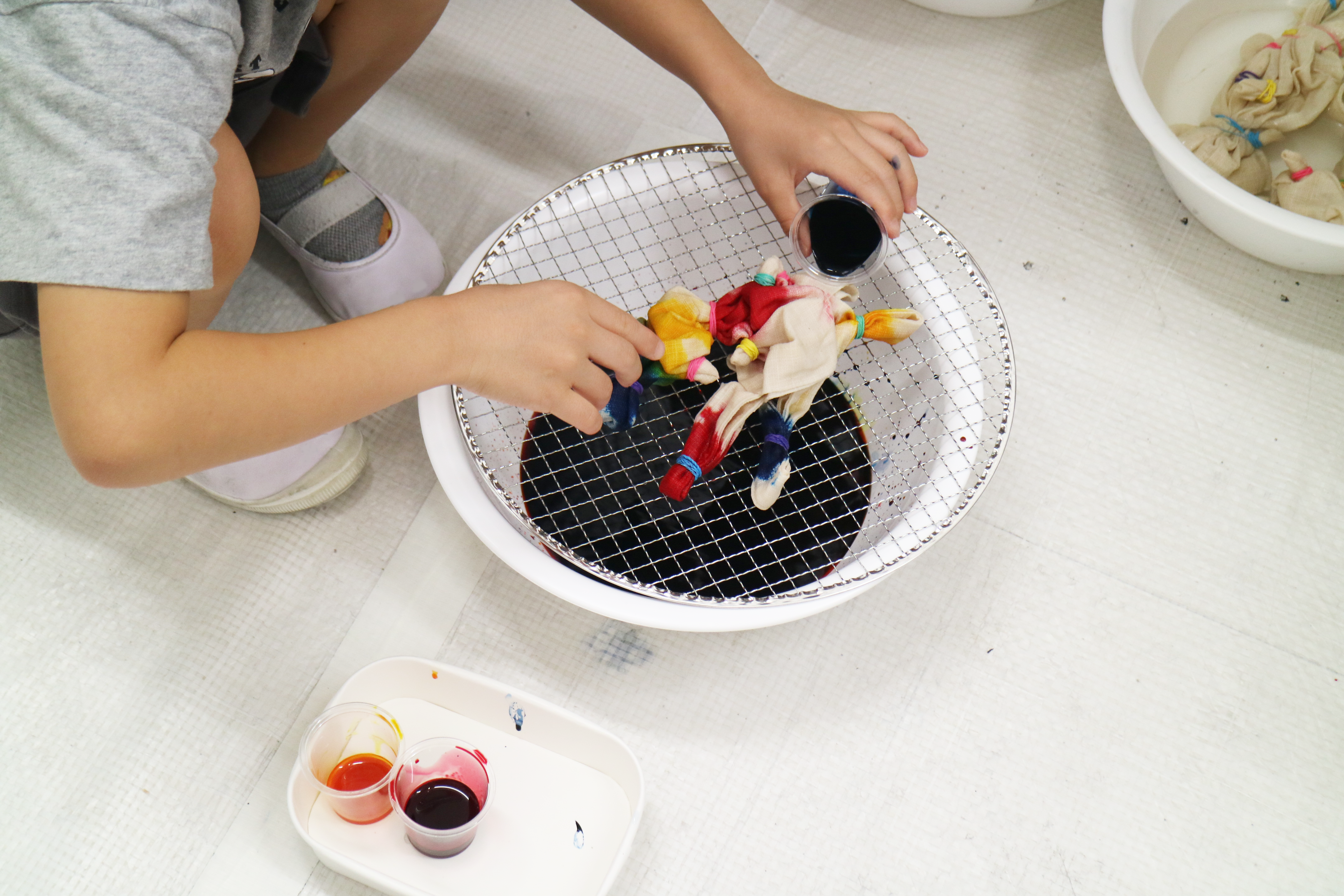
The children said, "What will it look like? unimaginable" and focused on making their own creations, being particular about the amount of dripping and the place where it was poured.
Receiving Mr. Ishii's words, "Even for tie-dye artisans, it is quite difficult to predict the exact pattern that will appear. There's something about tie-dyeing that makes accidental design fun." the children seemed to have high expectations for their work.
Workshop (2) "Draw Harmony!"― Colored Pencil Painting ― (Lecturer: MOMOKO SATO)
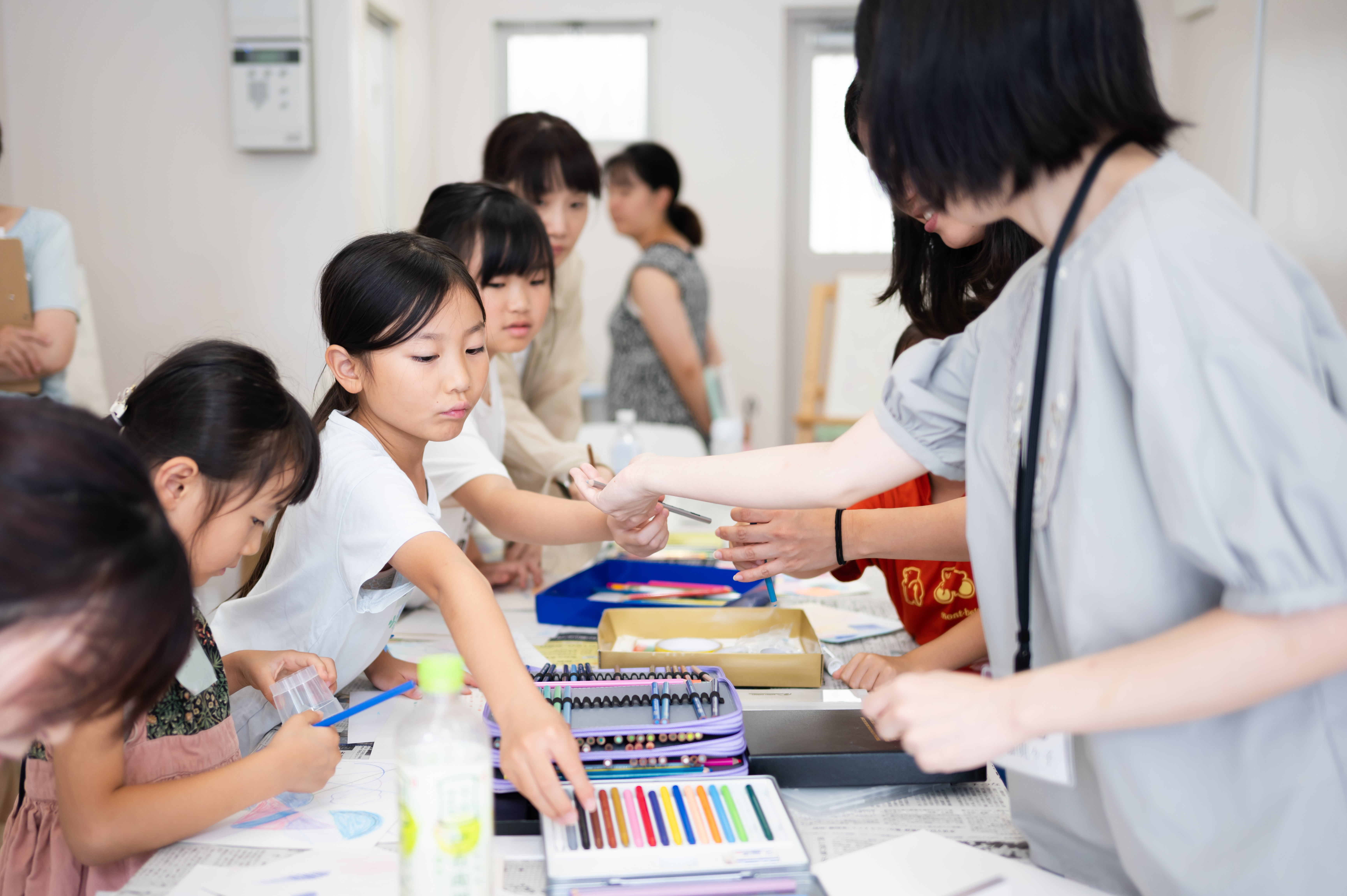
At Momeko Sato's atelier, she held a workshop to draw "harmony" using colored pencils. First of all, I will think about "What is harmony?" with the gathered children. After sharing the feeling of overlapping and resonating sounds using the keyboard, Sato says, "In the same way as with sound, let's feel the various emotions that come from the overlapping of colors as they resonate together."
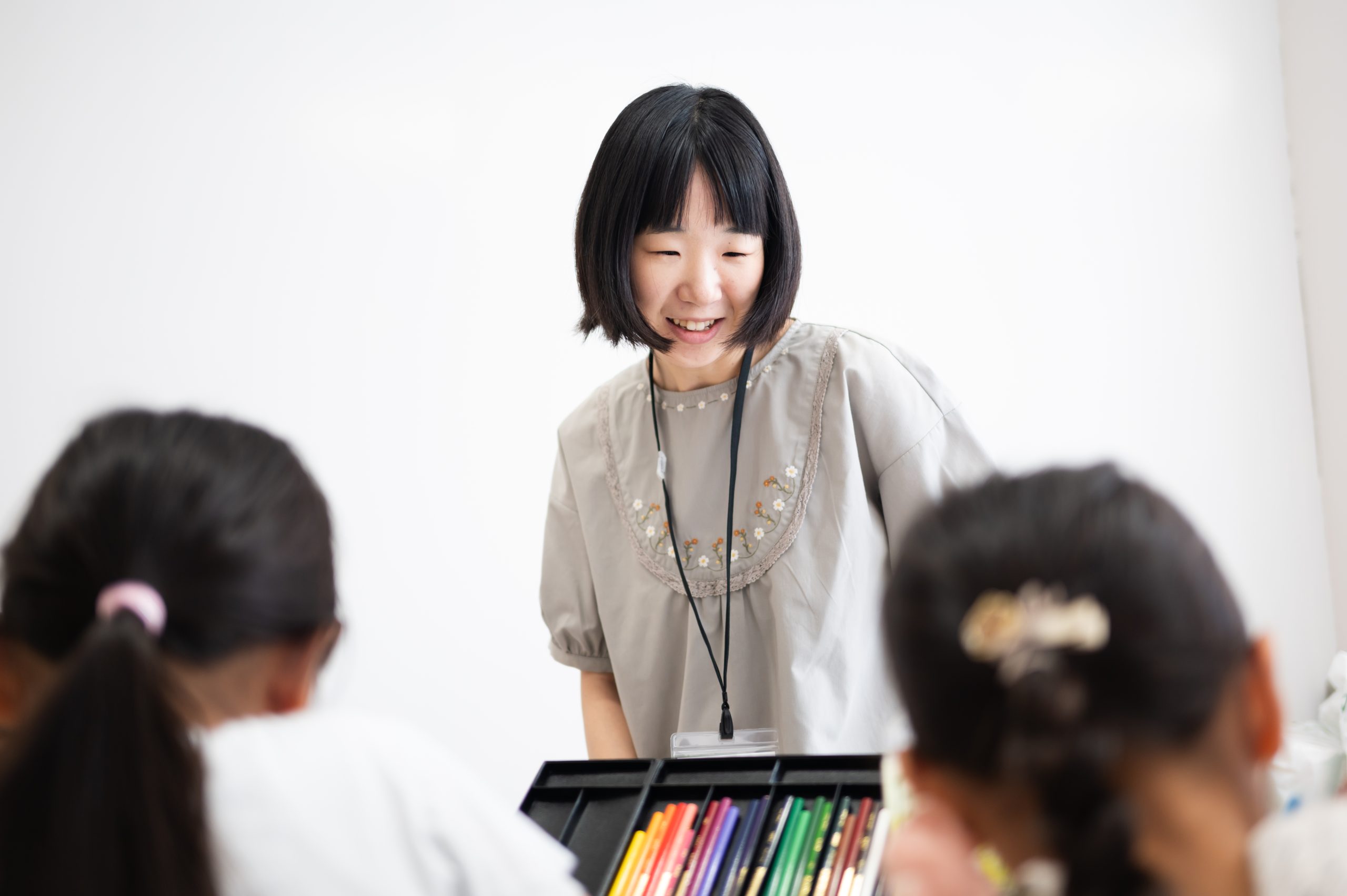
Sato is an artist who uses colored pencils to create works based on everyday scenery and reconstructs them on the screen while observing colors, lights, and shapes. In the workshop, I encouraged the children to touch not only the colored pencils that I use in my daily work, but also ordinary colored pencils with soft and hard leads, fluorescent colored pencils, and pencils made overseas. I encouraged them to feel the differences and discover new expressions. For the children, there are many art materials that they don't usually have the opportunity to touch, so they seem to be excited about choosing and combining their favorite ones.
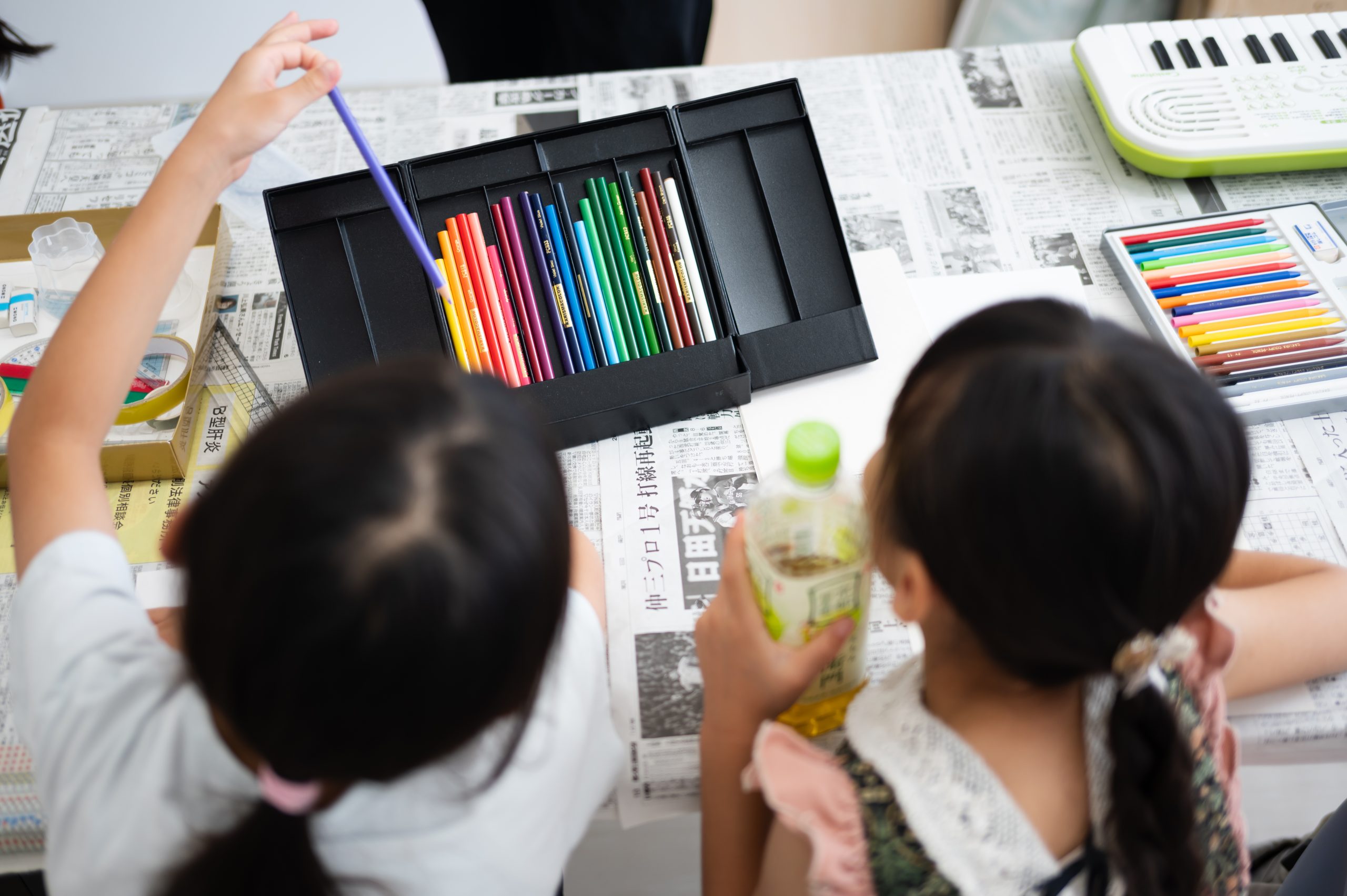
Before you know it, the parents next to you are also fascinated, and both children and adults are concentrating on their work. As parents and children peeked at each other's artwork and exchanged art supplies, various forms of communication were born, such as, "I mixed the colors and it turned out beautiful!""When I applied it, I got a different color than I expected!" or, "It looks like a different color when you paint it lightly or heavily."
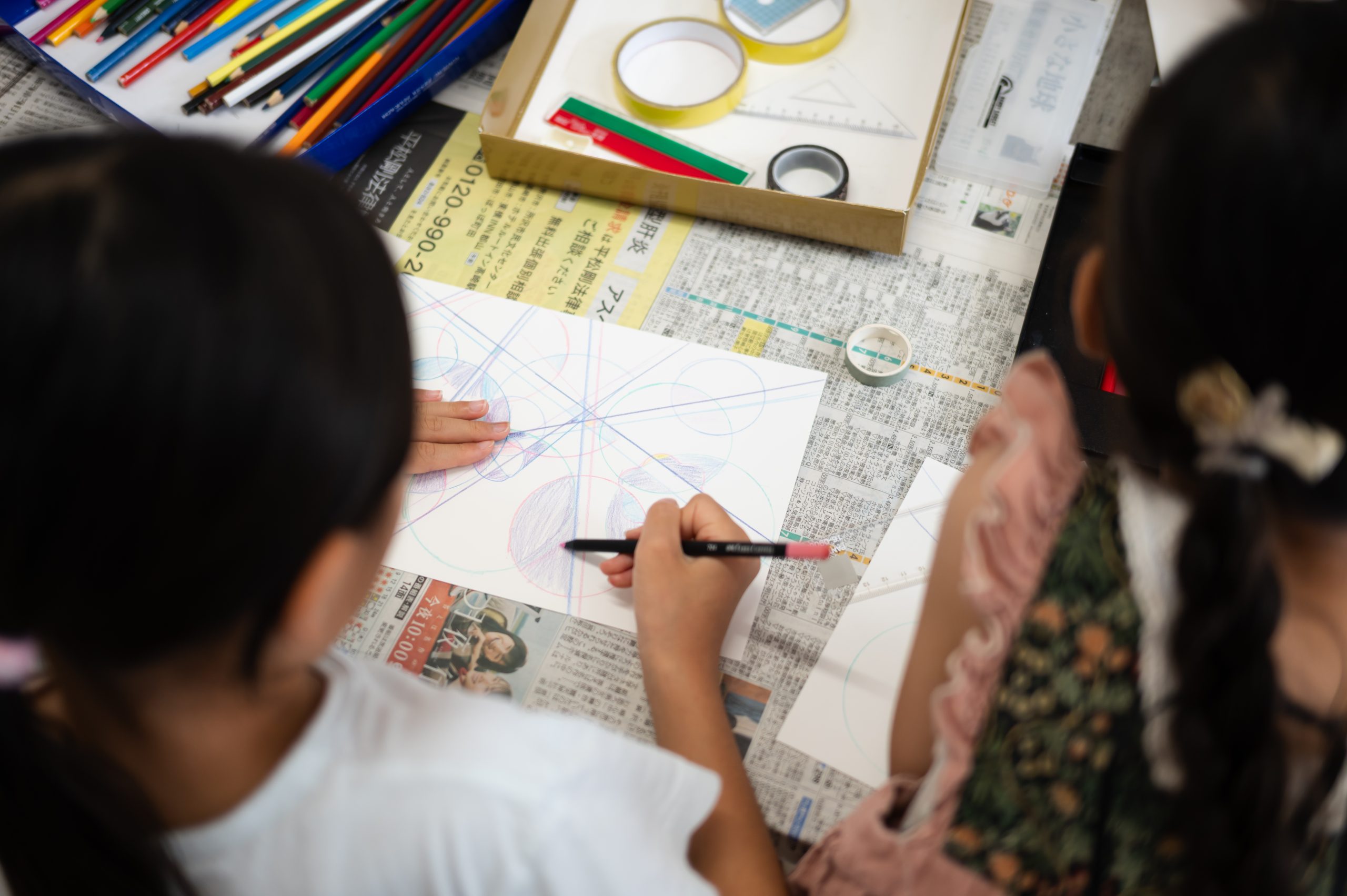
"Colored pencils are a familiar art tool, but I think you have experienced that the possibilities of expression expand by the combination of colors and the way of painting." says Sato. It was also impressive to see the conversation among the participants as they showed each other their finished works.
Workshop (3) "a large plant painted with charcoal"― Charcoal Drawing ― (Lecturer: Noseyui)
The children were welcomed by large plants with distinctive shapes and gorgeous and unique flowers in the studio of Ms. Noseyui, who creates paintings on the theme of plants, obsession and vitality. A drawing workshop was held in which participants drew plants on large paper using charcoal. All participants had never touched charcoal before! The first lesson was how to hold charcoal.
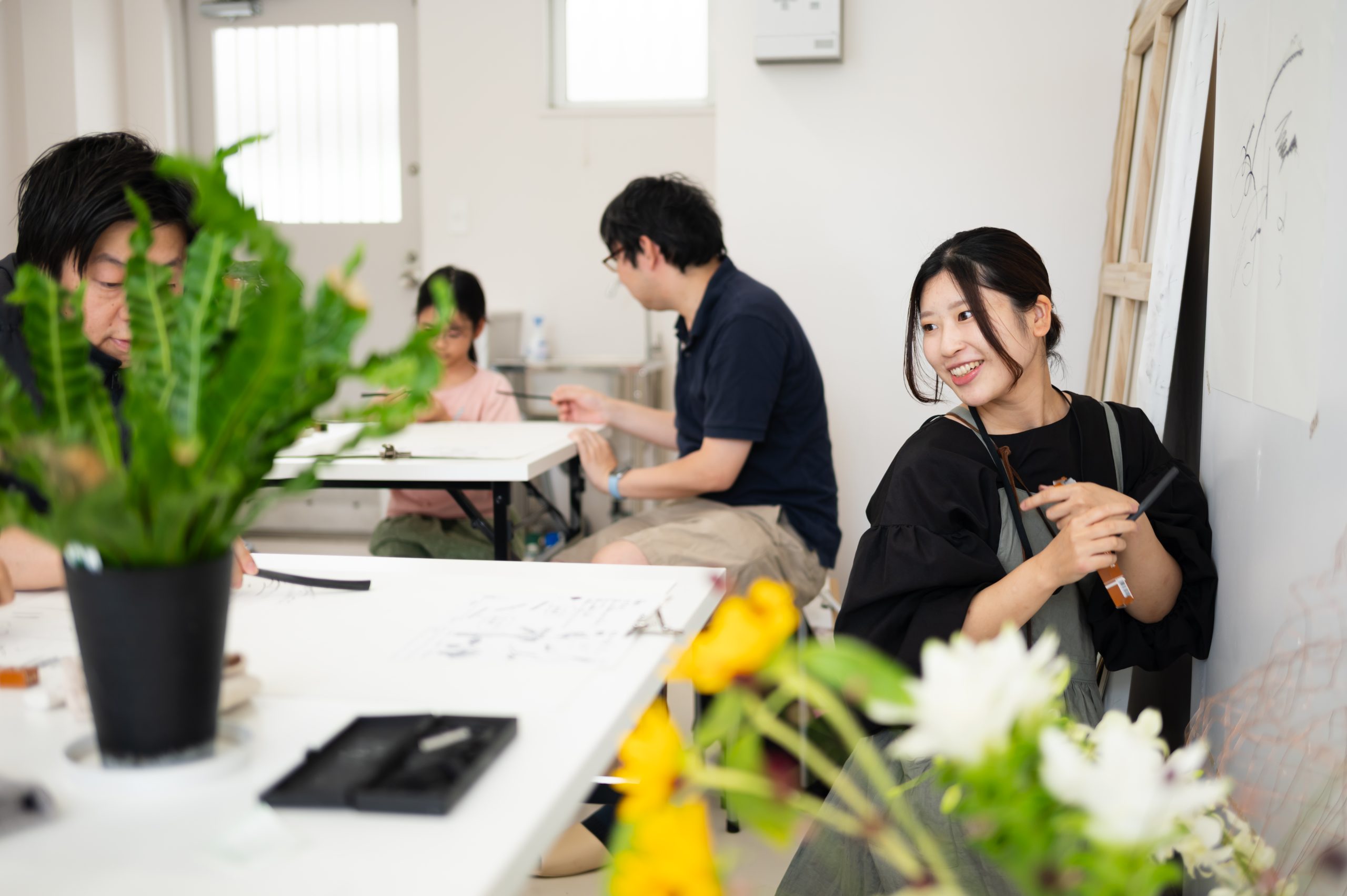
When Ms. Nose said to her, "Go and touch the plants that interest you. It is easy to have an image when you touch the feeling of the underside of the leaf, the thickness of the leaf, the roughness of the tree trunk, etc." the children leaned forward and their powers of observation were brought out. Even though they were drawing the same object, there were different ways of drawing the whole object in a big and bold way, and there were different ways of drawing the details thoroughly. The children's individuality was exuded in the way they approached the object.
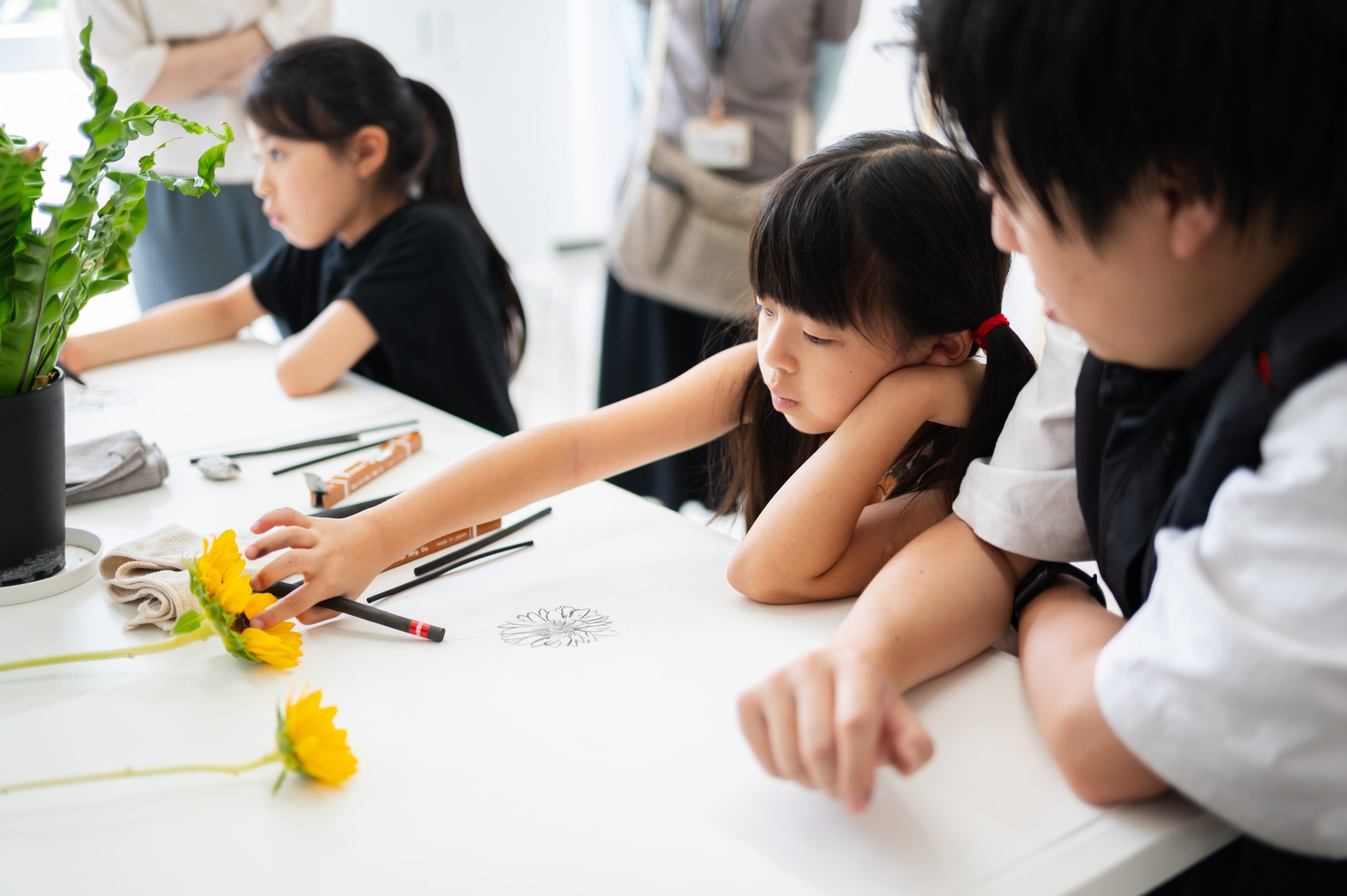
"Charcoal is characterized by the fact that once you draw a line, it remains vague even after you erase it, and the shadow gives a deep expression. At first, you may have been confused by it, but I was glad that everyone got used to it and drew the second and third pictures." Nose says.
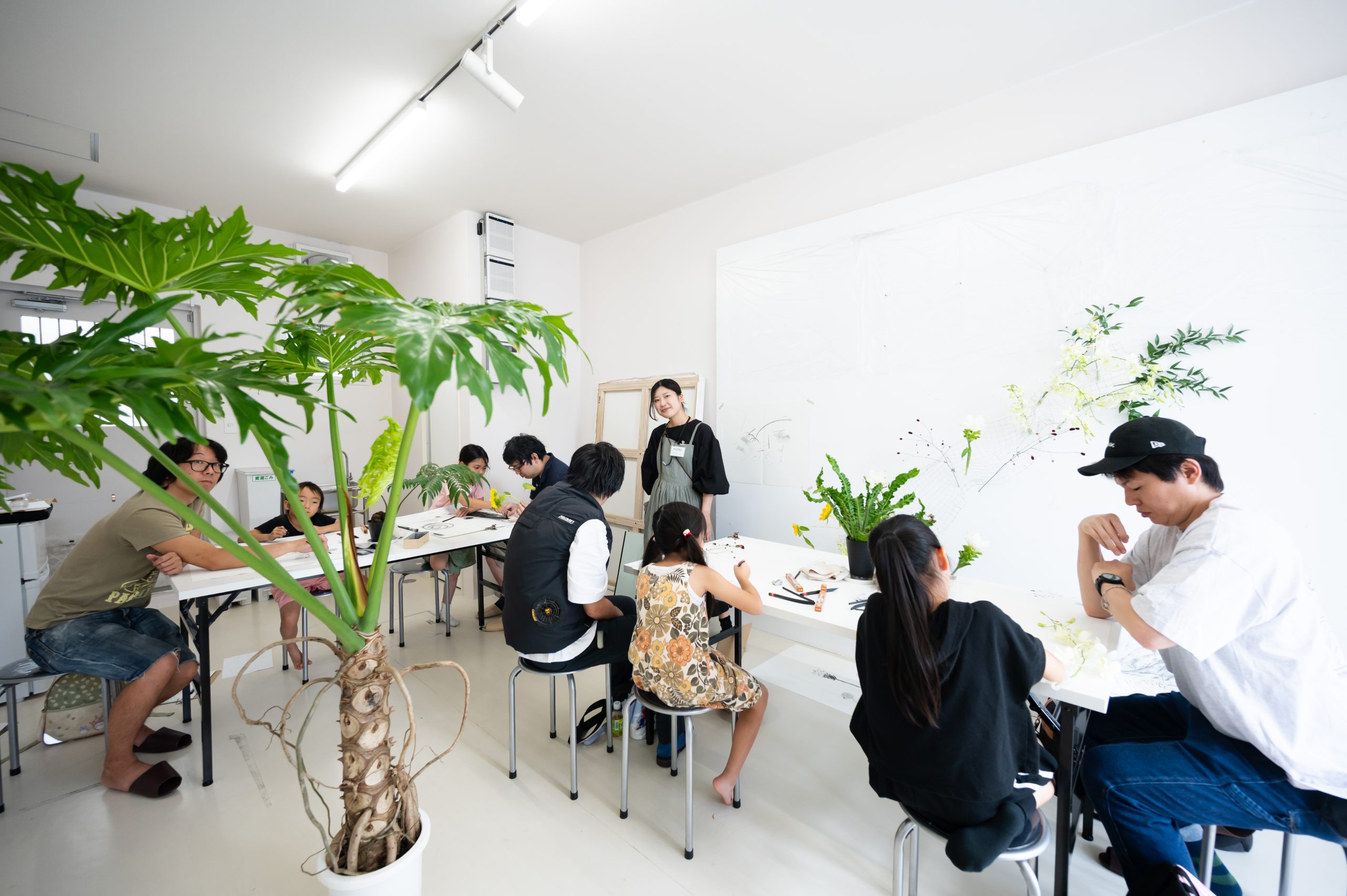
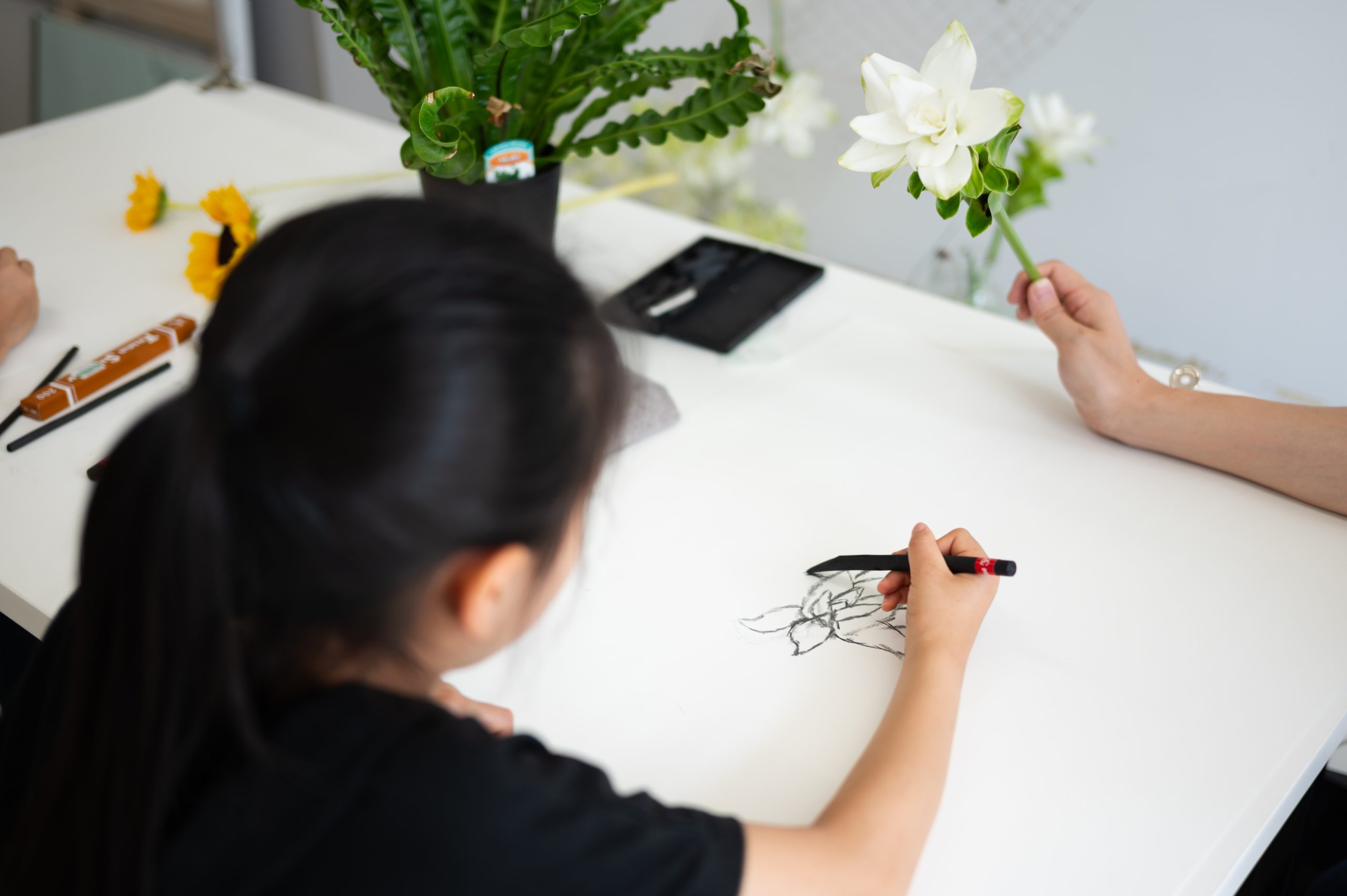
Put your signature on each of the finished pictures and spray them with processing spray to finish. The children looked at the completed work and the model plant and looked as if they were still interested in further exploration.
Want to know more about START Box!
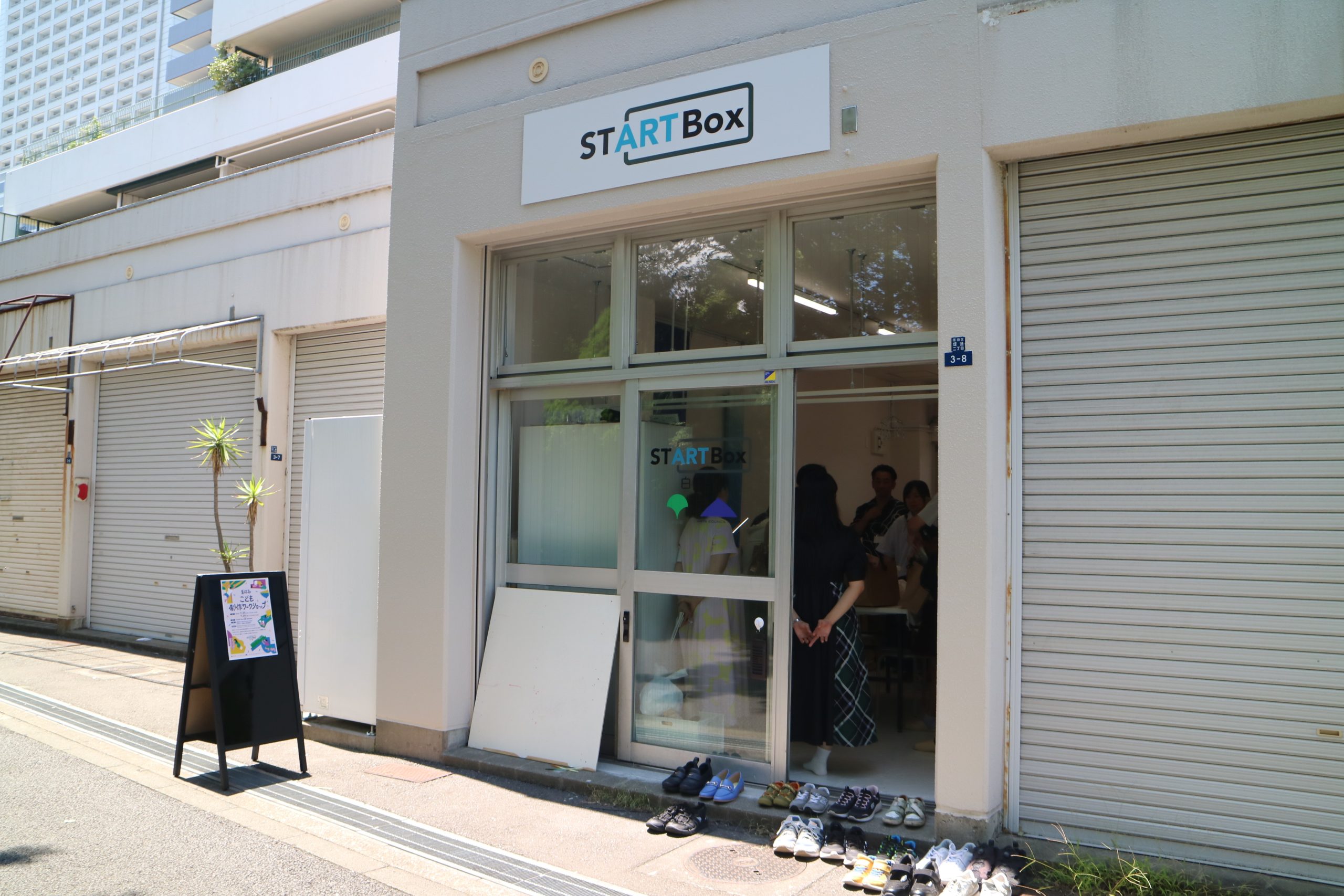
The “atelier ” of“ START Box Shirahige, ” which held the workshop this time, is a private space separated by each artist, equipped with air conditioning, running water, and a toilet. You can concentrate on your work all day long. Due to the renovation of the space that was originally a store, it is a bright and open space with a glass opening facing the street, allowing natural light to enter. In addition, there are four “practice rooms ” located near the“ Atelier, ” which are used as creative spaces for performing arts such as theater and dance. Users also like the fact that they can choose between rooms with mirrors, rooms with wooden floors and rooms with linoleum sheets.
In October 2026, “START Box Sakashita ” opened in Itabashi-ku, Tokyo, as the company's fourth base following Sasa Hatahatsu, Odaiba, and Shirahige. It is a form of shared atelier, characterized by the fact that multiple artists share one space.
In addition, “START Box ” is currently holding“ START Box EXHIBITION ” [August 18 to 23 (Period I), August 26 to 31 (Period II)] as part of an initiative to provide a place for artists who use “START Box ” to present. With related programs such as artist talks and public lectures, it is a place for artists to meet each other, artists and visitors, and artists and society.
In addition, an open atelier at START Box Shirahige will be held on September 20, and “MEET YOUR ART FESTIVAL, ” where START Box will exhibit, will be held from October 9 to 12th. There will be many opportunities to meet the activities of START Box and the artists who use it as one of their bases.
Making the "START Box" a place for the next generation of artists to meet and grow
As mentioned above, the START Box provides various opportunities for artists to interact not only with each other but also with local people and children. Feeling close to artists and getting them interested in their activities will surely lead to nurturing future artists and enriching our world with creativity.
Reporting and text by Maeda Mami
Start Box, a creative environment for artists
This project, a collaboration between the Tokyo Metropolitan Government and the Tokyo Metropolitan Foundation for History and Culture Arts Arts Council Tokyo, provides creative spaces for young artists who have difficulty securing studios and other facilities, thereby supporting their continued activities. It utilizes vacant commercial spaces in public housing complexes and other locations, renting them out at affordable rates. The project also facilitates interaction between local communities and artists, and provides venues for showcasing artwork.