
This year marks the 4th year of the Tokyo Metropolitan Government and Municipal Cooperation Project, which started in 2023. The Tokyo Metropolitan Government and local governments have worked together to create opportunities to approach the potential issues and needs of municipalities from a cultural perspective. Aiming to make arts and culture come to life in various places in the community, this project supports new initiatives by municipalities that are responsible for cultural projects. By developing cultural projects in places familiar to local residents, the project creates opportunities for them to feel comfortable with arts and culture.
One of our initiatives in fiscal 2026, the Tokyo-Katsushika Ward Arts and Culture Collaboration Project, was started with the desire of the ward staff to "Creating More Opportunities for Children in Katsushika to Experience Art and Culture from an Early Age". Planned with shadow painter and musician Koheisai Kawamura After a series of meetings and field research, they held shadow picture workshops for elementary and junior high school students during summer vacation. The workshop was held one day at each of three locations in Katsushika Ward (Aoto Area Center, Shinkoiwa Area Center, Shibamata Learning Center). 27 People's children participated.
This year's theme is "water," which is deeply connected to the lives of people in Katsushika. They will learn about the history and topography of the town, come into contact with nature through fieldwork, and expand their imaginations from the discoveries and observations they make. We report on a day at the Shibamata Learning Exchange Center, where children created new expressions through shadow puppets created through such experiences.
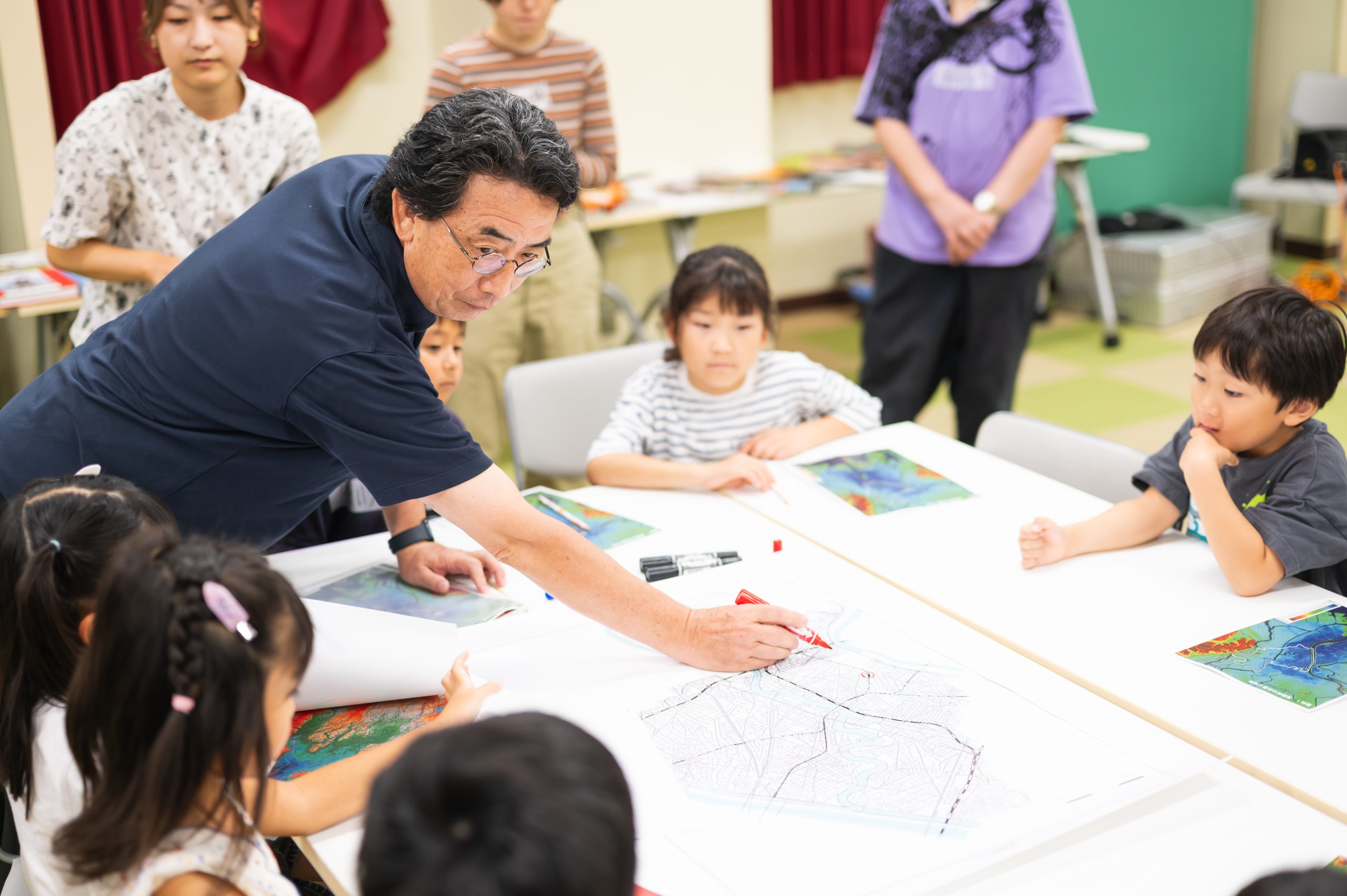
What kind of town is Katsushika-ku? Let's unravel from rivers and water – Lecture
The workshop consists of lectures and research in the morning, followed by production and presentation in the afternoon. Nine elementary school students living in the suburbs of Shibamata participated in the workshop held in Shibamata. The children started by checking how much they knew about Katsushika and what kind of place Katsushika was.
Laying out a lecture with a big map in front of the kids KatsushikaBorn and raised in Katsushika, an archaeologist familiar with Katsushika's history and culture Sakae Taniguchi, a former curator Mr.
- Mr. Taniguchi
- "Looking at this map, we can see that Katsushika is surrounded by rivers and close to the sea. We can't usually see it, but under the ground where we live, the water from the nearby Edo River seeps into the soil, and there is a lot of high-quality underground water. The livelihood of Katsushika Ward has been supported by pumping such underground water as well water."
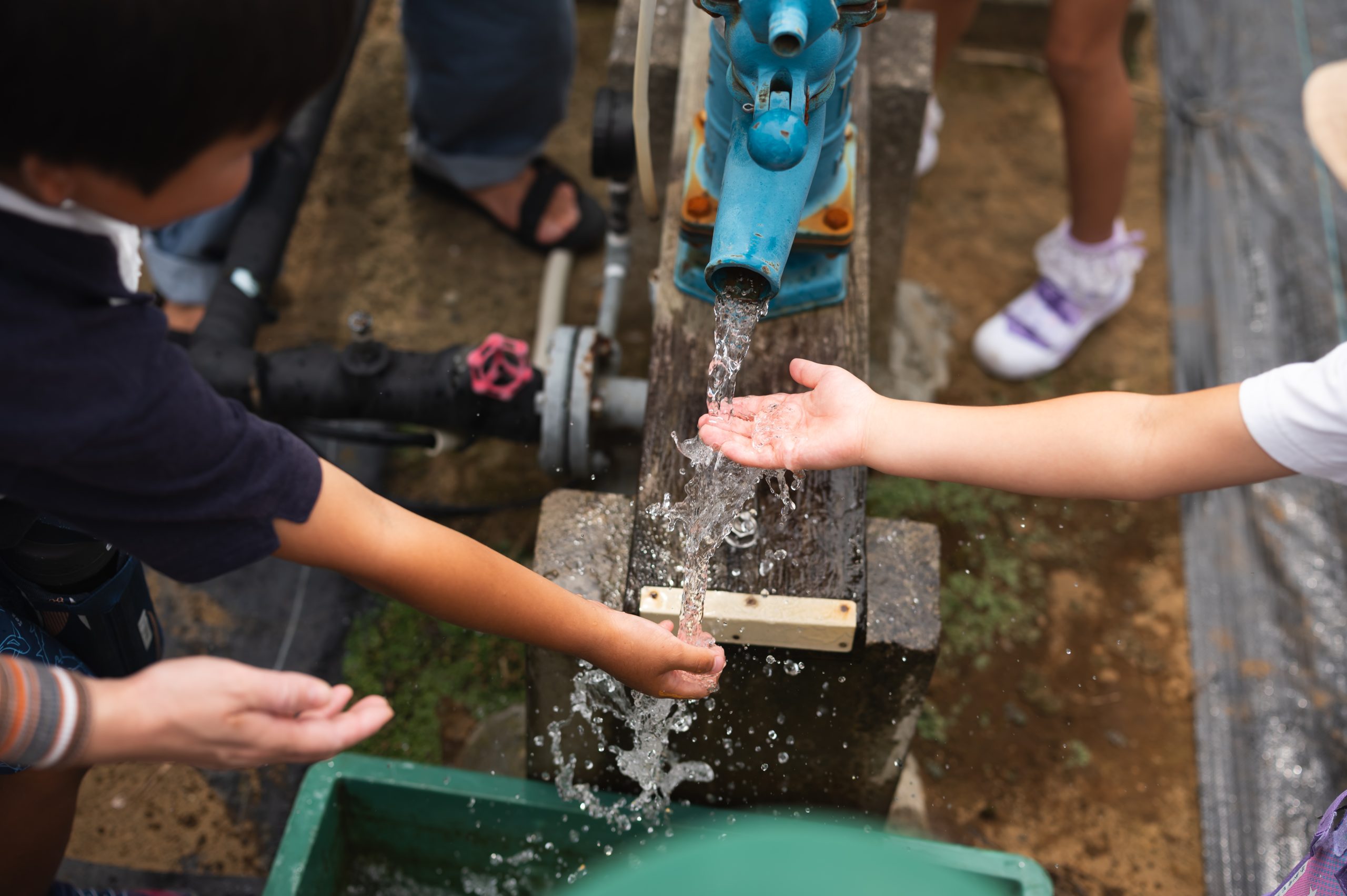
Well water is used not only for drinking and washing hands, but also in kitchens, fields, and public baths. In the event of a disaster, when electricity and water supply are cut off, it can be manually pumped up and used, which is one of the essential lifelines even now that water supply is widespread. In Katsushika, there are more than 50 wells in active use. After learning about Katsushika's close relationship with water, the children went on fieldwork to experience what a well actually looks like and what the water coming out of it feels like.
Touch the water in a well – fieldwork
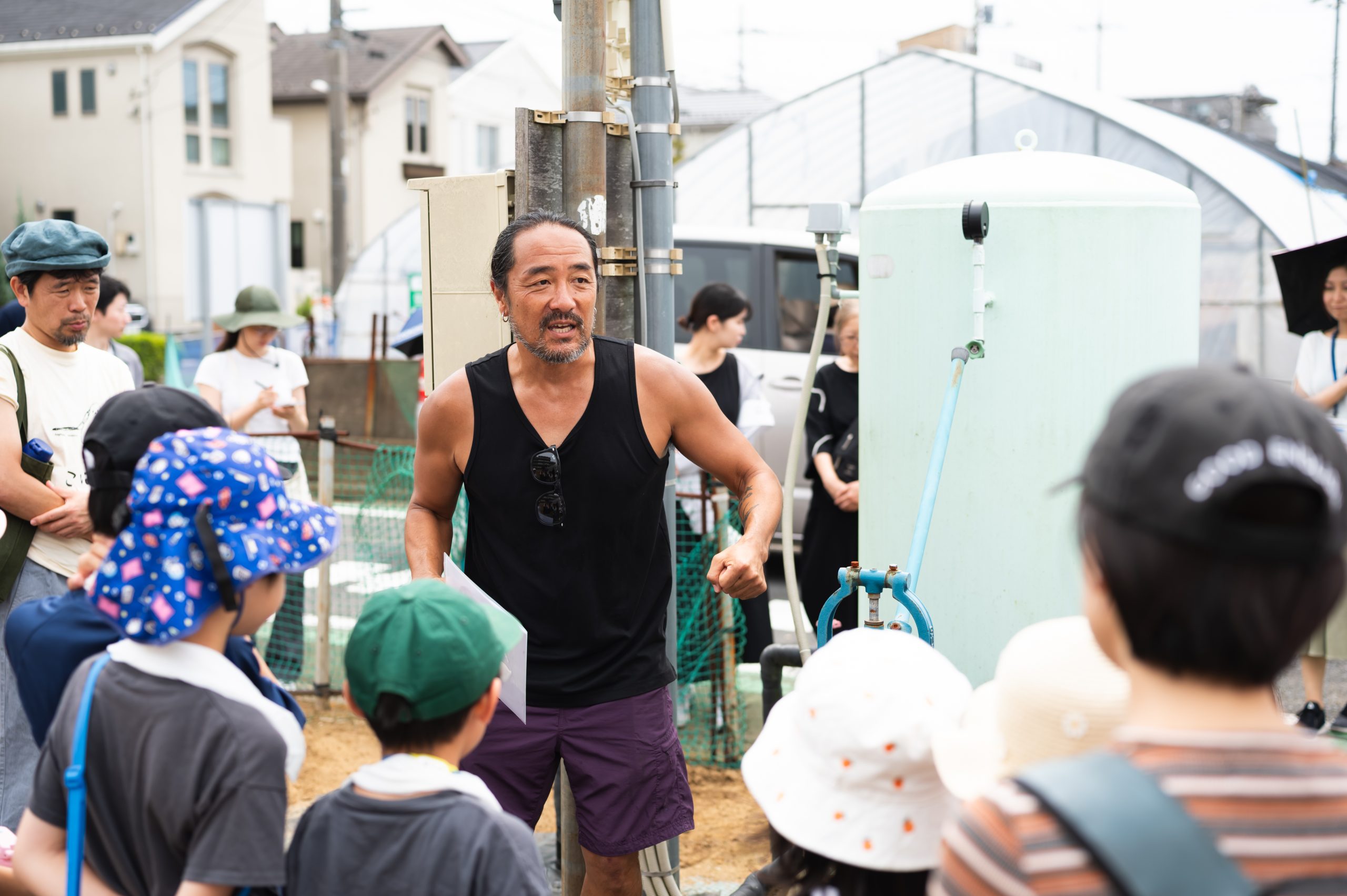
The children arrived at the well in the field with Kawamura saying, "Look, listen, think." Mr. Saito, a farmer, dug a disaster-prevention and agricultural well five years ago. In addition to using it as water for his fields, it can also be used as water for daily living in the event of a disaster.
- SAITO
- "The water in this well is drawn from groundwater that is 47 meters below the ground."
- Children
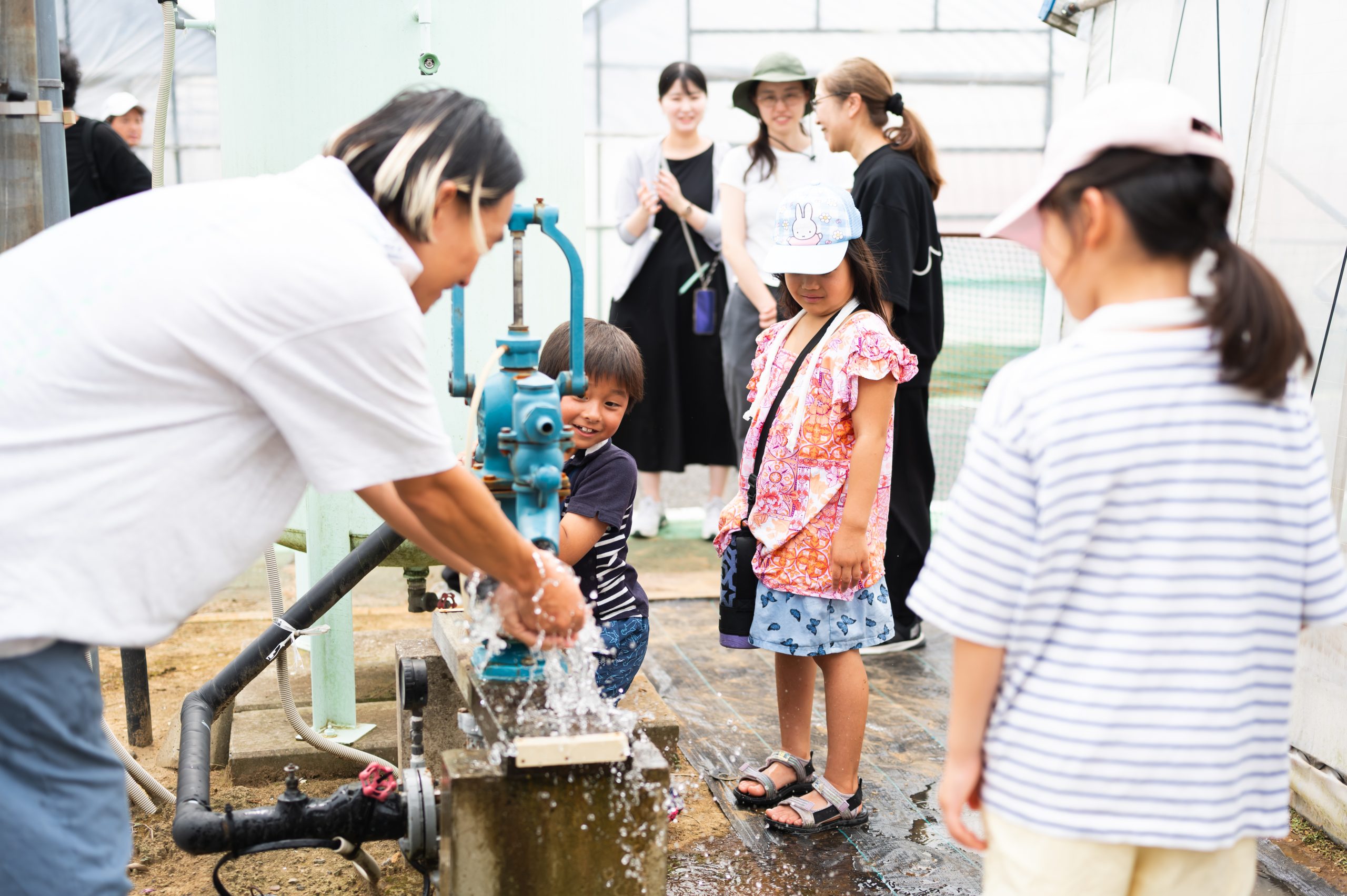
- "It's colder than my water." "It's coming out like crazy!"
- Mr. Kawamura
- "A well means water flows under the ground. It's not just the rivers you see on the map, there may be a lot of rivers under the ground that you don't see, or maybe the whole of Katsushika is actually floating on the water."
Perhaps inspired by Mr. Kawamura's words, the children gazed at the cold, vigorous water gushing out of the well and the way it seeped into the soil. On the way home after leaving the fields, I passed over culverts and looked at the banks of the river. Through the clues of "water," I was able to revisit the scenery of the city where I usually live. He seemed to be grasping at the sensation of seeing something different.
Let's make shadow puppets – Creation
After returning from fieldwork, the children immediately set to work.
- Mr. Kawamura
- "Recalling the feelings of feeling "I'm scared!" and "It's cold!" when touching the well water, let's play with making creatures that are likely to be found in Katsushika."
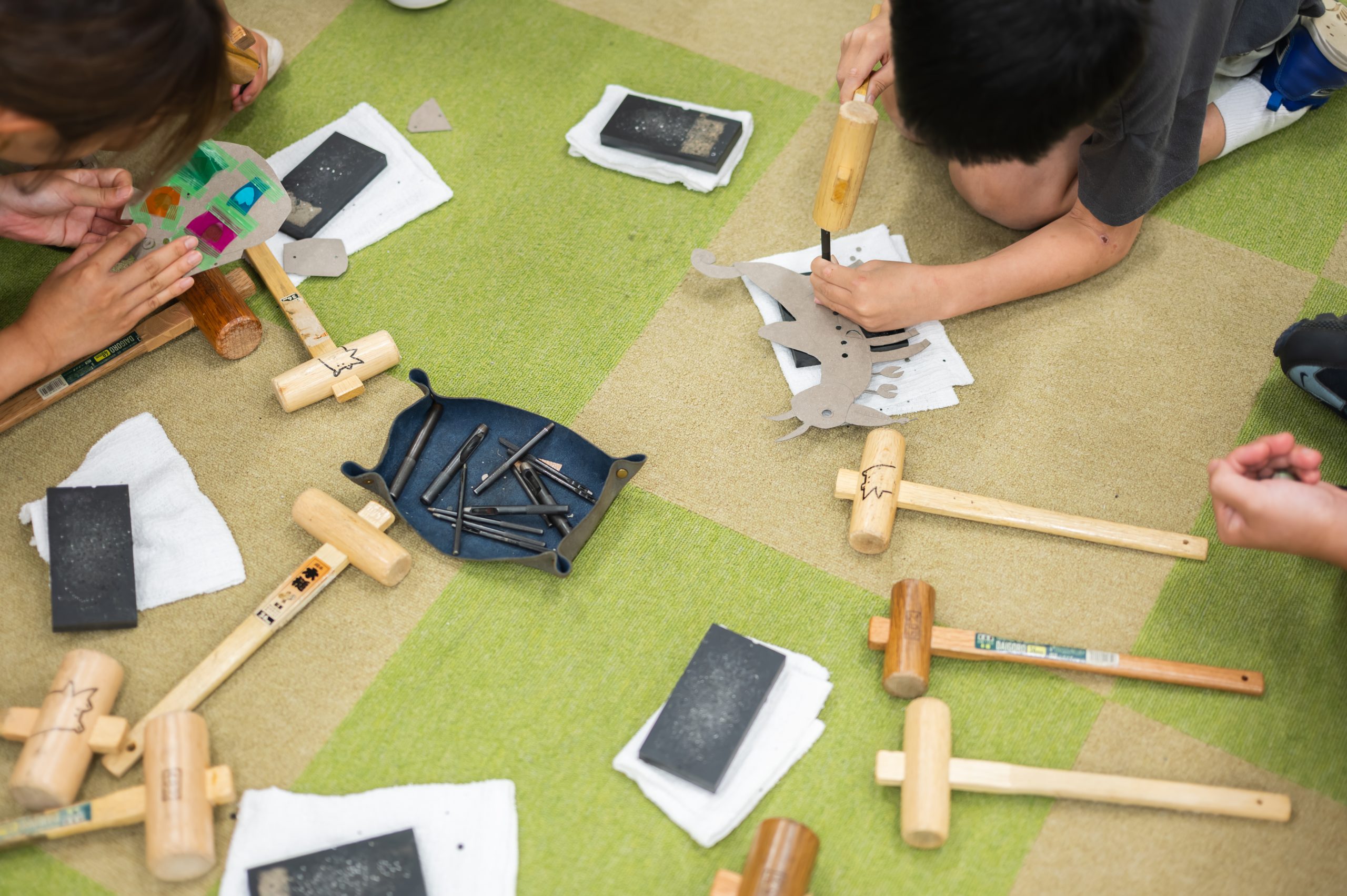
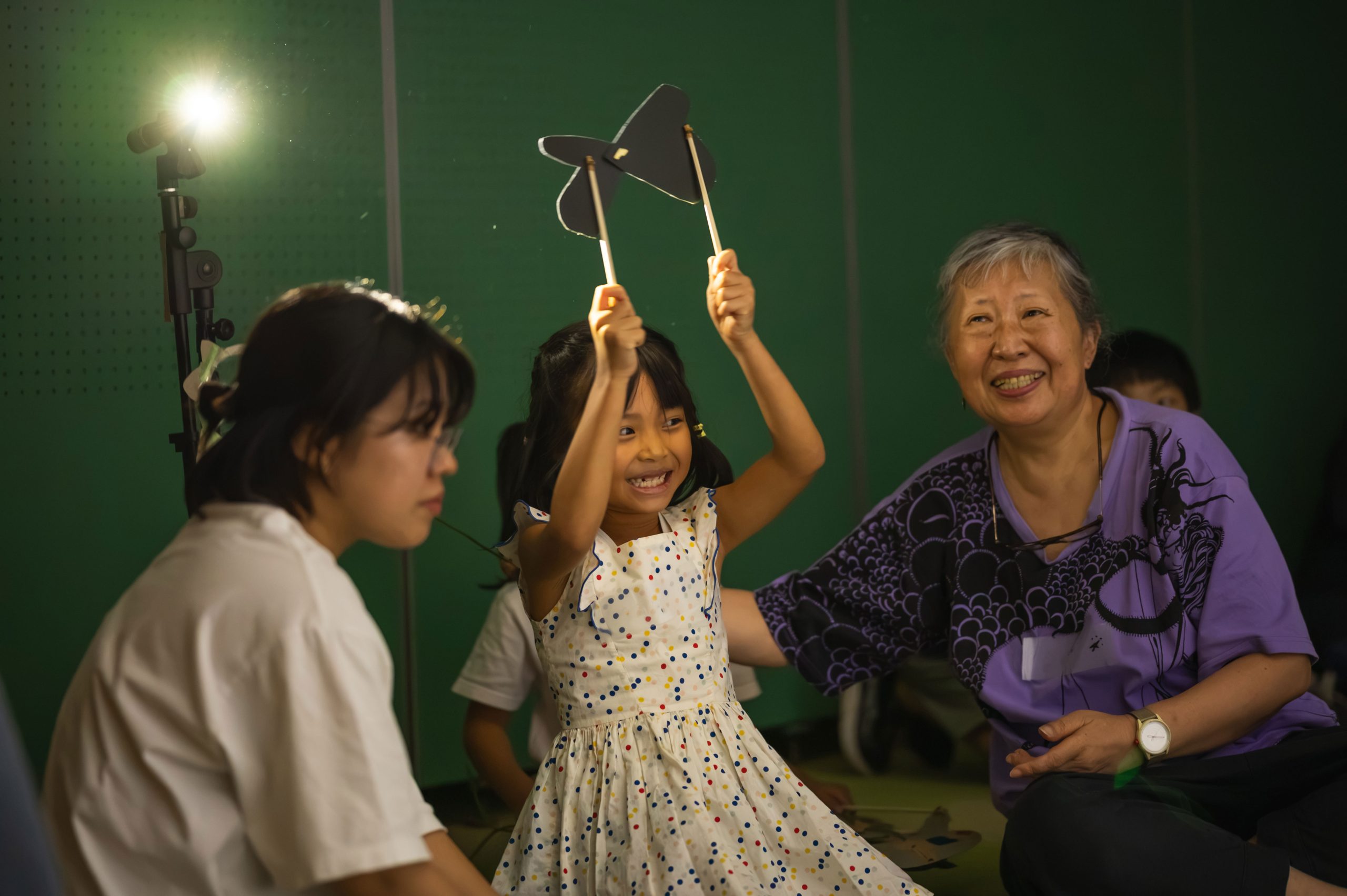
The children make shadow puppets. Kawamura usually deals with colourfully colored shadow puppets made of cow skin using the traditional Indonesian method, but in this workshop, the material is cardboard so that children can easily handle them. By using authentic tools such as making holes with hammers and punches, children can expand their free expression.
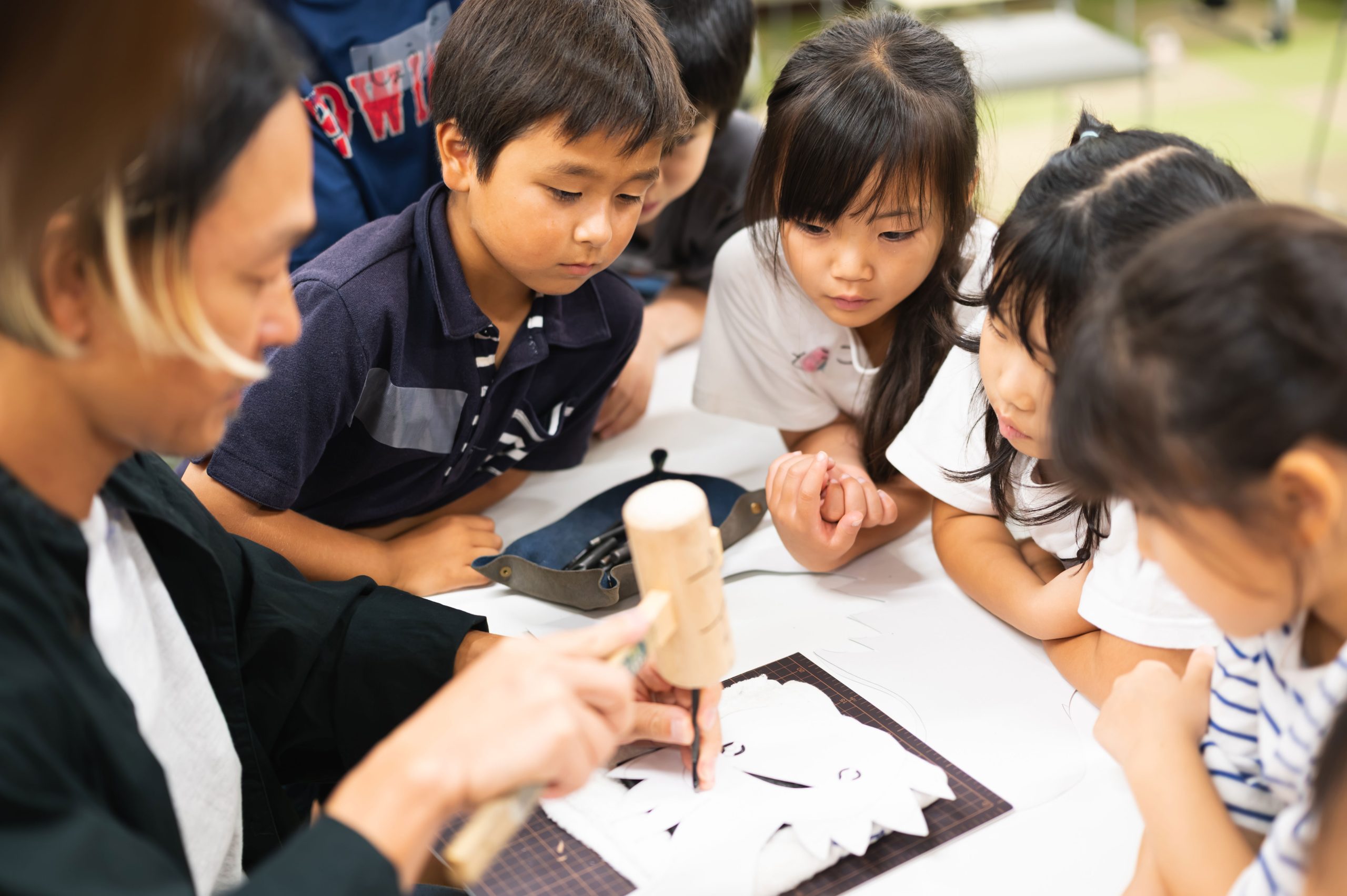
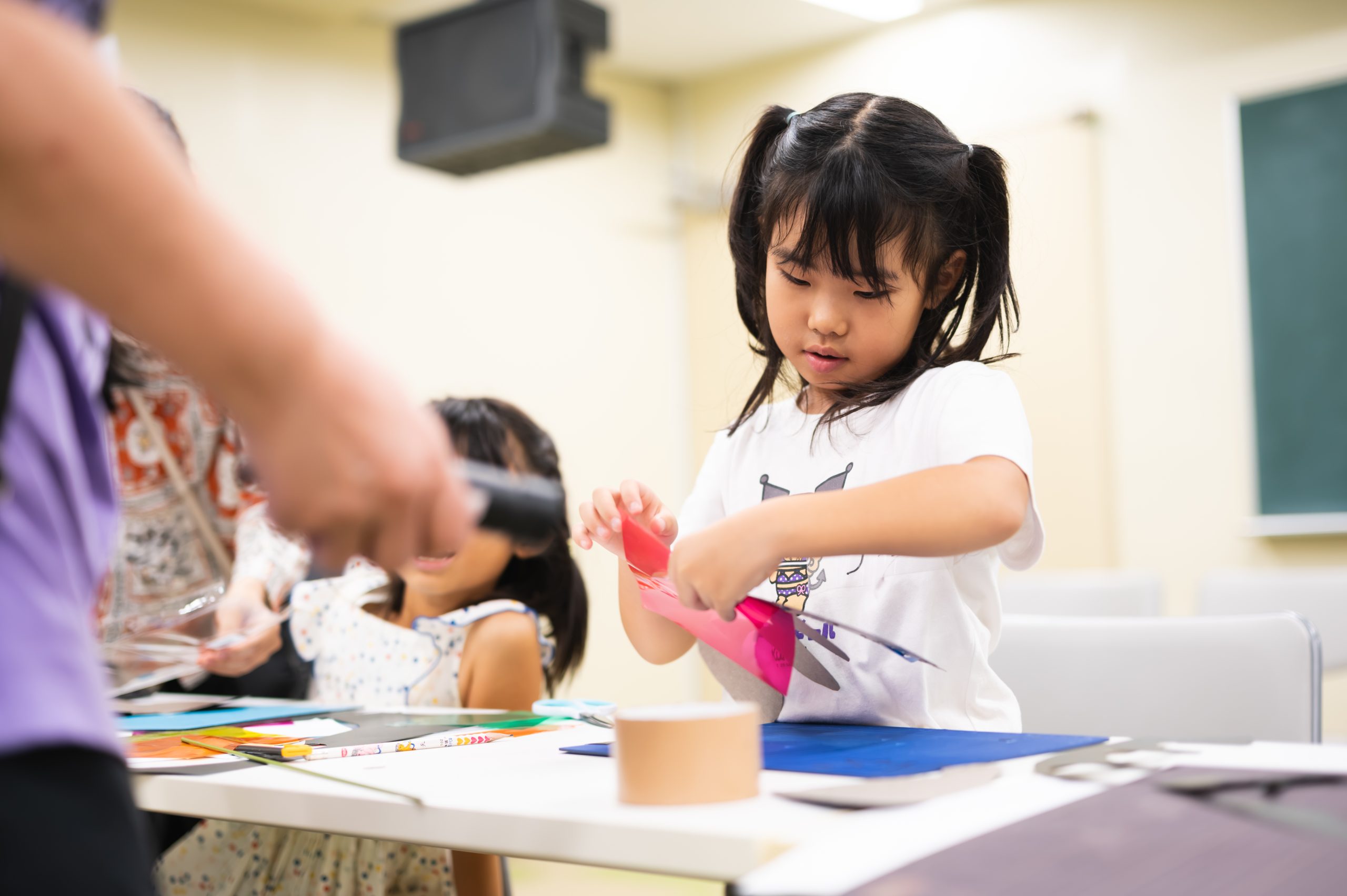
Draw the creature you want to make on a piece of cardboard, cut it out with scissors, make holes in the eyes and patterns, attach a handle, and you're done. When you shine a light from behind the shadow puppet against the wall, the light passes through the hole, and the cardboard part appears as a black shadow on the wall. Color cellophane can be used to combine colored light.
- Children
- "I want to move my arm, how can I do it?"
"It might be fun to see small creatures next to big ones!"
"Now that I've made one, I'll make another! There are so many things I want to make."
In order to realize what they wanted to do and create, they took advice from Mr. Kawamura and the support staff when they could not solve things on their own. During the approximately two hours of production time, the children's hands never stopped creating creatures one after another. They were very interested in tools and materials they used for the first time, and I was impressed by their willingness to pick them up and try them out.
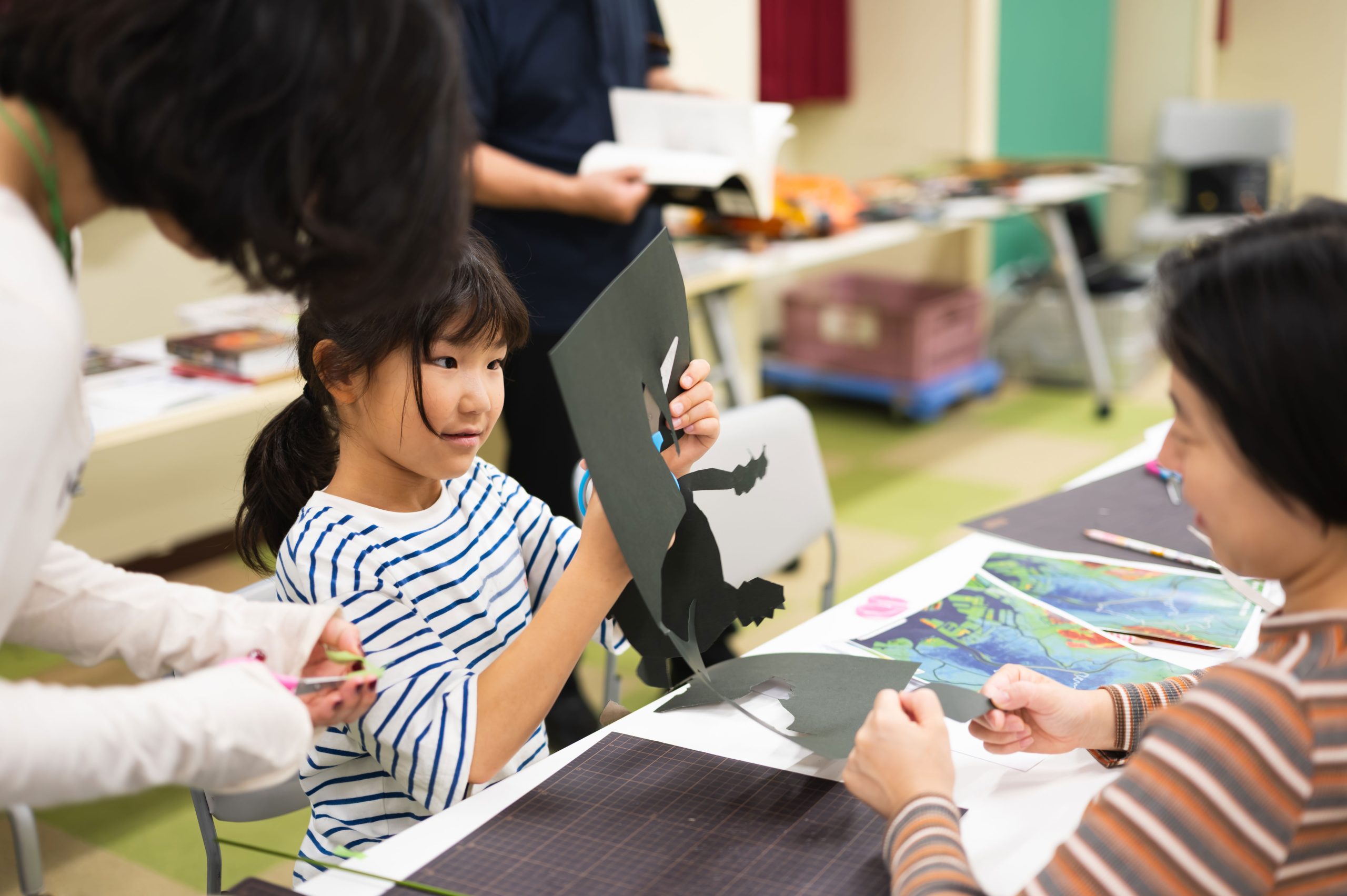
- Mr. Kawamura
- "The reason why children are able to create living things with such vigor is because the experience of 'touching' has deepened and clarified their images. There was a child who said he was scared when he touched the well water, but I'm sure he was scared of nature and intuitively felt he was in danger. I think it means that children could see signs of creatures moving through the water. Touching artifacts doesn't lead to that feeling. By coming into contact with the power of nature, the door of creation opens and children's desire to create is greatly stimulated."
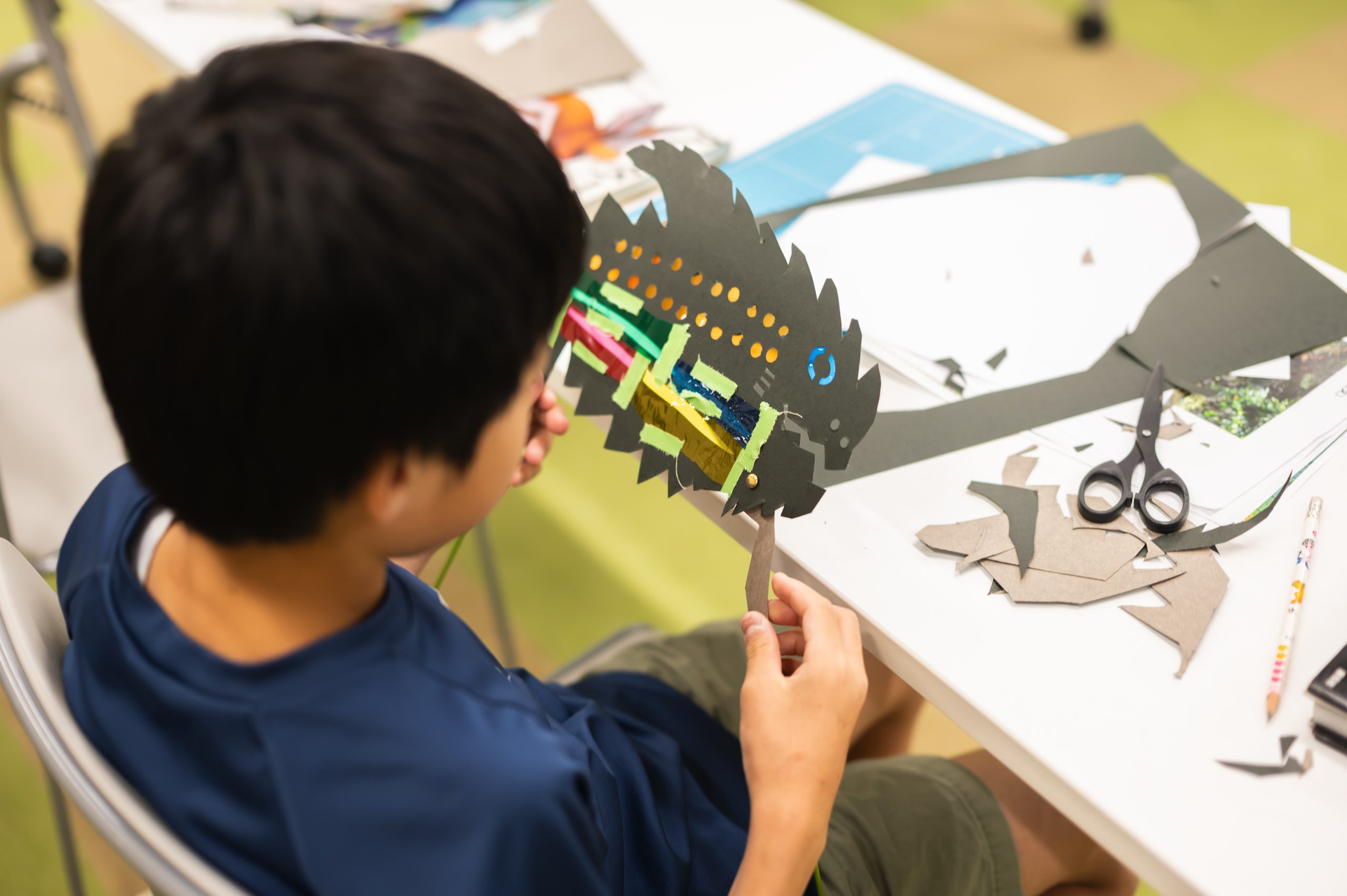
The Driving Force of Creation Brought about by Contact with Nature
Kawamura decided to conduct a workshop in Katsushika Ward on the theme of "water" based on her field research. She has conducted fieldwork and performances in various parts of Japan, and while working on her work based on local memories, she says that she is always looking for "points of contact" where she can jump into nature in her daily life.
- Mr. Kawamura
- "People say that there is no nature, that there is not enough nature, but in fact, I think that nature is wiggling under the concrete in an ongoing way. It's always there, just cleverly hidden by artifacts. This time, the well served as a "point of contact" where we could peer into and touch nature that is active underground."
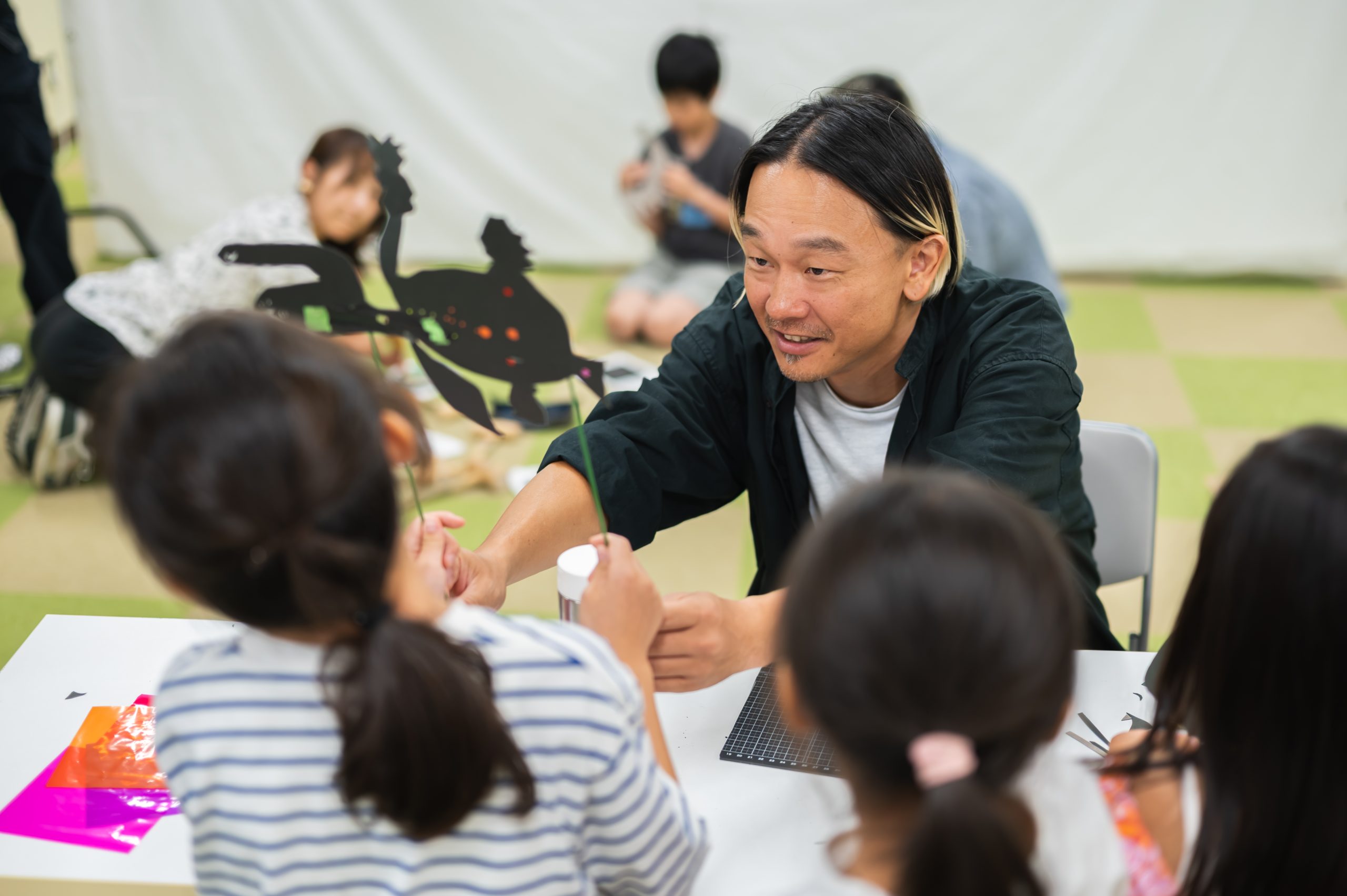
While water is an essential blessing for human life in many ways, it can also be a threat to human life due to flood damage such as tsunamis and floods. By being exposed to the complexity that is both rich and scary, they can develop flexibility and tolerance to accept ambiguity and ambivalence.
At the beginning of the workshop, the children seemed to be looking for the right answer to the questions being asked. also, by the time they went into production after fieldwork, their facial expressions had become more animated. There is no "right answer" to expression, and I felt the possibility of creativity in which people can freely expand their ideas.
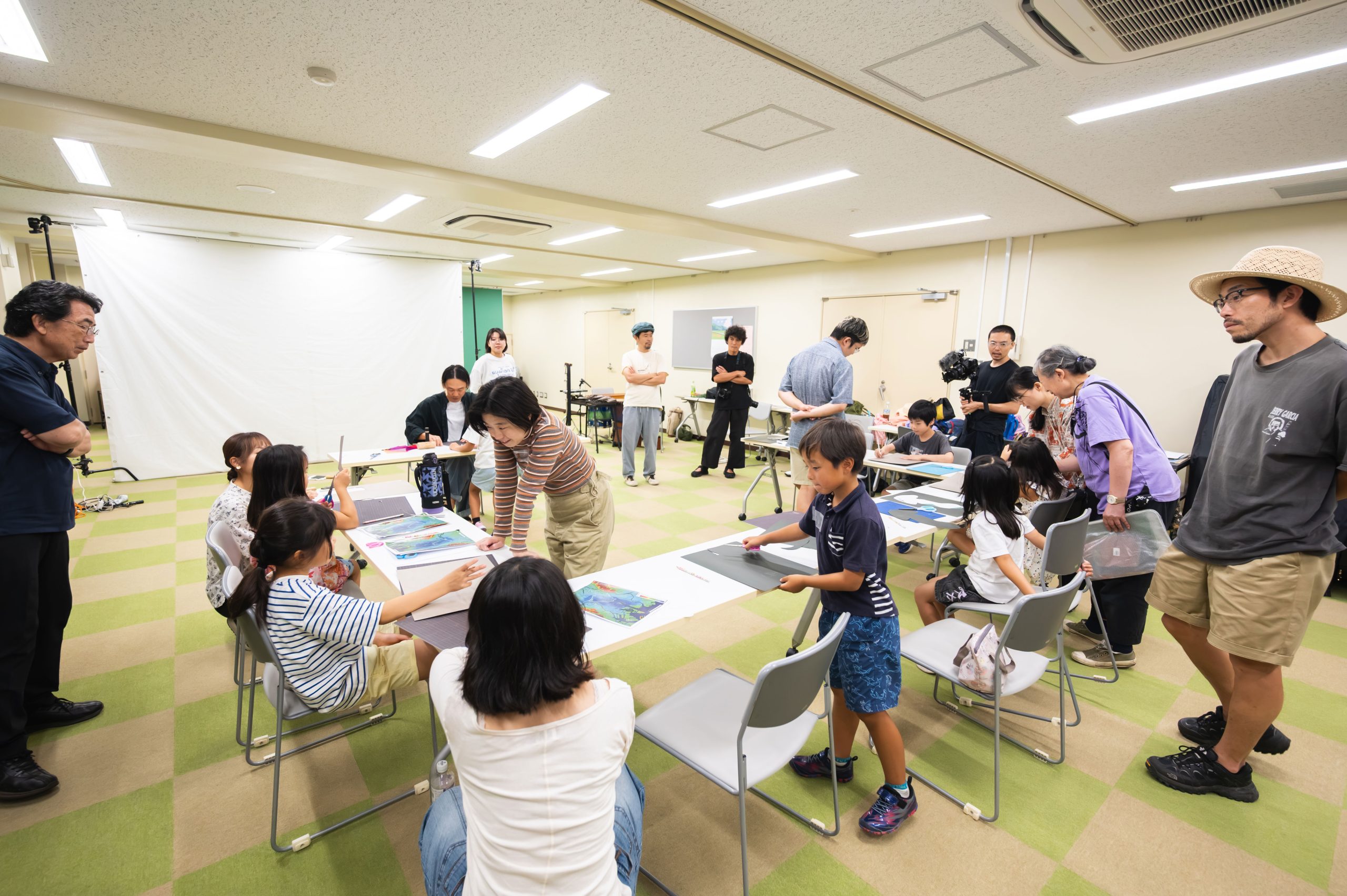
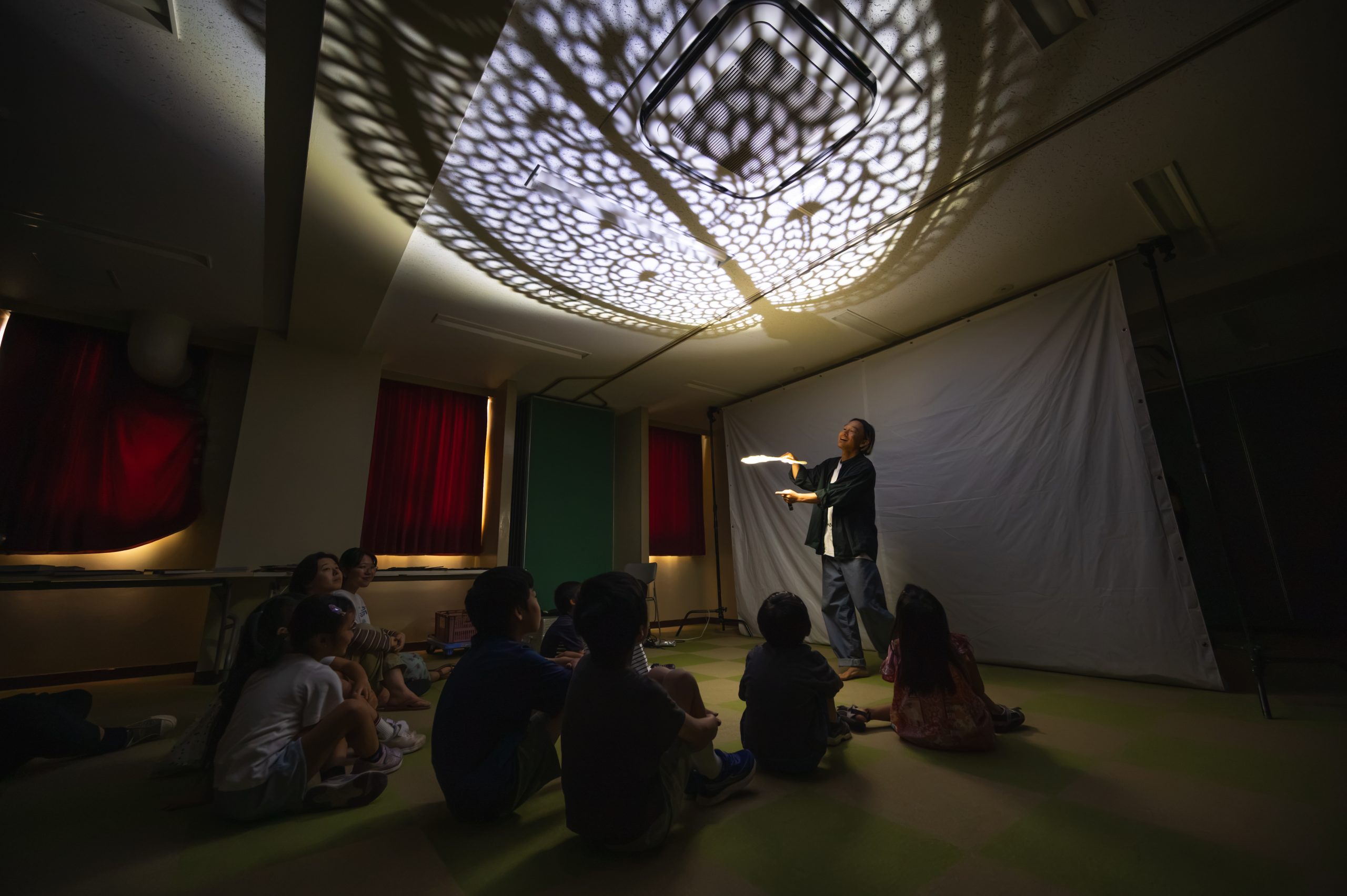
At the end of the workshop, percussionist Takefumi Kobayashi joined in and presented a shadow puppet performance. Feeling the rhythm of the improvised performance, Kawamura's character, "Monkey Nishioka-san," and the unique creatures created by the children chatted, moved, and danced in a lively exchange.
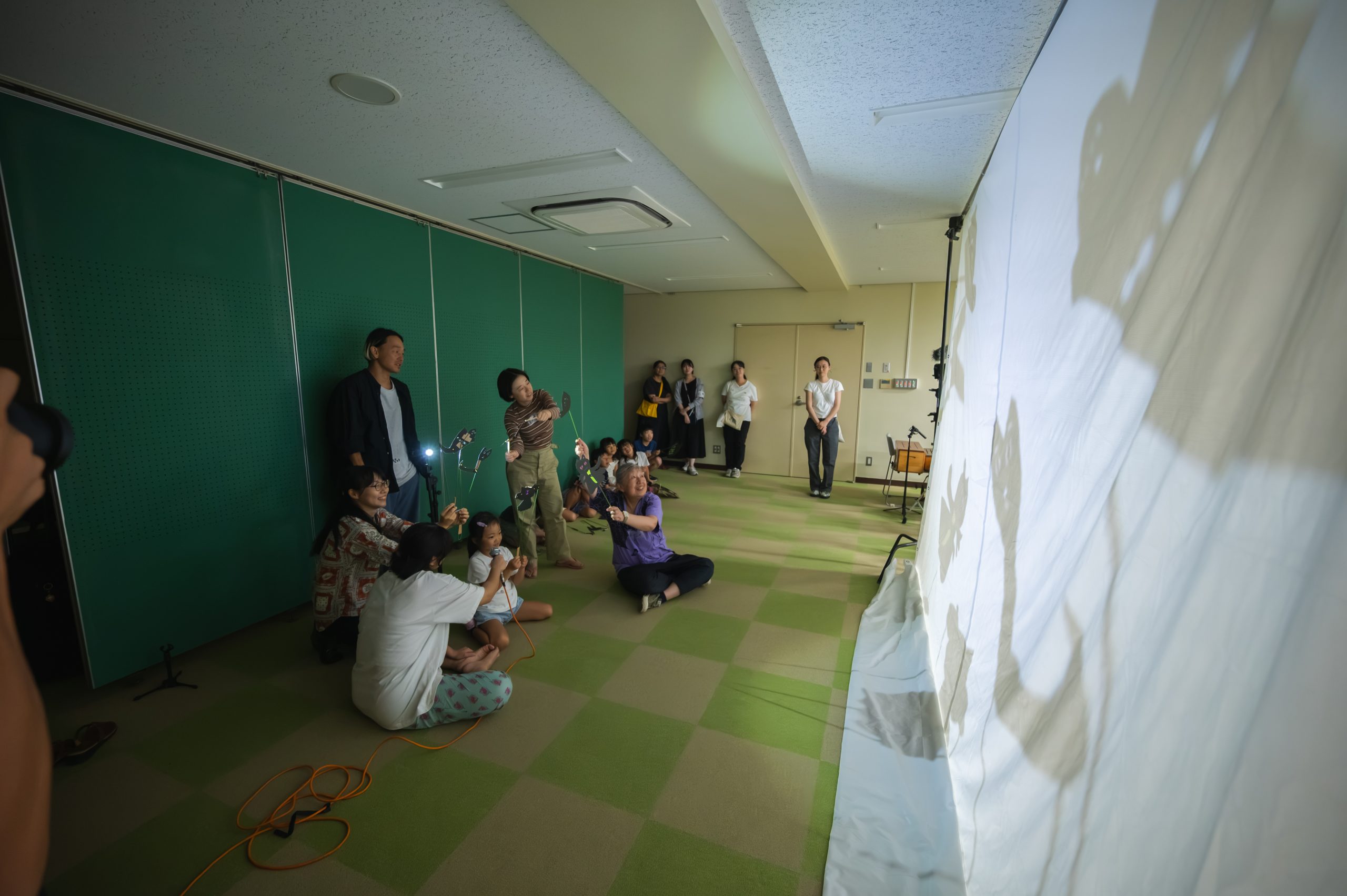
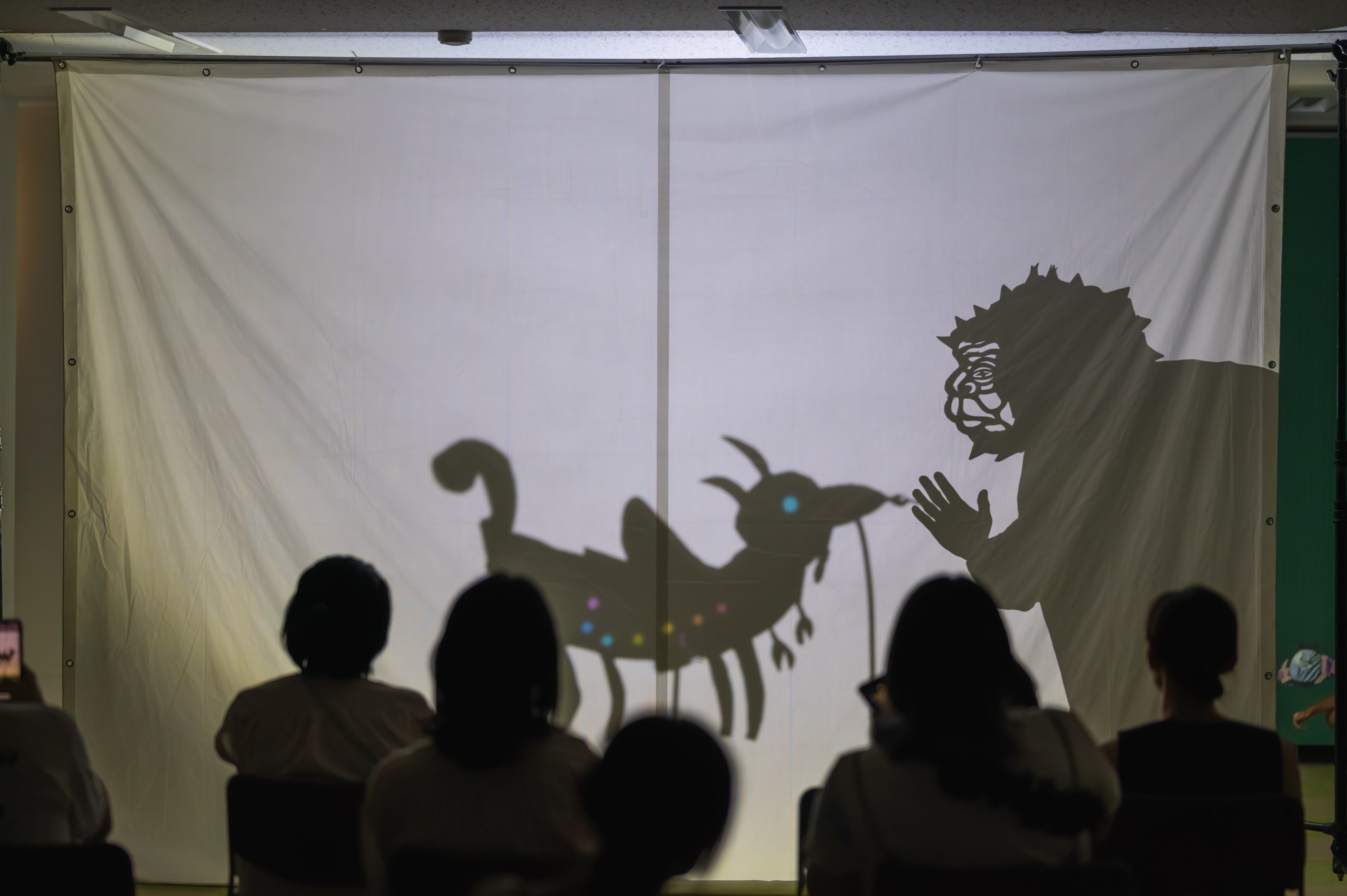
When they spoke into a microphone while holding a shadow puppet, they could express themselves as if the puppets were having a conversation. The children seemed a little nervous at the beginning of the presentation, but they moved the shadow creatures they had created to the whole room, projecting them on the walls and ceiling beyond the screen. The presentation, which was watched by parents, was filled with laughter from the children throughout, and it was the finale.
Possibilities for new collaboration and collaboration among diverse human resources involved in local communities through cultural programs
Tomoki Hayashi, a member of Katsushika Ward's Culture and International Division, was involved in the Tokyo Metropolitan Government, Ward, and Municipality Collaboration Project. He was raised in Katsushika and is a native of the city. Therefore, when planning and holding the workshop, he wanted to provide children living in Katsushika City with an opportunity not only to experience art and culture, but also to express themselves and exercise their creativity.
- Mr. Hayashi
- "While we have regularly provided opportunities for art appreciation in the past, this is our first attempt at an output-oriented program that involves learning about the ward (the town where we live) and then elevating that knowledge into art. Thanks to Ms. Kawamura's involvement from the research stage, we were able to rediscover the unique characteristics of Arts Council Tokyo, which has the know-how from previous collaborative projects and connections with artists."
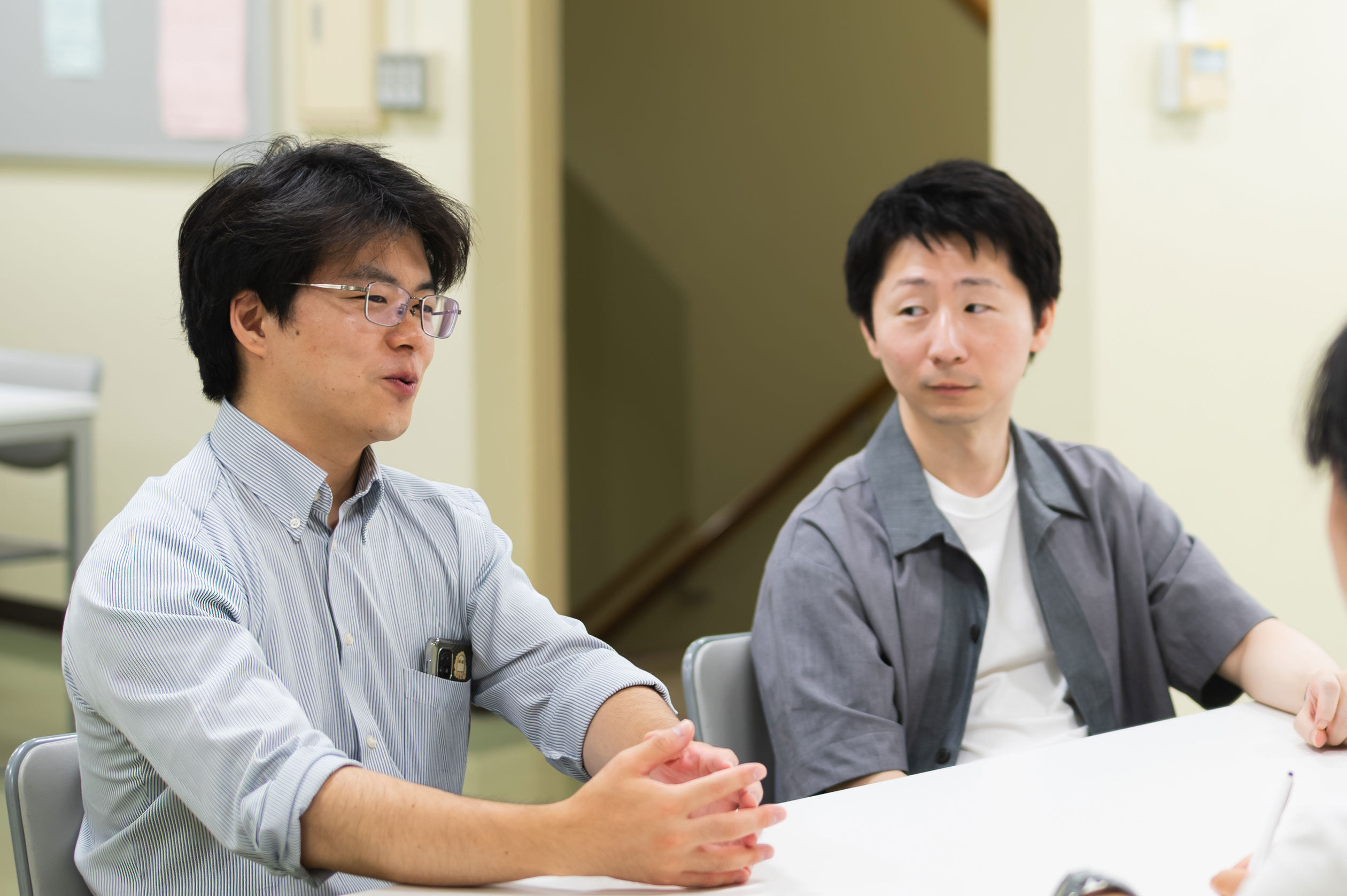
Through the cultural program, the participants were able to connect elements that had traditionally been dealt with in their respective fields, such as local learning in the field of education, farmland wells in the field of agriculture, and art in the field of art and culture. By involving various stakeholders, the program contributed to cultivating local human resources and forming new collaborative networks.
- Mr. Okawa.
- "In order to continue to make the most of the effects created by the new experiment, it is important to disseminate the awareness and relationships gained through this experience widely. for example, by conducting a workshop. By releasing the recorded footage and creating an opportunity for more people to realize that "I can do this!" it can lead to new challenges. "
- Mr. Hayashi
- "It is important to have an attitude to look back properly after it is over and take it to the next stage. It was exciting to realize that projects that involve cross-border collaboration expand what can be done with the cooperation of people with diverse knowledge. It is not just a place for learning, but we hope to gradually increase the number of opportunities for people to think and create something by themselves through the experience of learning about the region."
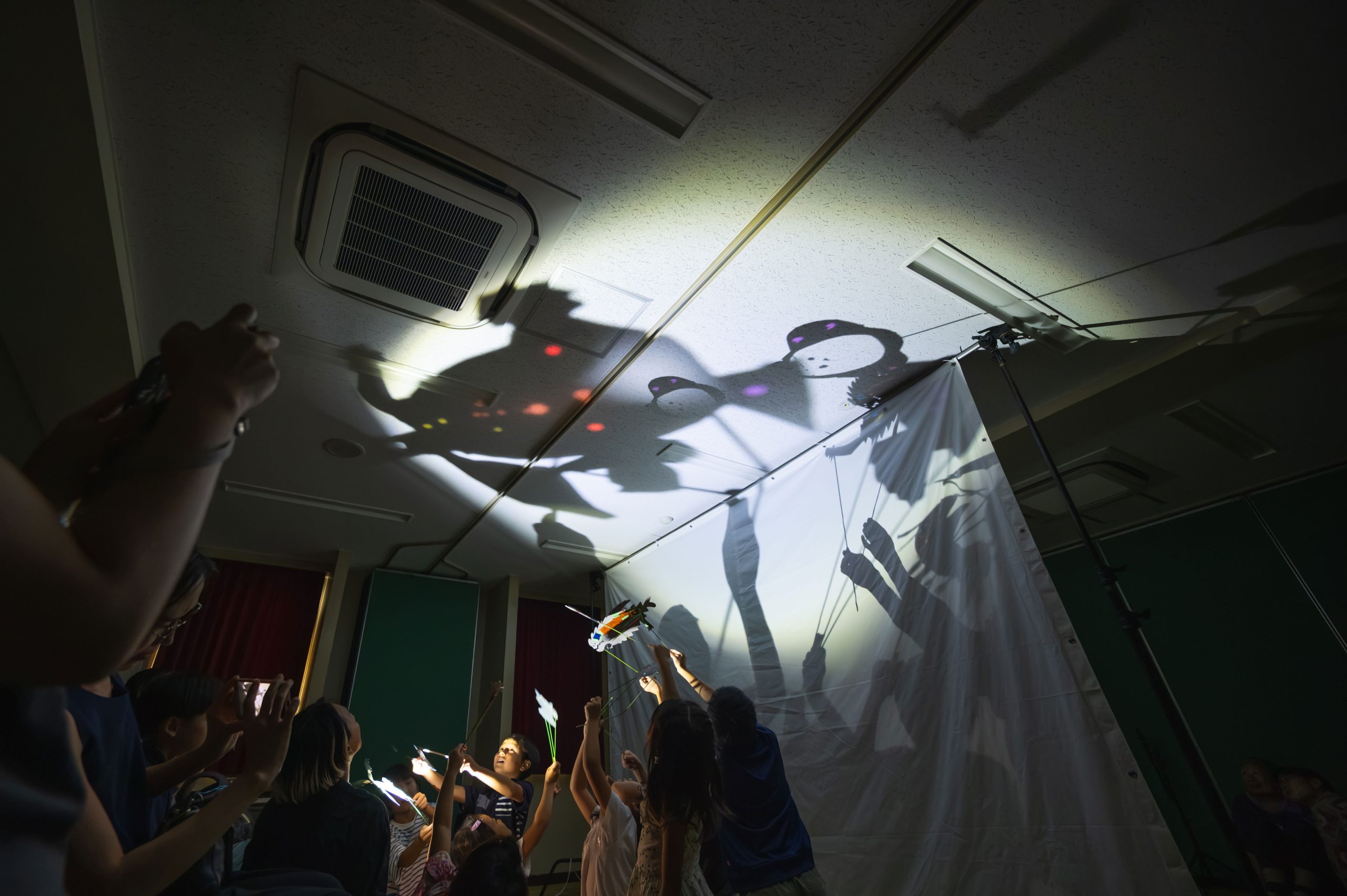
These are shadowy creatures that seem to exist somewhere but are nowhere to be found, born from touching underground water that is normally invisible to the eye and expanding imaginations. Just like the shadows that burst out of the screen and filled the walls and ceilings, the children's imaginations, which began with the experience of learning about the region, also expanded greatly beyond the set boundaries.
It's not just children and art and culture that have been connected through this initiative. Local history and nature, agriculture, and education Through a cultural program, people involved in various fields met and formed new relationships.
By looking at the local area from a slightly different perspective, you will be able to see nature, history, and human activities that you had not seen before. And new expressions and relationships are born from connecting them. I believe that the accumulation of these experiences will nurture the unique cultural experiences of the region and lead to further collaboration and creation. Just like the shadowy creatures created by the children, something new may emerge from this encounter in the community.
Photo by Yuki Nakayama
Reporting and text by Mami Maeda
東京都・葛飾区芸術文化連携事業
川村亘平斎 影絵ワークショップ「かわにうつる このかげはなに?」
葛飾区のあちこちに隠れている「水」を探して、オリジナルの影絵人形をつくるワークショップ。一日の最後には、影絵師の川村亘平斎さんと音楽家と一緒に影絵の上演を実施。
東京都・区市町村連携事業
東京都内の区市町村と連携し、地域のニーズや課題に即した文化事業を住民に身近な場所で展開することで、芸術文化に気軽に触れられる機会の創出を目指す事業。