
Civic Creative Base Tokyo (hereinafter referred to as CCBT) CCBT was established in Shibuya in 2022 as a base of activities to demonstrate people's creativity to society through art and digital technology. To date, various players such as artists, designers, engineers, and researchers have crossed paths to create a place where co-creation can occur, and we have been experimenting with the creation of mechanisms to involve citizens in these activities. We have used the entire city of Tokyo as a testing ground to expand creative possibilities.
In December 2025, CCBT moved to Harajuku and reopened. We will introduce the characteristics of the new base, the future of Tokyo as envisioned by CCBT from the new base, and the potential of Civic Creativity to open up the diverse creativity of people living in the city, along with the opening talk held on Saturday, December 13.
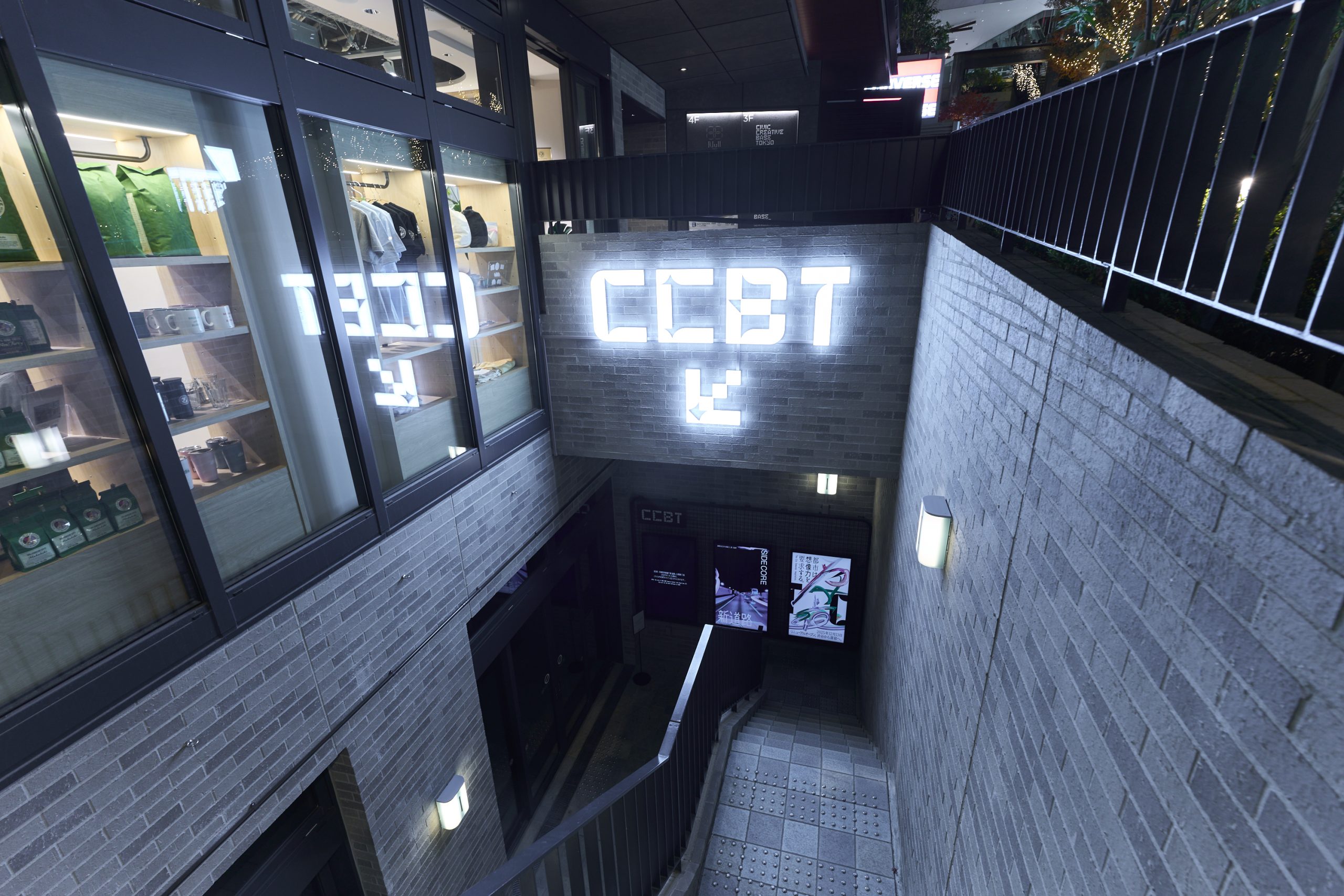
From Shibuya to Harajuku: CCBT as a "Base"
CCBT is neither a gallery nor a museum, but rather a "creative hub" that exposes artists' creative processes and creates contact with citizens. It is expected that this lab-like approach, which involves citizens and causes change in Tokyo, the future experimental district, will accelerate and expand further under the key message of "Cities demand imagination." announced at the reopening.
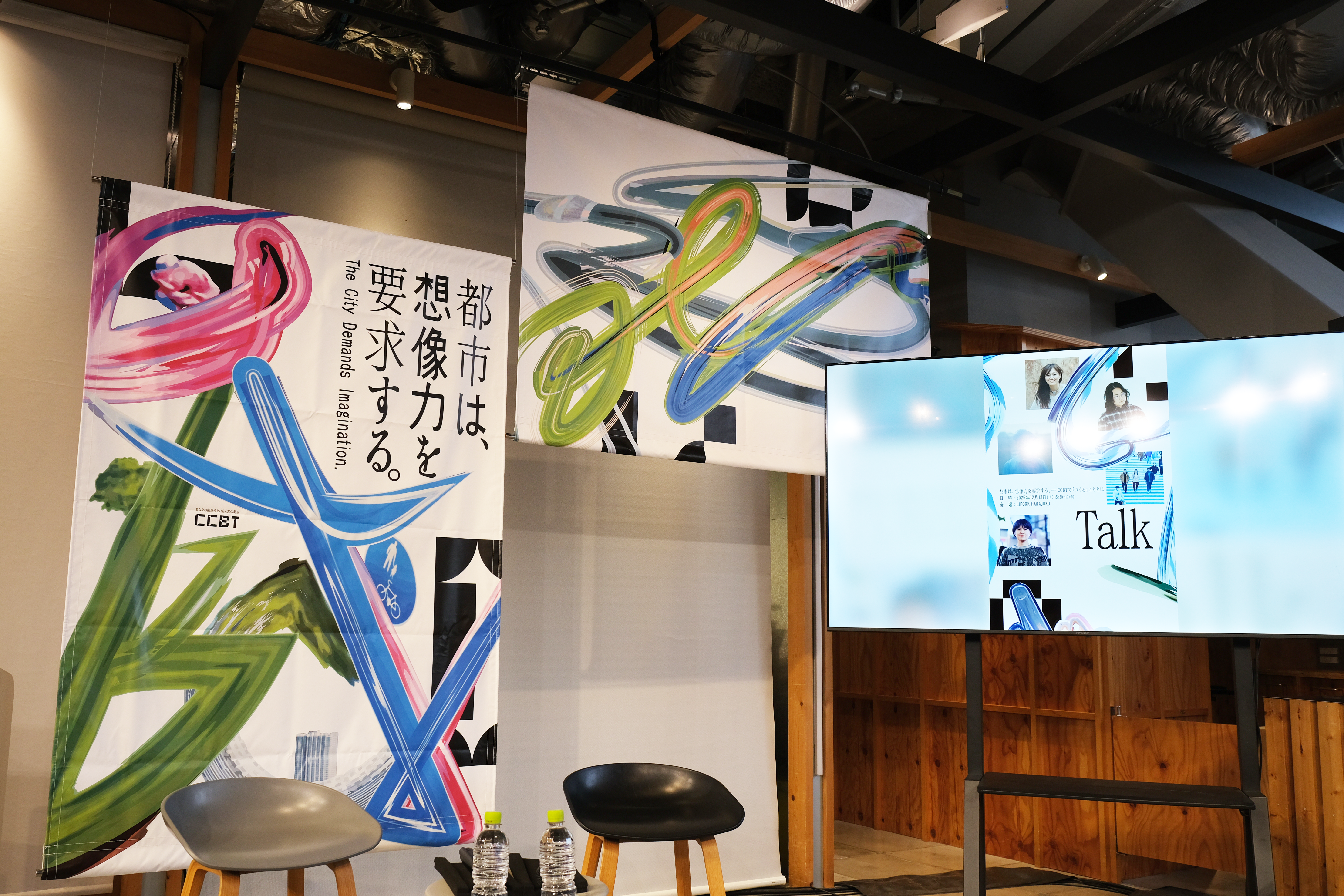
On the occasion of the relocation and renewal to Harajuku, the five programs “EXHIBITON ”,“ SOUND,” “TALK ”,“ WORKSHOP” and “ART INCUBATION PROGRAM” were planned to symbolize the new direction of CCBT.
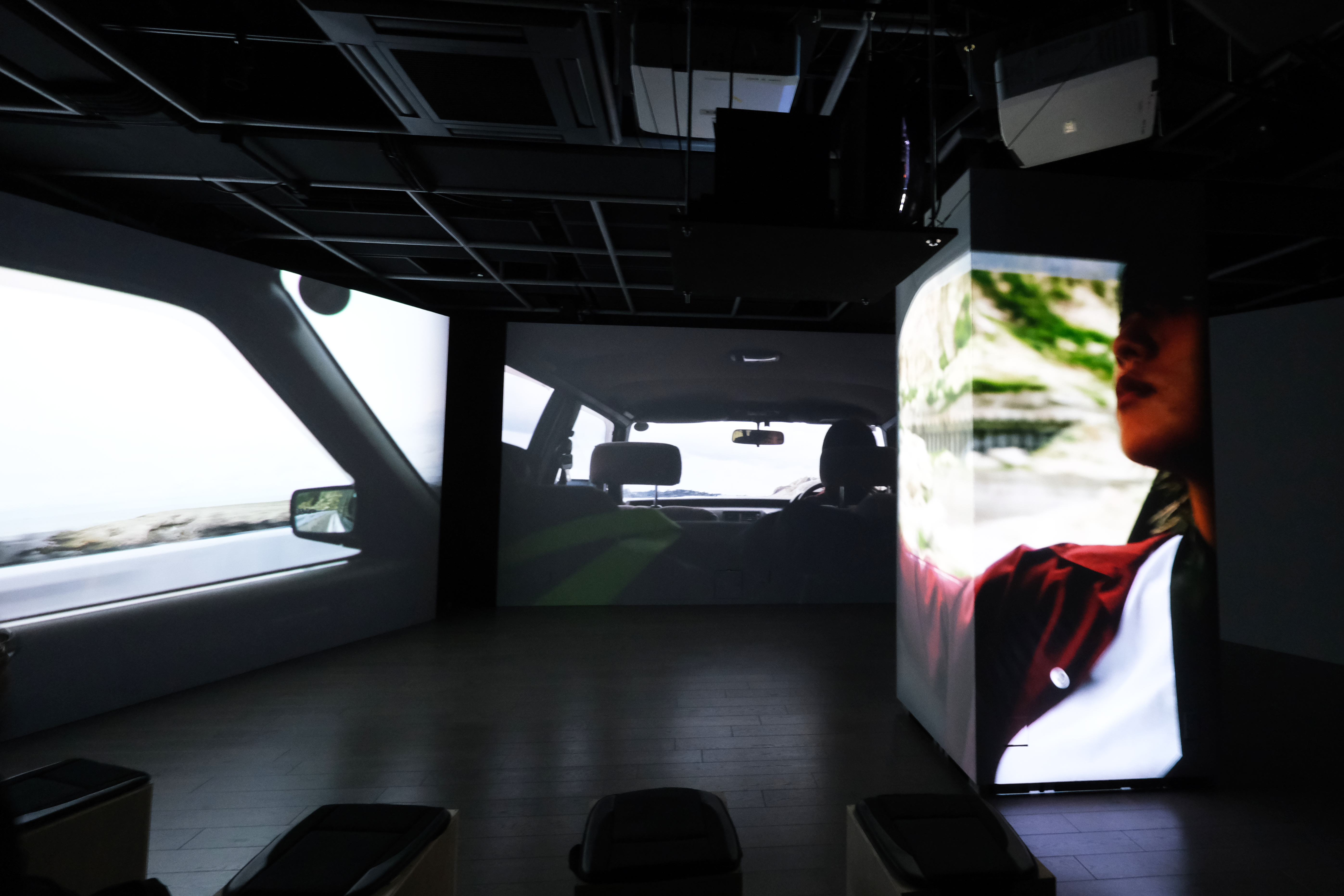
At "EXHIBITION," the artist team SIDE CORE, who were CCBT Artist Fellows in 2022, held the special exhibition "New Road" for about 1 month (from December 13, 2025 to January 25, 2026) as the 1st special exhibition using CCBT B1 STUDIO and 3F BASE.
"SOUND" has launched "Sound Atlas," a project to explore the theme of "sound" by utilizing the knowledge of sound experts who have been involved in CCBT activities. With the aim of creating a project that can be explored over a long period of time, we plan to open up spaces and spaces to explore the possibilities of "sound" from a variety of perspectives. On the day of the relocation and renewal, a collaborative event titled Sound Atlas#1 “Sound from the Polar Region ” was held at Spiral Hall in Omotesando, encompassing live performances, DJs, installations, and talks.
As an opening talk to commemorate the renewal of "TALK," four talk events were held over two days on Saturday, December 13, 2025 and 14th (Sun). Panelists from diverse backgrounds including artists, researchers, government and designers gathered to explore the foothold for "co-creation". The opening talk held on Saturday, December 13 will be introduced in detail later in this article.
The "WORKSHOP" program was designed for children in the fourth grade and above. Two events were held in which participants were able to experience new discoveries and awareness through the presence of artists and the introduction of technology in Harajuku. The first is the "Inspirational ☆ Dojo Sound Design Introduction: Let's find unfamiliar sounds!" from CCBT's original workshop series, "Hirakiraku Dojo," which started in July 2023 with the aim of providing opportunities to discover the methods and joys of manufacturing through encounters with art and technology. As an introduction to the aforementioned SOUND, a workshop was held on Saturday, December 13 and 14th (Sun.) to experience the fun of the world of "sound" while walking around Harajuku. On Saturday, December 20 and 21st (Sun), "Urban ink - Town becomes ink" was held. The NEW Creators Club, which provides art direction for public relations, developed Urban Ink, a tool for drawing urban scenes in ink, and the participants explored Harajuku with the NEW Creators Club, collecting ink, and designing original posters.
The ART INCUBATION PROGRAM is one of the largest artist fellows in Japan and has collaborated with 15 artists since the launch of CCBT. In fiscal 2025, 5 artist fellows who were selected from about 120 applications conducted research and production activities based on their own interests and expertise under the theme of "future commons." Starting in January 2026, venues for presenting the results of each project were planned in various locations in Tokyo.
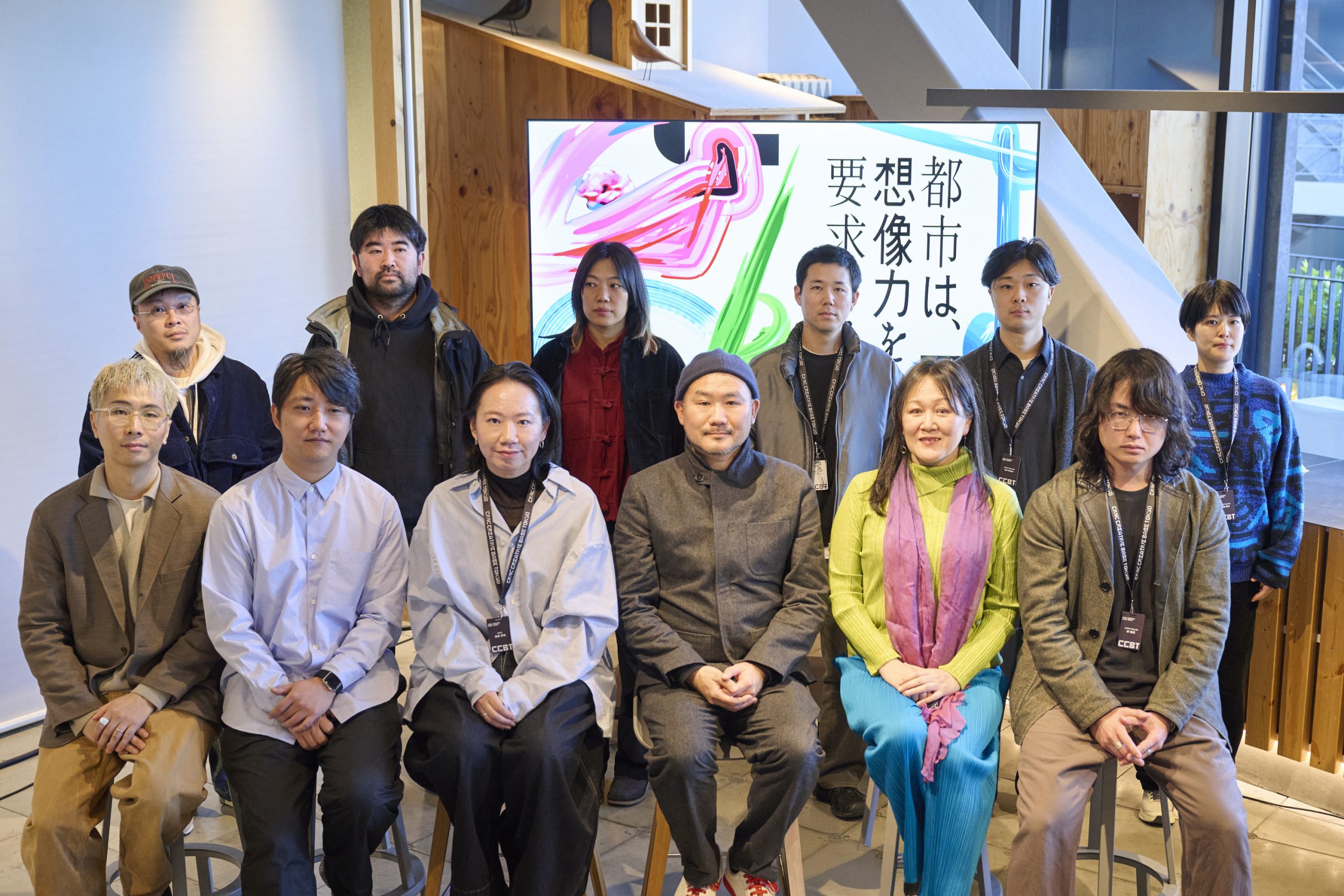
Special exhibition "New Road" by SIDE CORE
The new CCBT has two floors, B1 and 3F. B1 has a multipurpose space called STUDIO and a TECH LAB where you can work, and 3F has BASE which can be used as a creative base and exhibition space.
The SIDE CORE special exhibition, "New Road," which was held as the first special exhibition to mark the renewal, has a novel idea of starting with the outdoor exhibition and bringing the flow of the exhibition indoors through the back door of the building. It is a device that allows visitors to experience the CCBT around.
SIDE CORE Takasu "We often move around, and every time we go to a different place, we feel that cities are not established by themselves, but are supported by the resources, people, and goods of the surrounding areas to maintain their functions as cities. "Living Road" is a new video installation that combines my desire to express the relationship between cities and regions with my personal activities of finding interesting things in my daily life while moving around. By introducing a certain scenery in a different context somewhere other than here, I hope that you will discover the fun of connecting "here and now" to "somewhere in the future"."
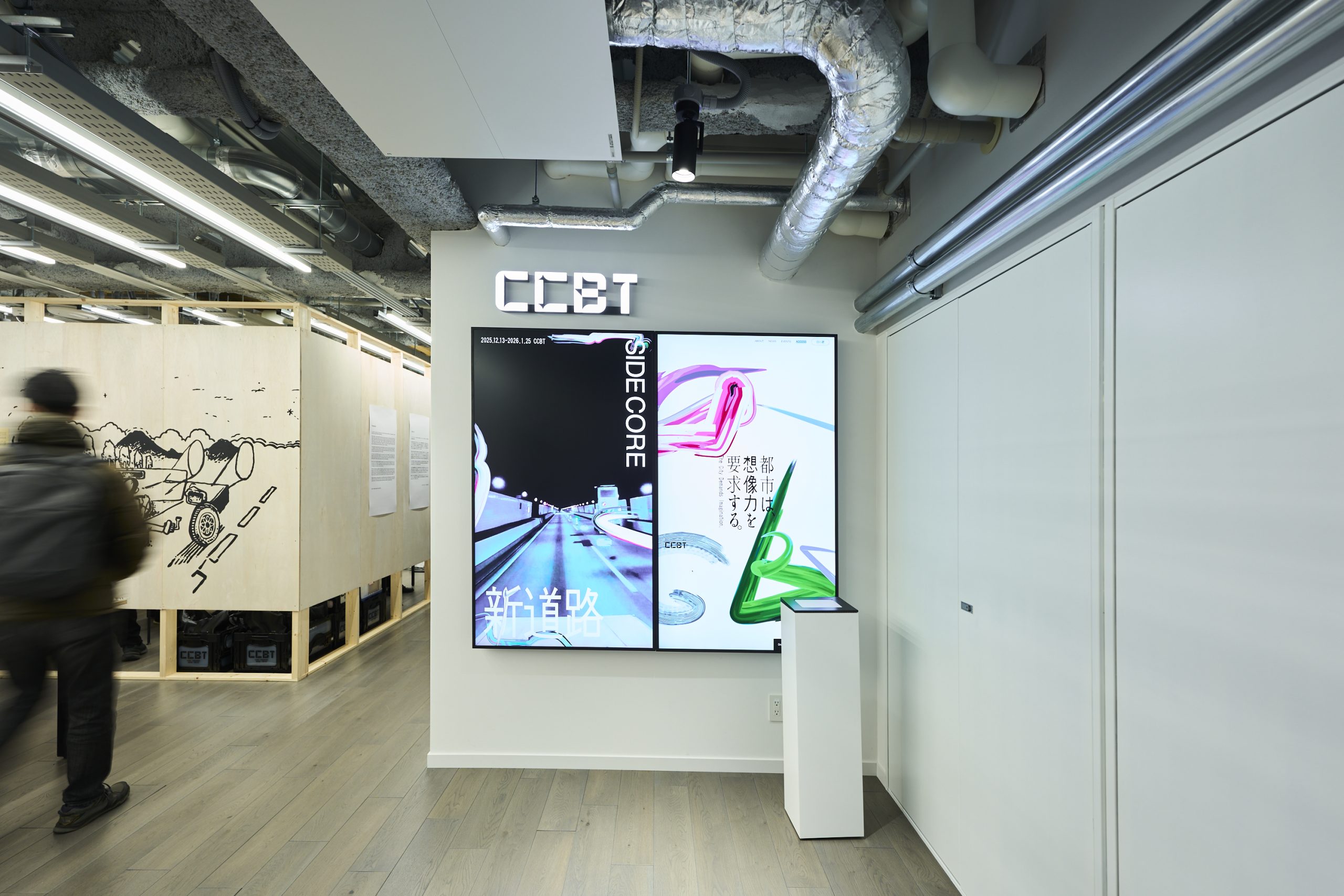
SIDE CORE is a group of four artists, Sakie Takasu, Toru Matsushita, Taishi Nishihiro and Kazuyoshi Harimoto, who develop projects in public spaces from the perspective of street culture. With the aim of shifting thinking, intervening in gaps, and expanding expression and action, they present works both indoors and outdoors under the theme of "expansion of expression in urban space." The theme of their new work and special exhibition is "movement." Considering roads as the physical infrastructure that connects Tokyo and other areas, and as the foundation on which diverse cultures travel, SIDE CORE's daily activities and practices were expressed through outdoor exhibitions, production process exhibitions, and video installations.
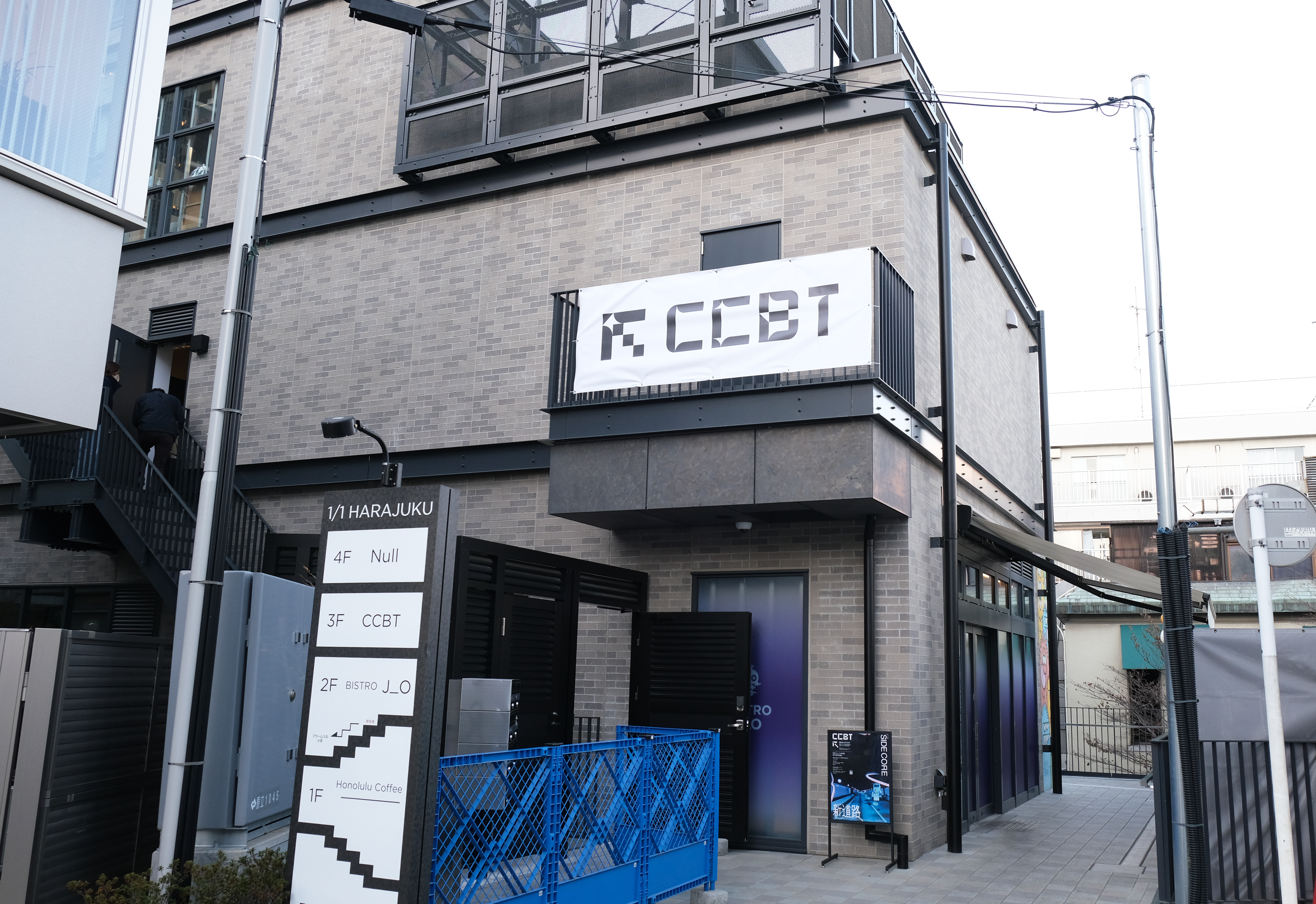
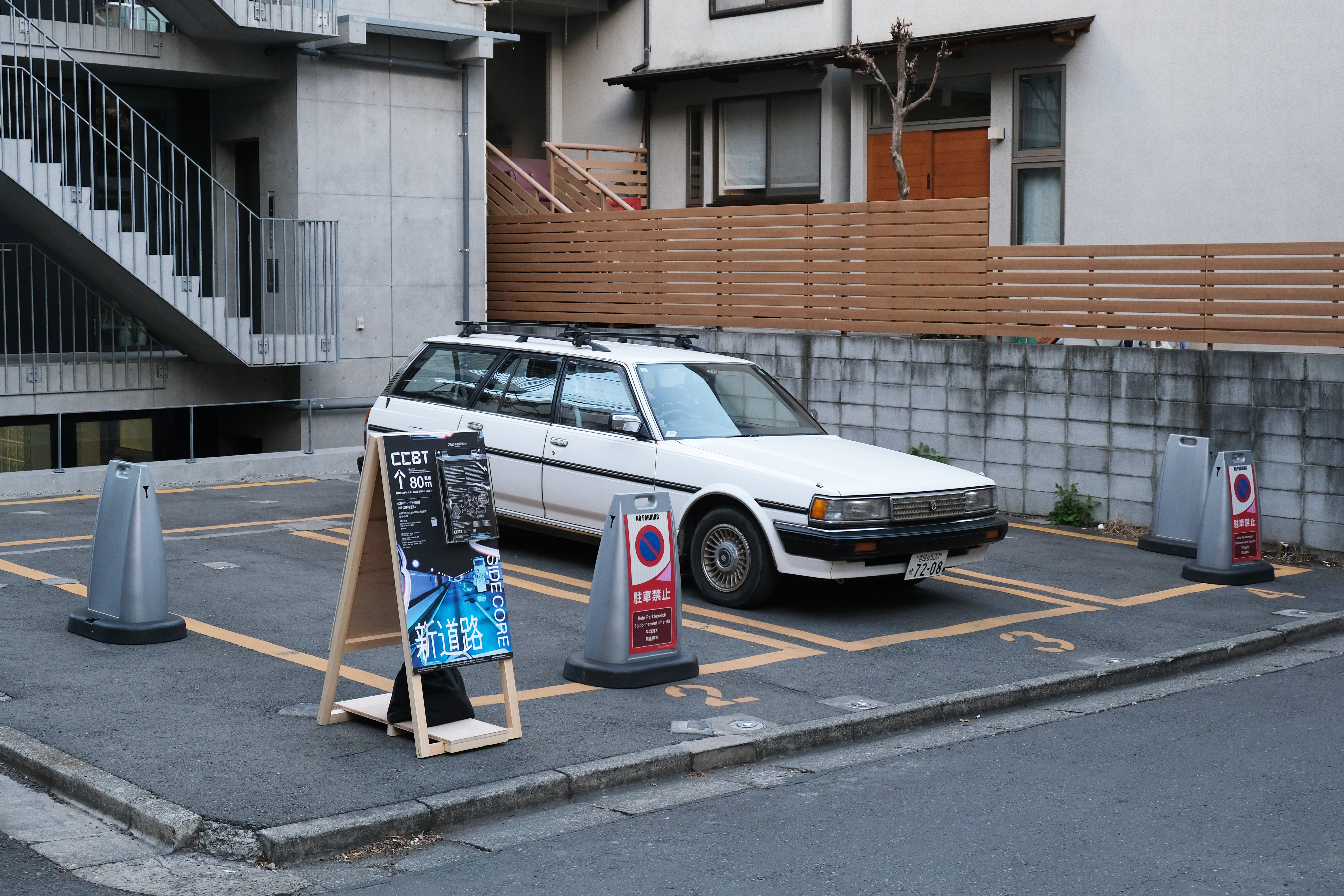
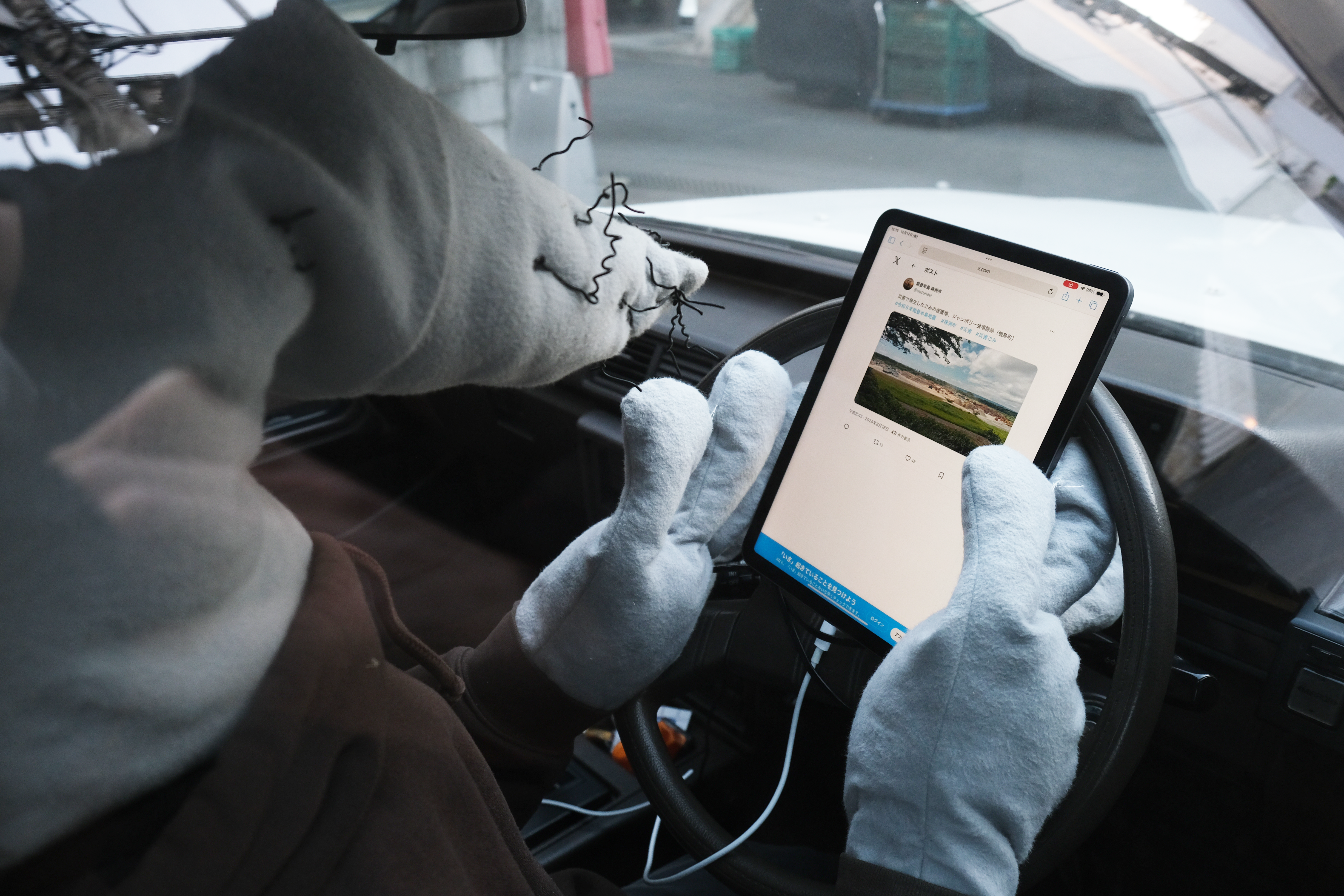
For the outdoor exhibition, an unused parking lot was used with the cooperation of NTT Urban Development Corporation, which owns the land. A car that appears in a video installation is exhibited. There's a human-sized mouse sitting in the driver's seat operating a tablet. It is said that mice project ourselves as social beings living in the same society.
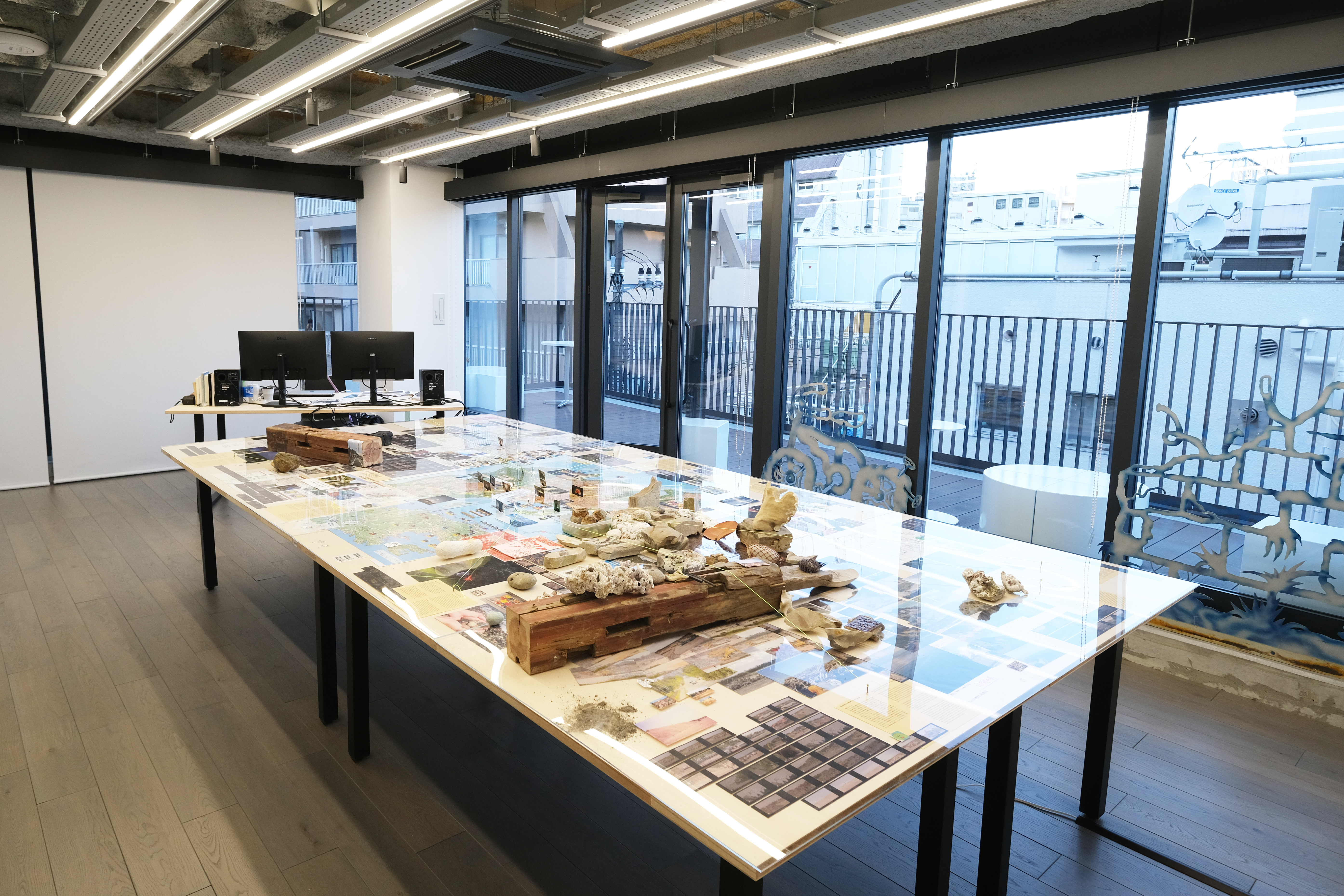
Climb the outdoor stairs and enter the building through the back door on the third floor, and you'll find a recreation of the mouse studio office. Specifically, photos, memos, and shooting records that allow you to relive the production process of SIDE CORE's new installation “New Road ” are displayed on a large map, allowing you to learn about the thoughts and aims behind the creation and the intention of the production that cannot be understood just by looking at the work, stimulating curiosity that makes you want to see the work over and over again.
At B1, the new installation “living road ” is being screened and visitors can encounter an immersive visual experience. While based on a road movie-like depiction of the journey from Tokyo to Noto, at times public urban planning ideas are reflected in civil engineering infrastructure such as highways and tunnels, while at other times individual memories and bodies are evoked in depictions of strolling along the beach or looking into back alleys. The composition is impressive as it moves between grandeur and familiarity, public and private, reality and fantasy.
Opening Talk (1)
Civic Creative Base Tokyo [CCBT] Phase 2: Creating a Social Experiment in Tokyo
Tokyo is a city that embraces a rich diversity that is unparalleled in the world. Each city has its own unique flavor and culture, and each impression differs greatly depending on the angle from which it is viewed. What kind of activities do you expect to expand and develop by establishing CCBT in Harajuku?
The opening talk (1) was moderated by Hideaki Ogawa, Creative Director of CCBT, and featured three panelists: Eri Tsugawa (Architect, representative of ALTEMY) from the perspective of urban planning and society; Kayoko Nohara Institute of Science Tokyo from the perspective of science × art; and Manabu Miyasaka, Vice Governor of Tokyo (Supervisor of CCBT) from the perspective of administration, business, and art.
Ogawa "Since 2022, CCBT's activities in Shibuya have been a process of repeated trial and error: "What is Civic Creativity?" and "What can we do?". If Shibuya is positioned as Phase 1, CCBT, which was relocated and renovated in Harajuku, is Phase 2. We are now in the stage of verifying the social impact of the prototypes created in Phase 1, in terms of how they can be established and spread, and how they can be accessed by as many people as possible. What do you expect from Phase 2 of the CCBT?"
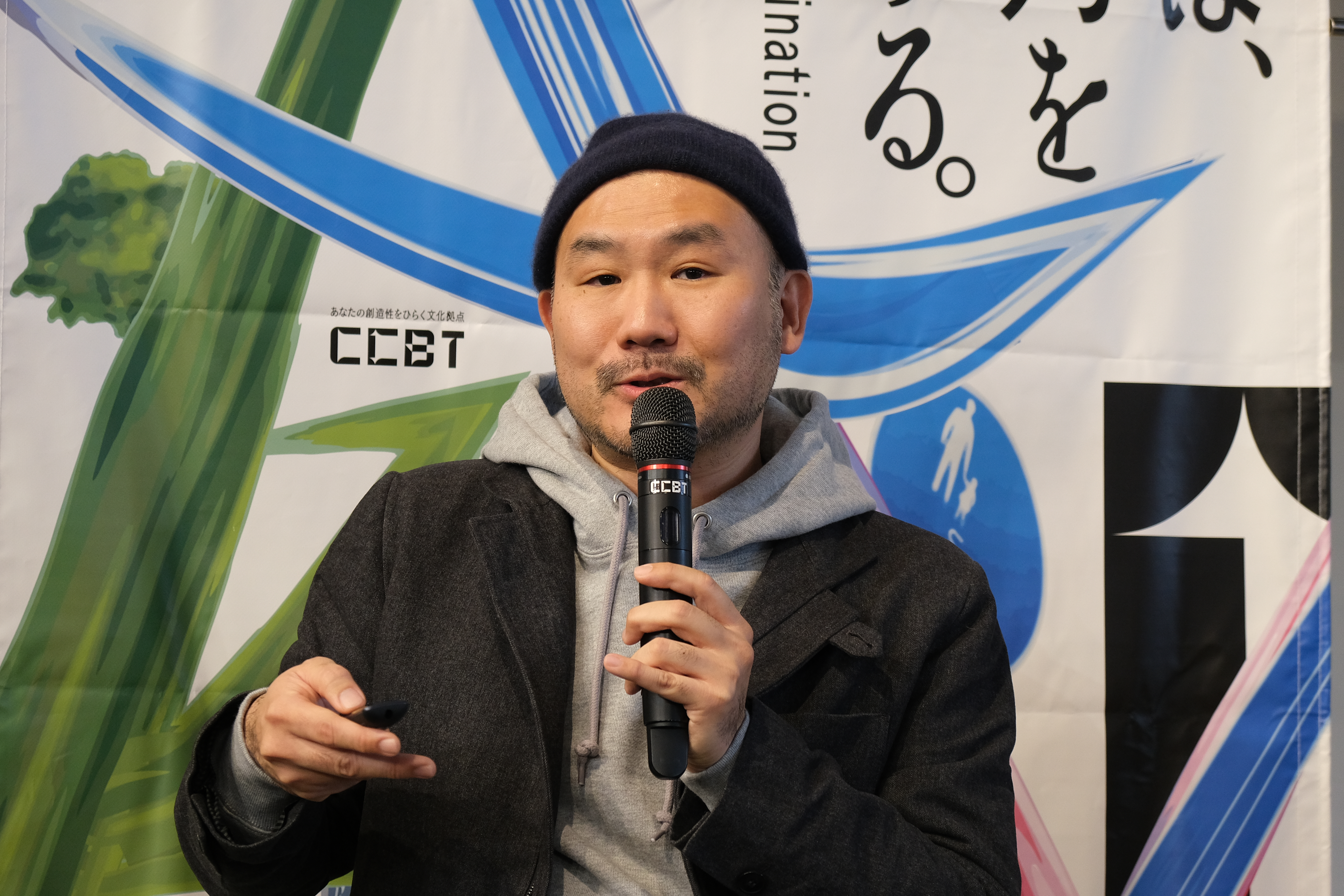
Miyasaka Vice Governor "Art has a value system that is completely opposite to that of a business that is based on depreciation, and I think it is rich in the fact that new and unexpected things are born from the start. Harajuku is full of narrow alleys, and the scenery that makes you feel close to the street even though it is a city is attractive. I'm interested in how CCBT's activities will permeate the streets of Harajuku by being based there."
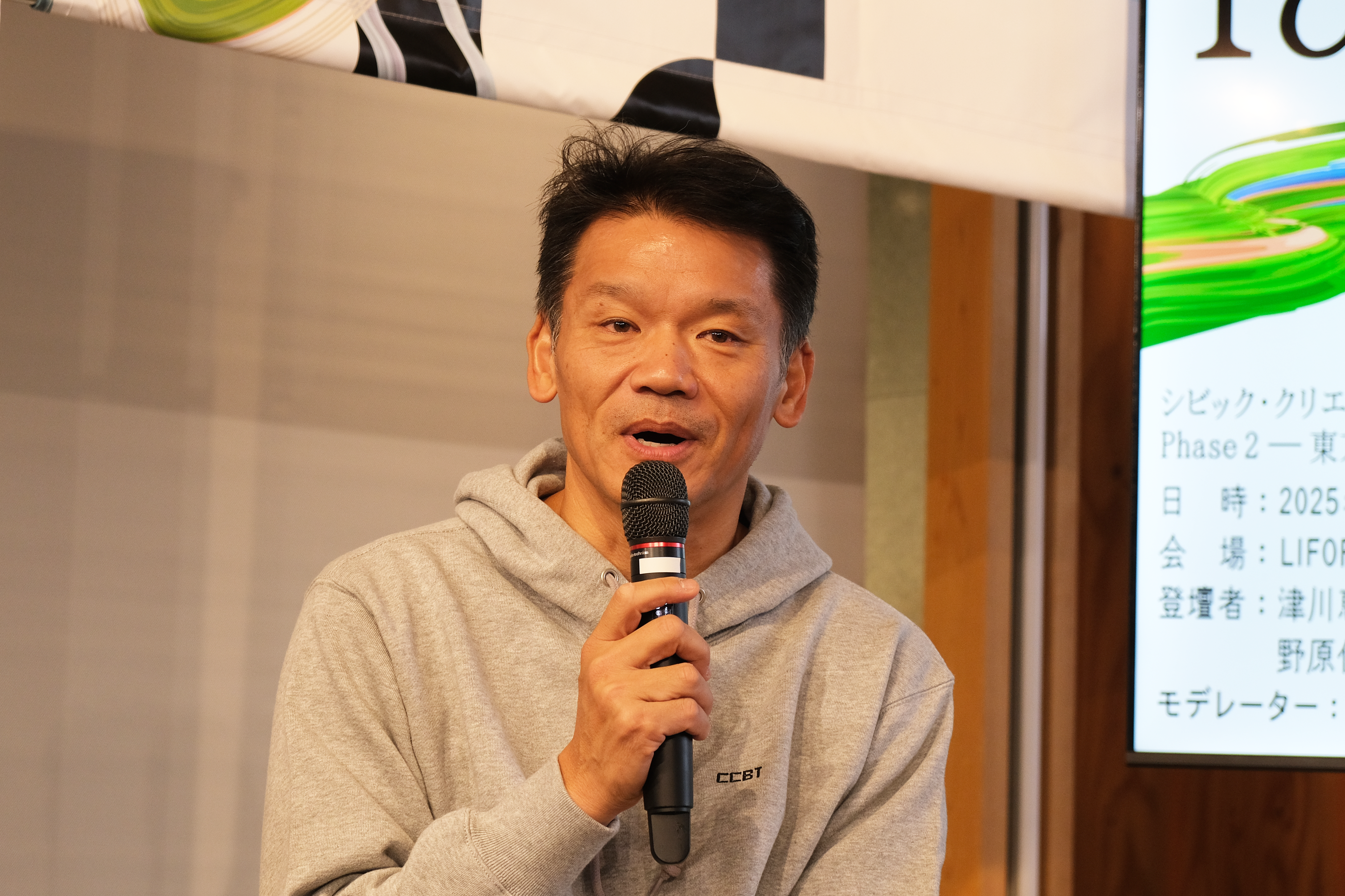
Tsugawa-san "In the field of contemporary art in particular, how one perceives the art depends on the intelligence and education of the individual who touches the work. In the current of the world, which tends to require quantitative indicators to judge whether something is good or bad, I think art is an area that is not bound by that current. As we pursue social impact in Phase 2, I think it would be interesting if CCBT itself could explore indicators that can express wealth that cannot be measured numerically and that can be shared by everyone when measuring the effects and value of CCBT activities."
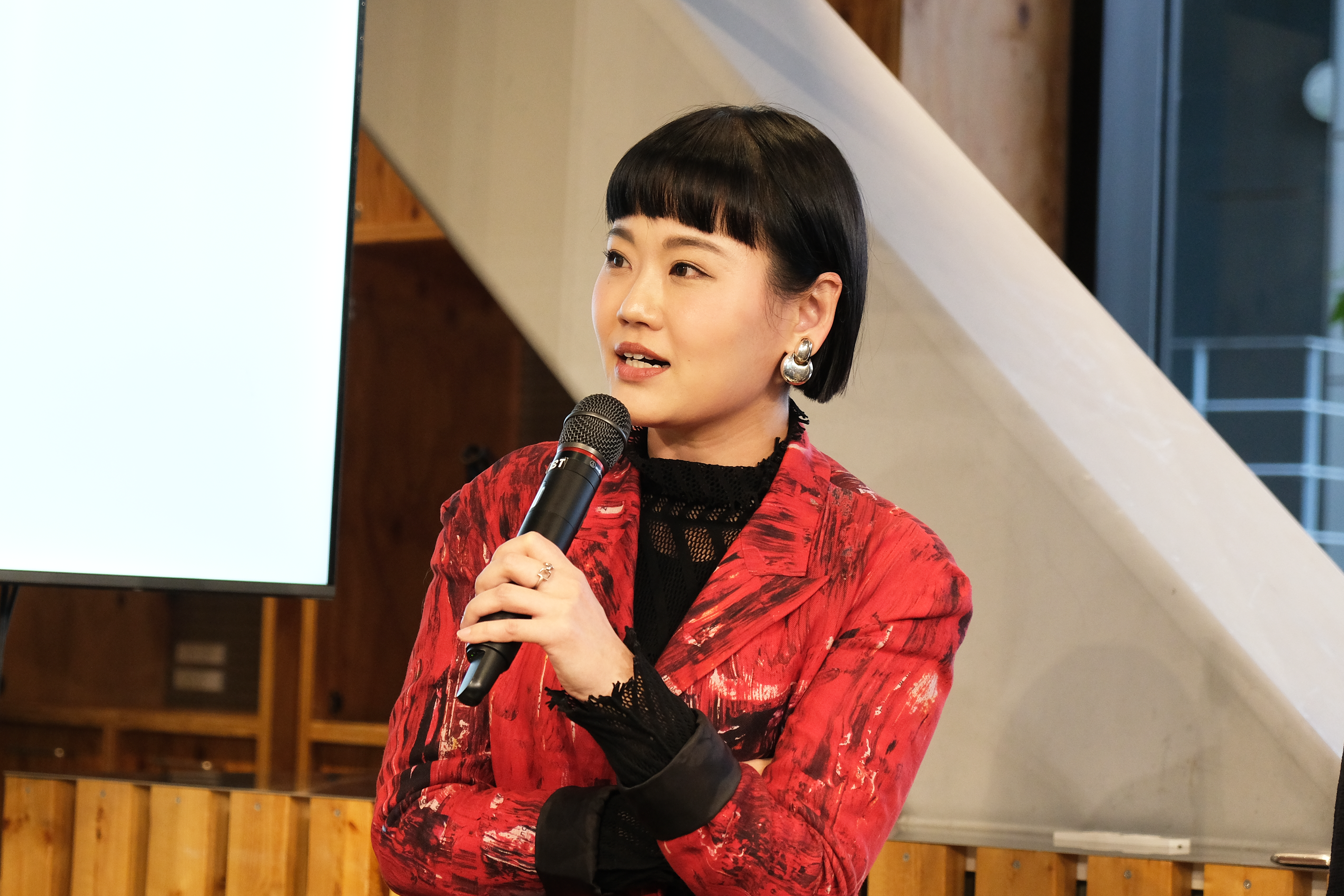
Nohara "I think the city of Harajuku is sensitive to the changes of the times and has a characteristic to reflect trends and the anticipation of the next generation. The center of the CCBT will take in the atmosphere of Harajuku, and the CCBT will change as the city changes. I hope that a cycle will be created in which the output of these mixed town and CCBT activities will emerge. It might be a good idea to create a critique of the output and archive its impact on the city and its citizens."
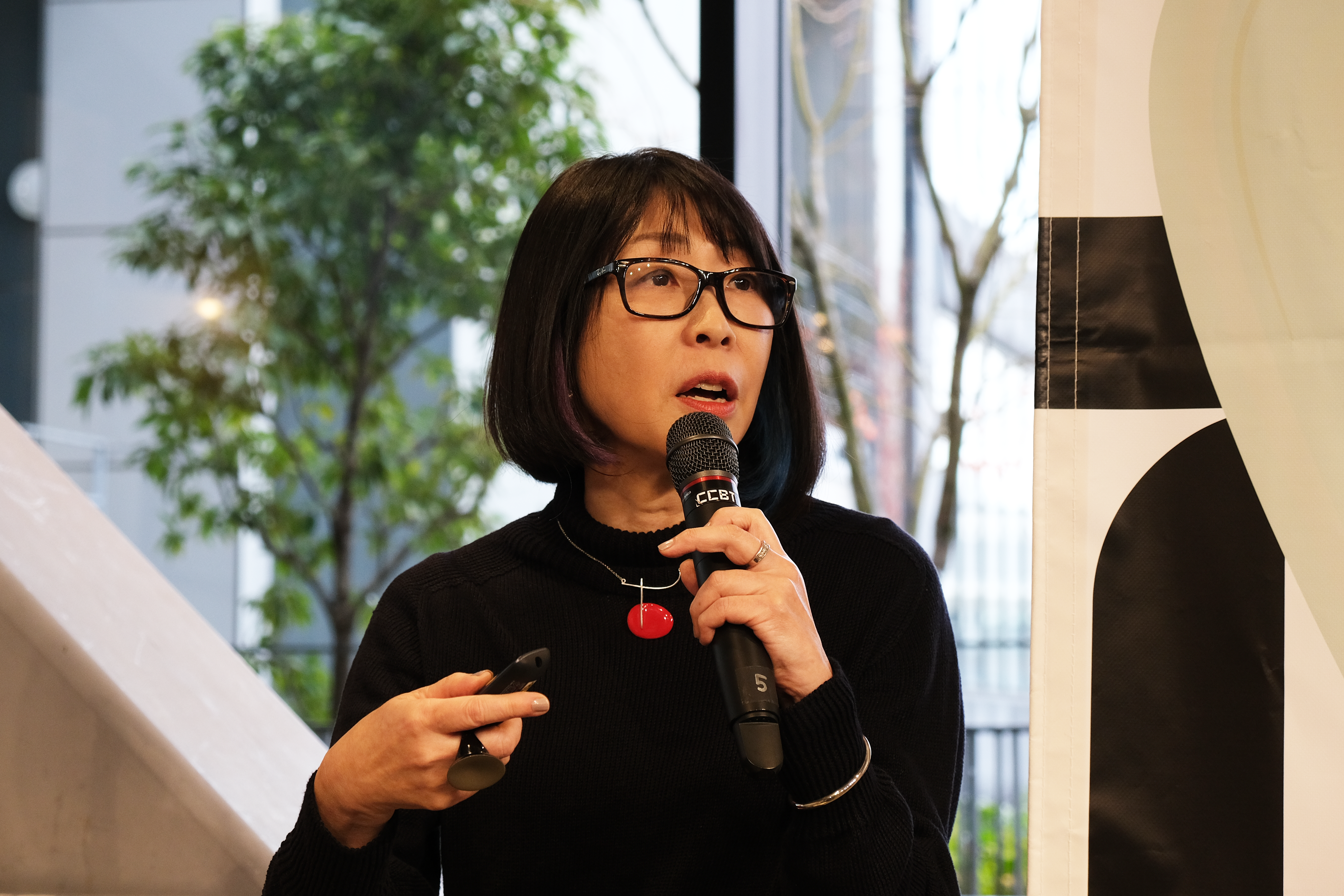
As reflected in the comments of the panelists, one of the points of interest in this relocation and renewal is how to utilize the Harajuku location to open up new possibilities for CCBT activities. According to Ogawa, there are three main points for Harajuku × CCBT.
One is that Harajuku is a city where young people gather. It is an environment that makes it easy to meet the next generation of innovators and young talents. That's why Ogawa says he wants the CCBT to function as a place to learn future literacy.
The second is that Harajuku is a fashion city. There is a history of culture that has been built up over a long period of time before it is recognized in the world in this way, and by joining CCBT as part of that context, we are imagining activities to create a sustainable culture together through Co-Creation.
The third point is that street culture is created by people. The city of Harajuku can be understood on a familiar scale and is easily connected to everyday life. This is an excellent fit for CCBT, which aims to conduct experiments and demonstrations in the city.
Opening talk (2)
Cities demand imagination. -What is "creating" in CCBT?
In the opening talk (2), Maki Ueda (Olfactory Artist), Yuma Kishi (Artist), Itsuki Doi (Musician, Complex Systems Researcher, Senior Researcher at Alternative Machine Inc.), Sakiko Fujishima (Artist), and Shota Yamauchi (Artist), 5 Artist Fellows of the ART INCUBATION PROGRAM for the 2025 fiscal year, gathered together and introduced their respective projects. Through a dialogue with SIDE CORE(Mr. Toru Matsushita, Mr. Kazuyoshi Harimoto), who served as the moderator, they were able to imagine the possibilities of Civic Creativity and how they interpret the common theme of.
◆Maki Ueda (smell artist)
"Olfacto-Politics: The Air as a Medium"
Based on the three stages of education, research, and production and presentation, this project attempts to approach the relationship between the city and smell from various angles, including odor mixing experiments, observation and analysis using digital technology, and the possibility of communication using the sense of smell.
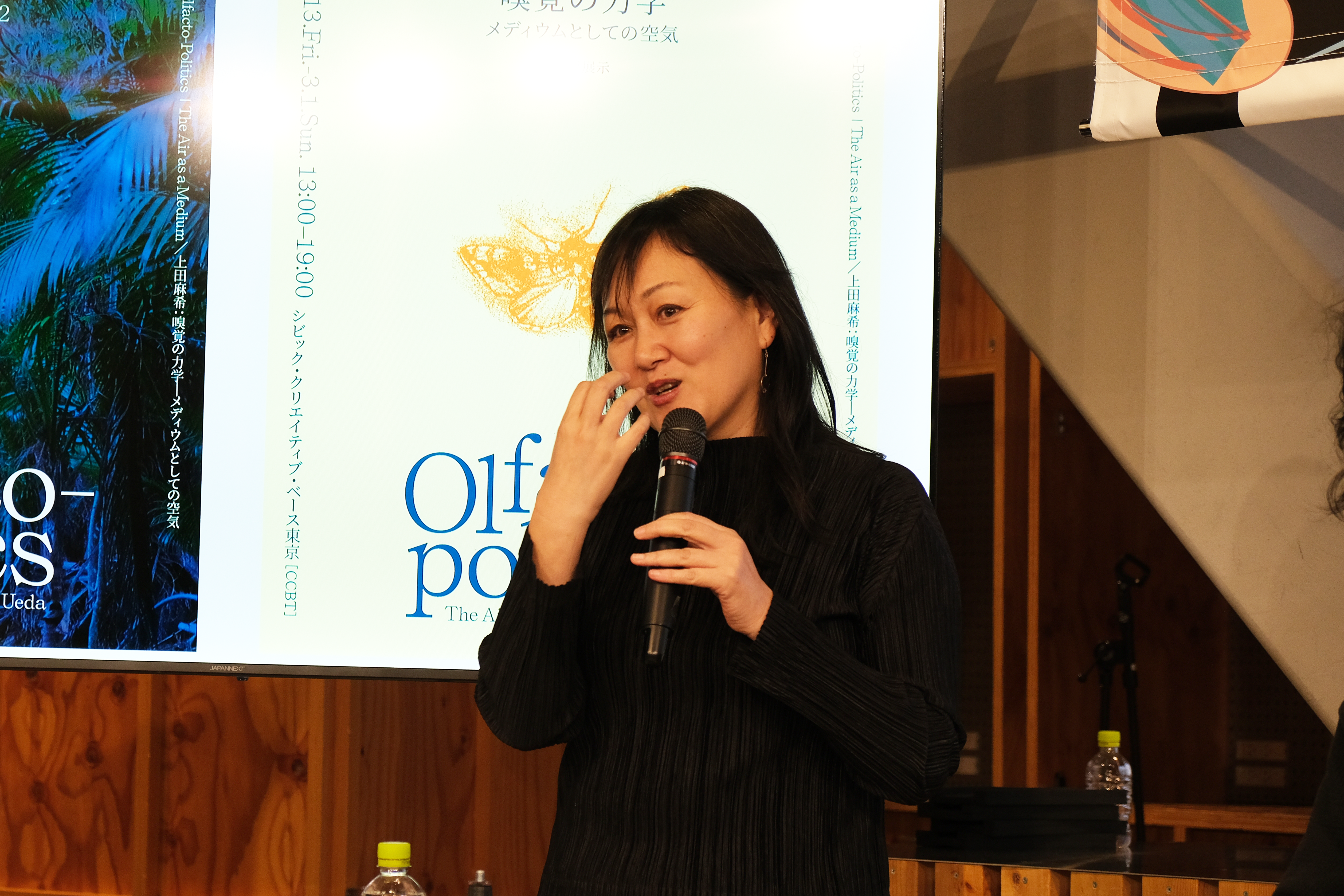
Ueda-san "When I think of the commons, I imagine the atmosphere that everyone shares, and I want to visualize and experience the invisible atmosphere. As modern cities become odorless as public health improves, what is the smell of public space? I've been experimenting with various methods, such as analyzing the smell of crowded trains and simulating the smell of Shibuya so that I can relive it from a dog's perspective. Workshops and exhibitions will be held at the Yumenoshima Tropical Botanical Garden to present the results."
◆Yuma Kishi (artist)
"Parallel Botanical Garden"
This project aims to develop "botanical intelligence" that reimagines modern artificial intelligence from a botanical point of view, and plans to use self-made devices and sensors to pass signals from plants to AI and experiment with what kind of output comes out of it.
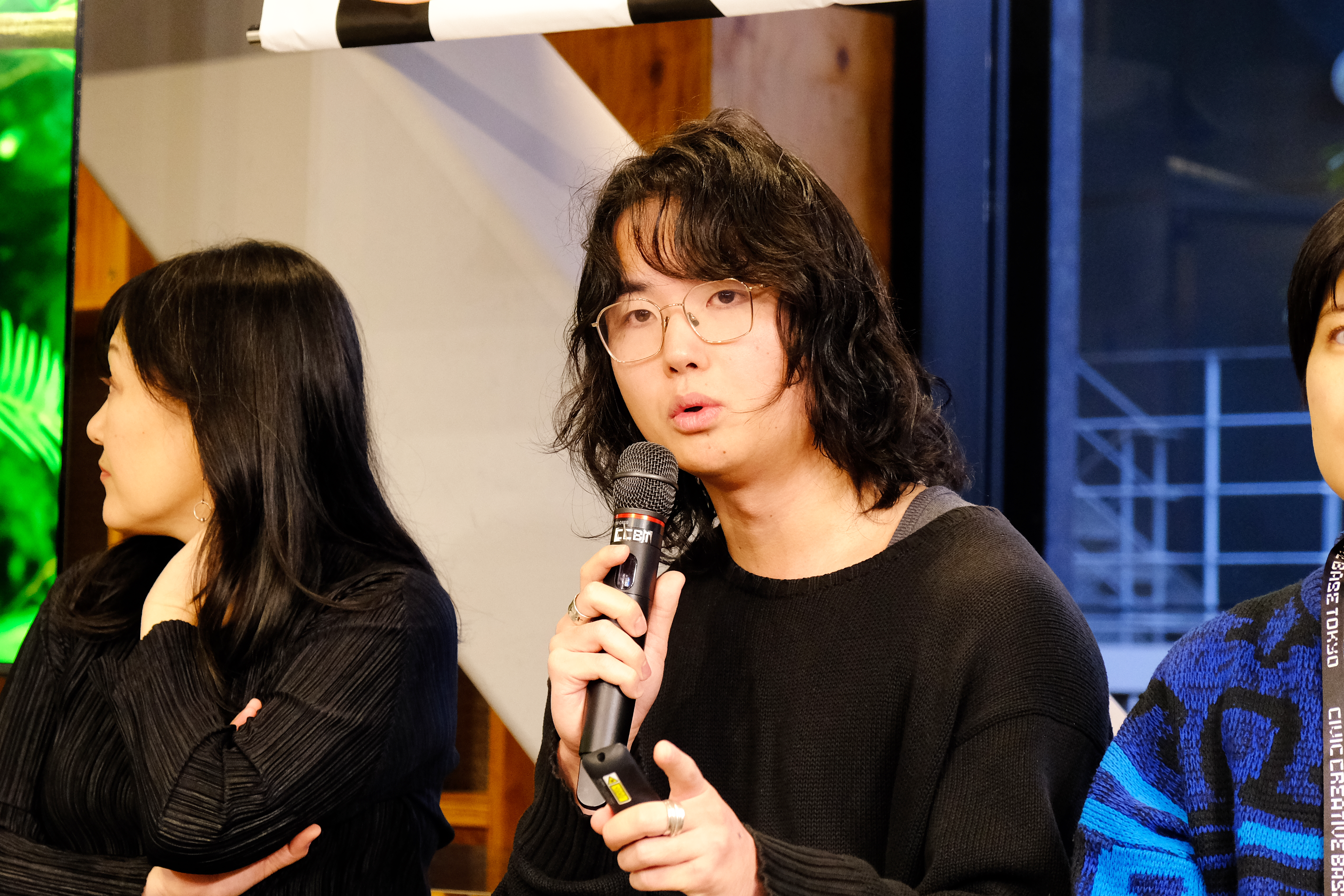
Kishi "I thought it was plants that created the first commons in the world. If you think that plants are intelligent beings and look around the city again, the world you normally see will feel slightly different, and you will even feel a strange tension. I hope that I can share my own feeling with you even a little bit and give you an opportunity to rethink the world."
◆(Musician, Complex Systems Researcher, Senior Researcher at Alternative Machine Inc.) by Itsuki Doi
Under the theme of weather, citizens themselves observe the weather from their personal point of view, record their observations in text like a diary, and share the data from multiple observation points on an independently developed SNS platform. The goal of this project is to create a commons by accumulating the combination of objective observed data and the subjective observation of the observer.
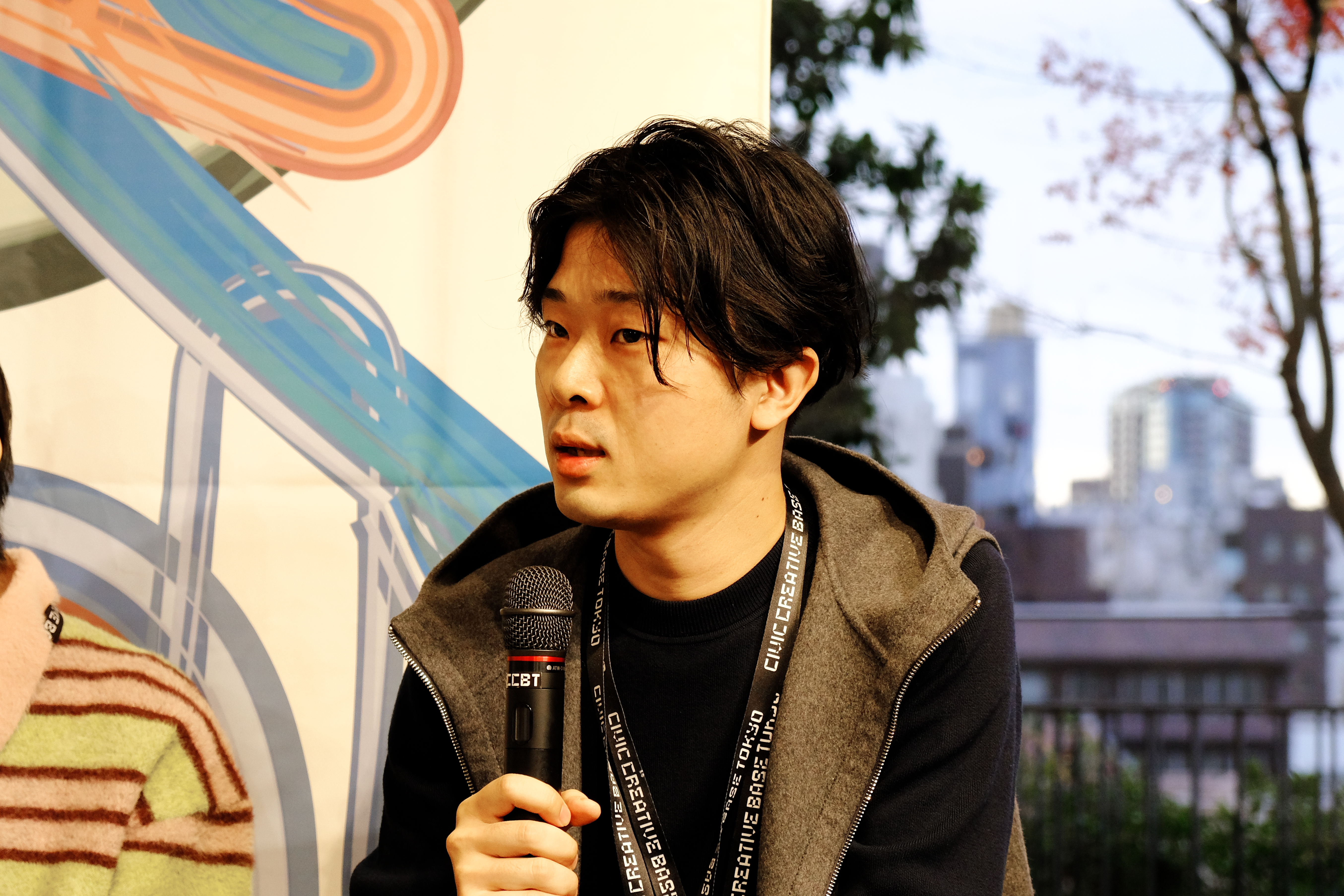
Doi: "I find it very interesting that there is no contradiction between the "weather" provided as public information by the Japan Meteorological Agency and the subjective "weather" felt by each citizen in their daily lives. Furthermore, the same weather is perceived differently depending on individual feelings and circumstances. By aggregating the narratives of "individuals," I would like to aim for an output that reveals the outline of a society = commons created by those of us who share the same weather but live different lives."
◆Sakiko Fujishima (artist)
"Coenoquest - Saved data left in the city"
A project to develop a game based on the idea of visualizing the voices of people living in cities, especially negative feelings, worries, complaints, and feelings that are difficult to express. In September, they developed and tested a board game that allowed people to reveal themselves while playing. Based on what I learned, I am currently working on the development of a digital game that enables 100 different game experiences for 100 players through interaction with NPCs.
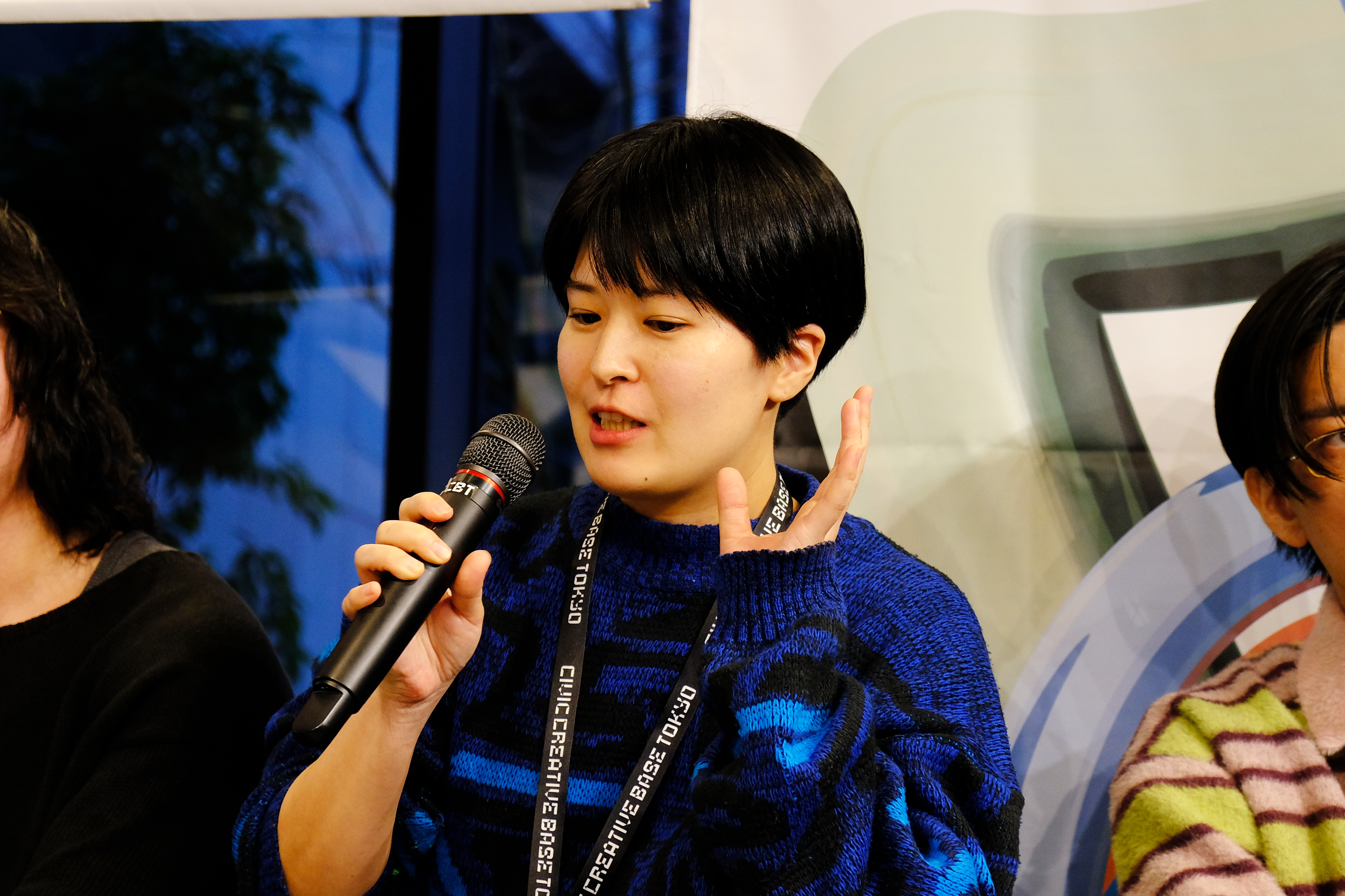
Fujishima "Games have a strange power. When you start playing a board game, for example, an atmosphere of fun emerges spontaneously among the people around the board game. This is very important, and as a foundation for thinking about the commons of the future, I would like to create a system to listen attentively, create an environment where it is easy to express thoughts, and create tools that can support such things."
◆Shota Yamauchi (artist)
"Close Encounters of the Third Kind"
Continuing from the video installation presented at Arts Maebashi that recreates an environment that changes through light and sound, this project aims to create an outdoor performance work that depicts the moment when unknown beings and humans overlap. Starting from the question of "what is unknown," this project envisions a new form of communication that does not depend on the framework of language.
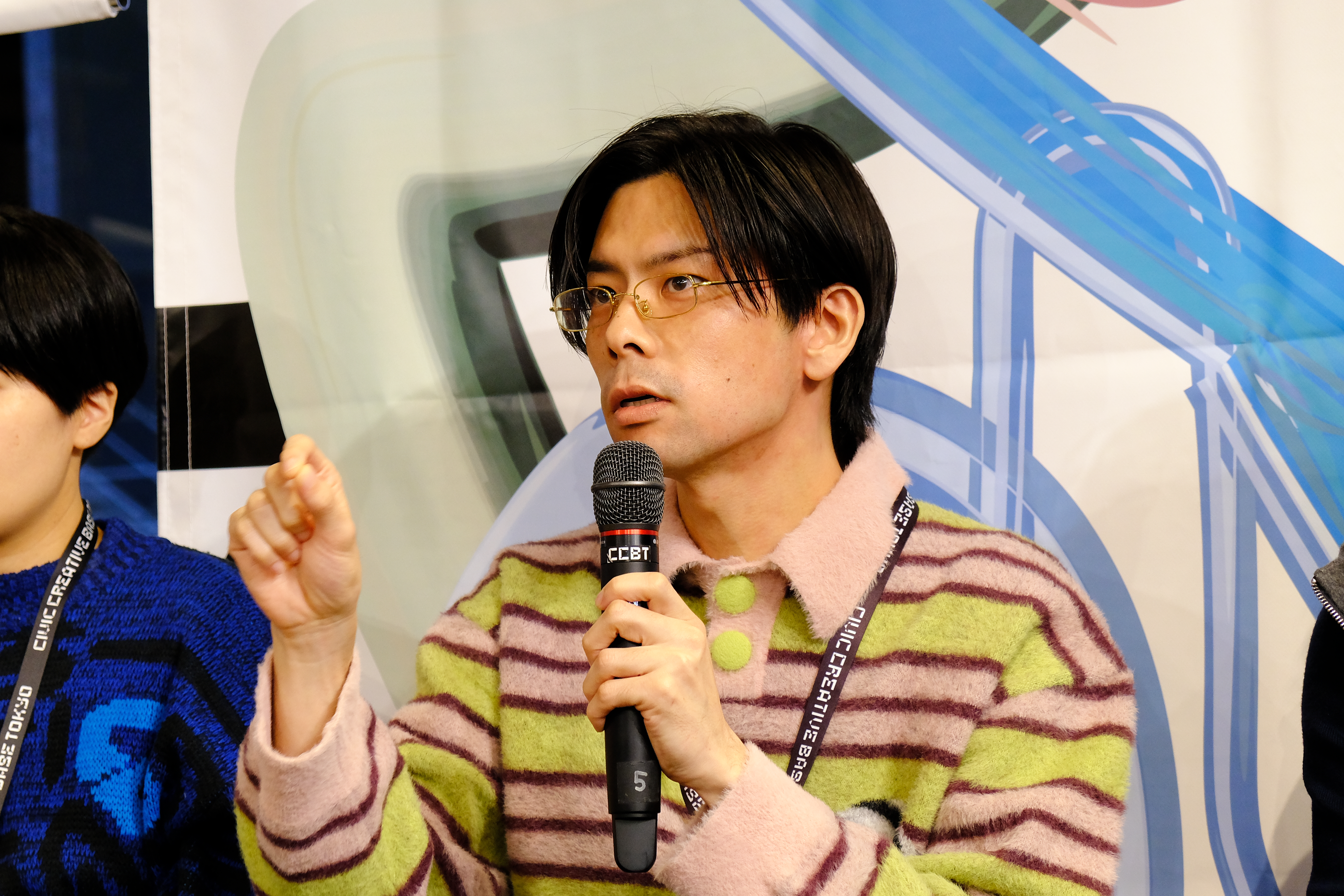
Yamauchi-san "We believe that the future and the commons are things we do not yet know. The work that is scheduled to be released in March is an outdoor performance, and I am thinking about the experience of meeting unknown things beyond language through physical expression. I have assumed that outdoor performances are greatly influenced by the surrounding environment, and I would like to explore how I can reconcile with the light of everyday life, which is not compatible with the extraordinary nature of the work, or if I can use it as a borrowed scenery to be integrated with the work."
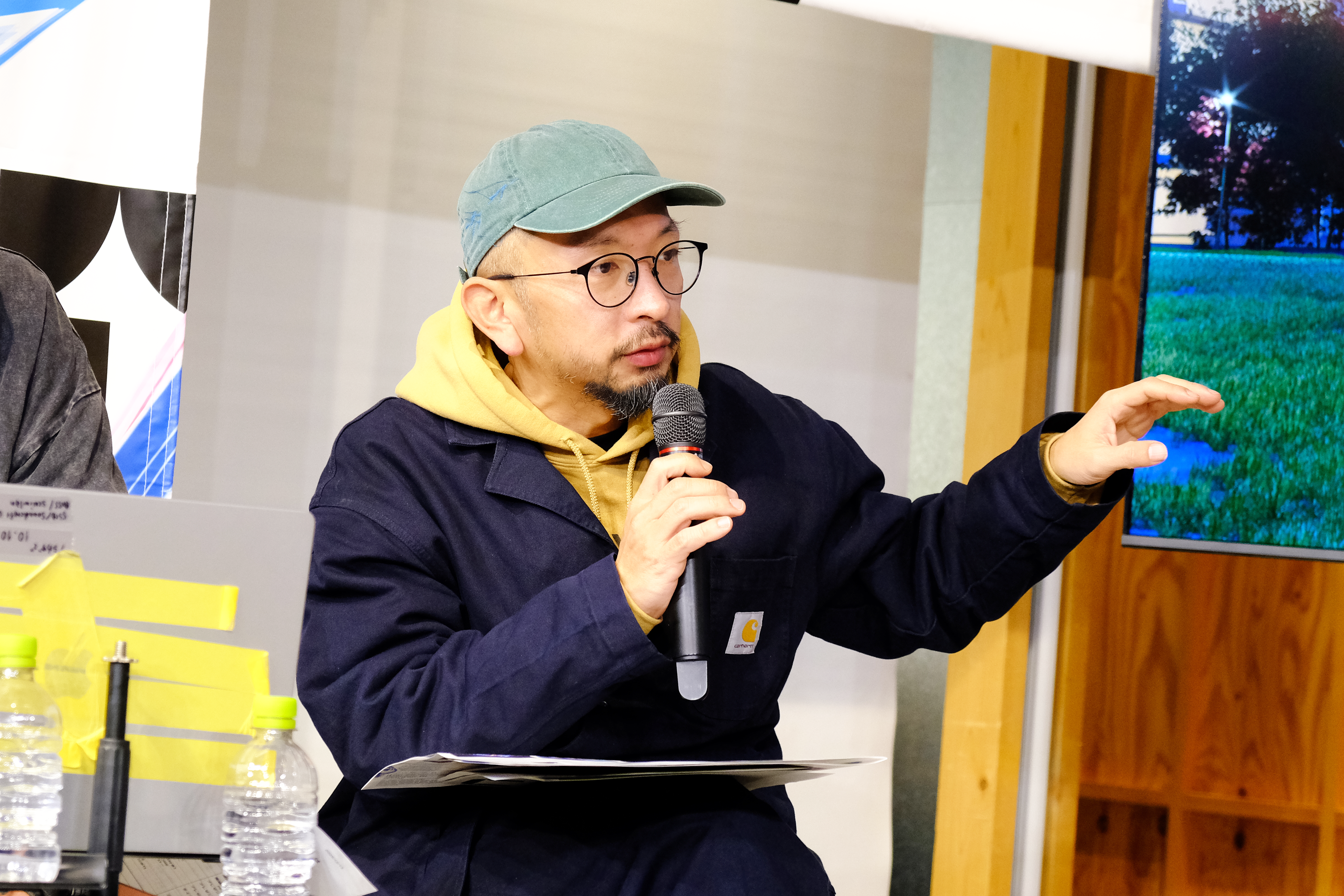
SIDE CORE Matsushita "I think the future of the commons is about sharing moments where we can relate to each other beyond social relationships. Such phenomena tend to occur in situations of "transportation" and "travel," and our creation started from our own experience of rapidly becoming closer to each other."
SIDE CORE Harimoto "If you know what you like, people will naturally come together, and I think the "commons" will naturally move."
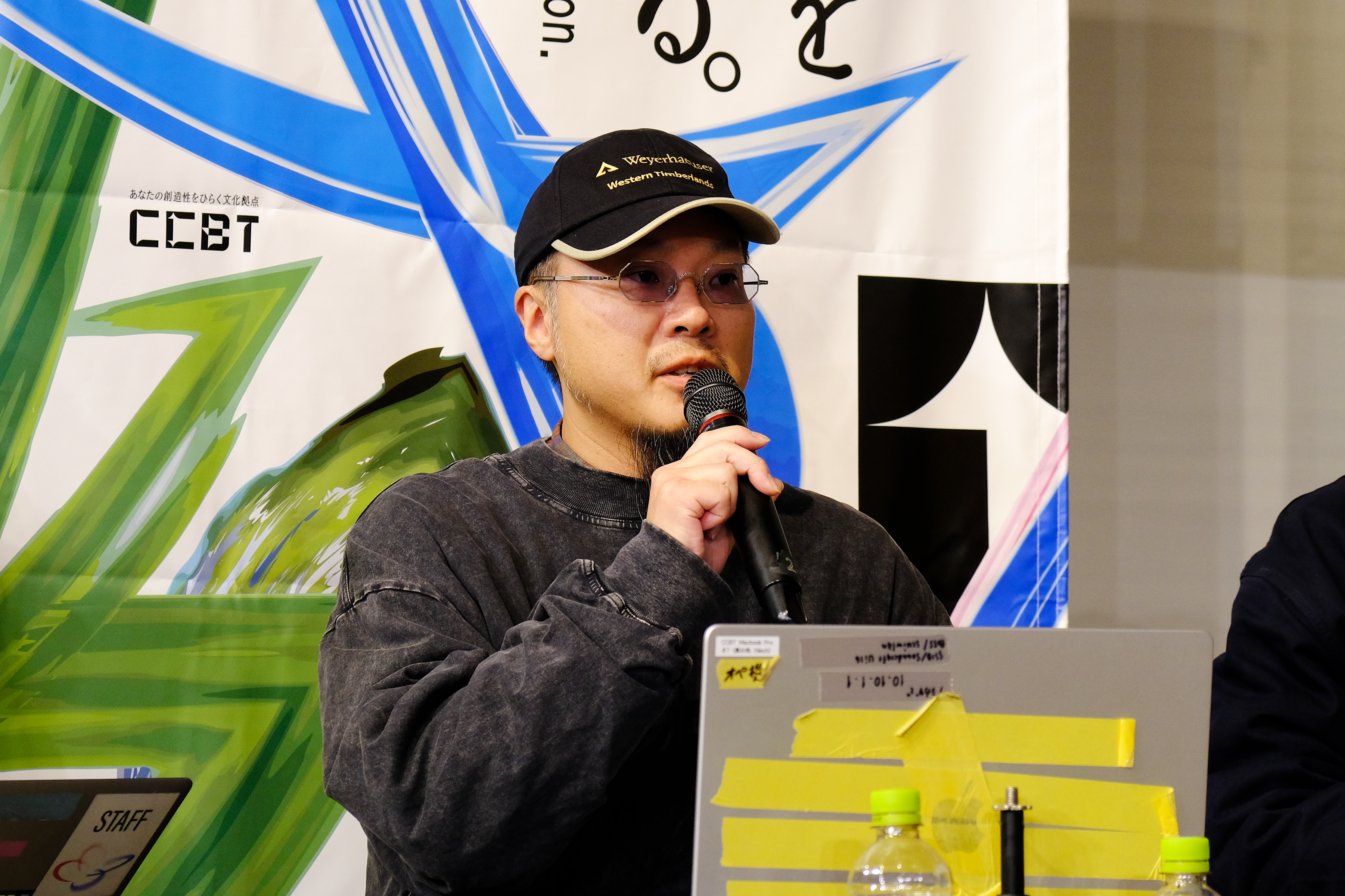
Although the five artist fellows have different specialties and approaches, I was impressed by the fact that they started from their strong personal interests and worked to create a sense of issues that can be shared with society and create touchpoints that people in society can relate to. Furthermore, because artists themselves have the flexibility to accept others and the space to involve others, they can be expected to produce a project with the potential of civic creativity that is even more expansive than a project completed by an individual.
Creating Civic Creative Touch Points in People's Lives
As you can see from the introduction so far, CCBT is not the only place where you can get in touch with CCBT activities. In the adjacent WITH HARAJUKU, where the opening event was held, the Spiral Hall, which can be accessed within walking distance, and outside the confines of the Harajuku area, it is envisioned that CCBT's expression and activities will expand to the point of contact between citizens and the city. To explore the possibilities of Civic Creativity, including not only meeting but also involving and creating with citizens. This is why CCBT is a creative base, and it is a manifestation of the attitude that the whole of Tokyo is regarded as a field of CCBT as an "experimental zone."
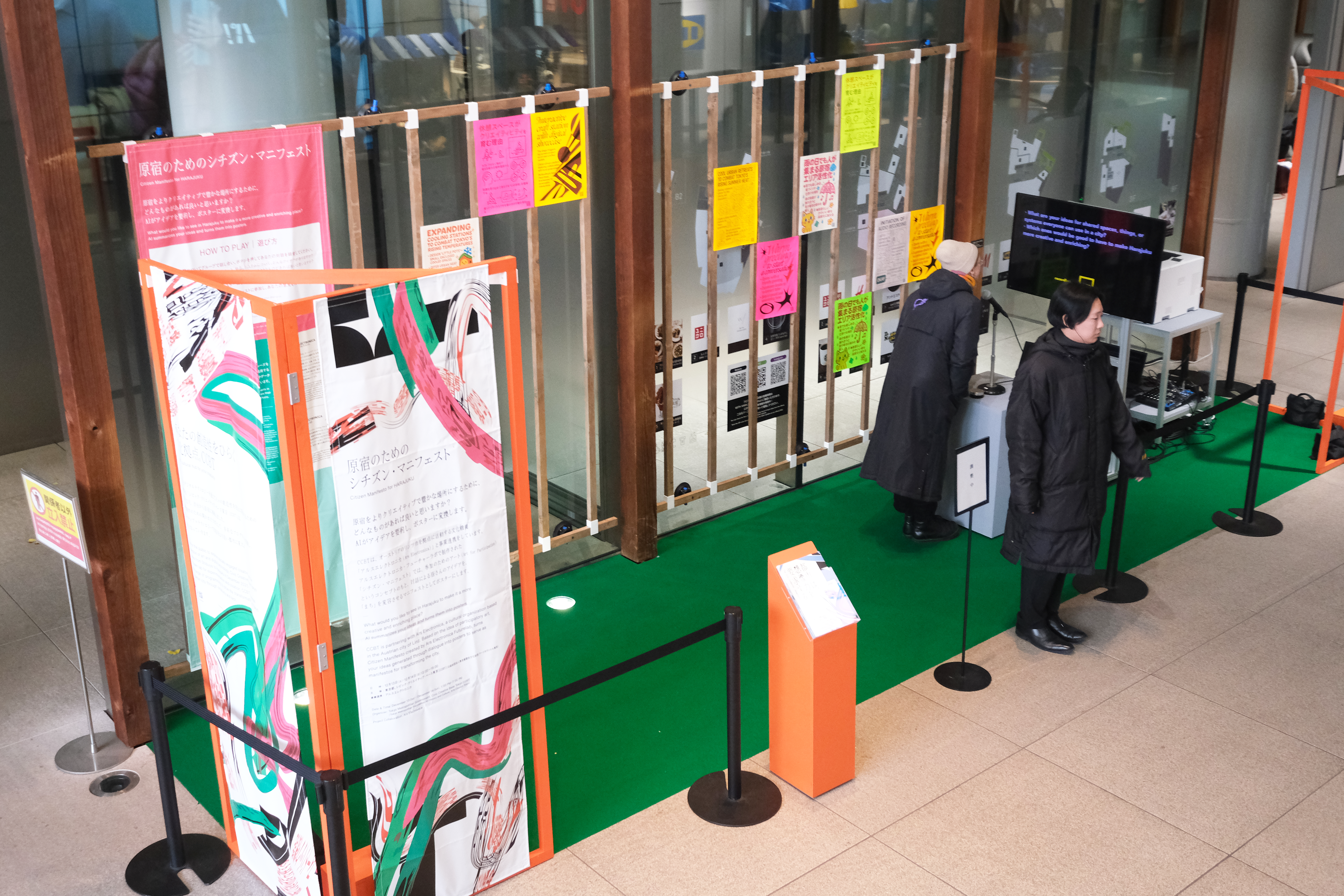
The outdoor exhibition of SIDE CORE tucked away in a back alley in Harajuku, the experiential installation ("CITIZEN MANIFESTO") in collaboration with Ars Electronica that I happened to encounter in the square of a commercial facility on a shopping trip, the advertisement for the CCBT relocation and renewal that blends in with the scenery of the city that I pass by casually, by creating more and more touchpoints that I encounter without thinking about it, opportunities for civic creativity will expand throughout Tokyo. Phase 2 of the CCBT, which is connected to the city and continues to respond to changes in the city. Seeds planted by CCBT will sprout in many parts of Tokyo.
Text: Mami Maeda
シビック・クリエイティブ・ベース東京[CCBT]
開館時間:13:00-19:00
休館日:月曜日(祝日の場合は開館、翌平日休館)、年末年始 ※ その他、保守期間等の休館あり
〒150-0001 東京都渋谷区神宮前1-14-4 1/1(ONE) HARAJUKU “K” B1・3F
公式ウェブサイト:https://ccbt.rekibun.or.jp/