
Based on the "Tokyo Cultural Strategy 2030," which aims to strengthen Tokyo's function as an international art hub, the Tokyo Metropolitan Government and Arts Council Tokyo are working on the "Overseas Dispatch Program for Art Management Personnel," which dispatches individuals who will play a role in connecting artists and society in the future to overseas art festivals and other events. The program started in fiscal year 2023 and will be in its third year in fiscal year 2025. This year, a total of 15 people were dispatched, three each to five regions: Scotland, Brazil, South Korea, Taiwan, and Germany.
Dispatch participants spend approximately one week in Japan based on the "Basic Program" planned for each region and the "Original Program" in which individual participants conduct research, planning and coordination based on their interests.
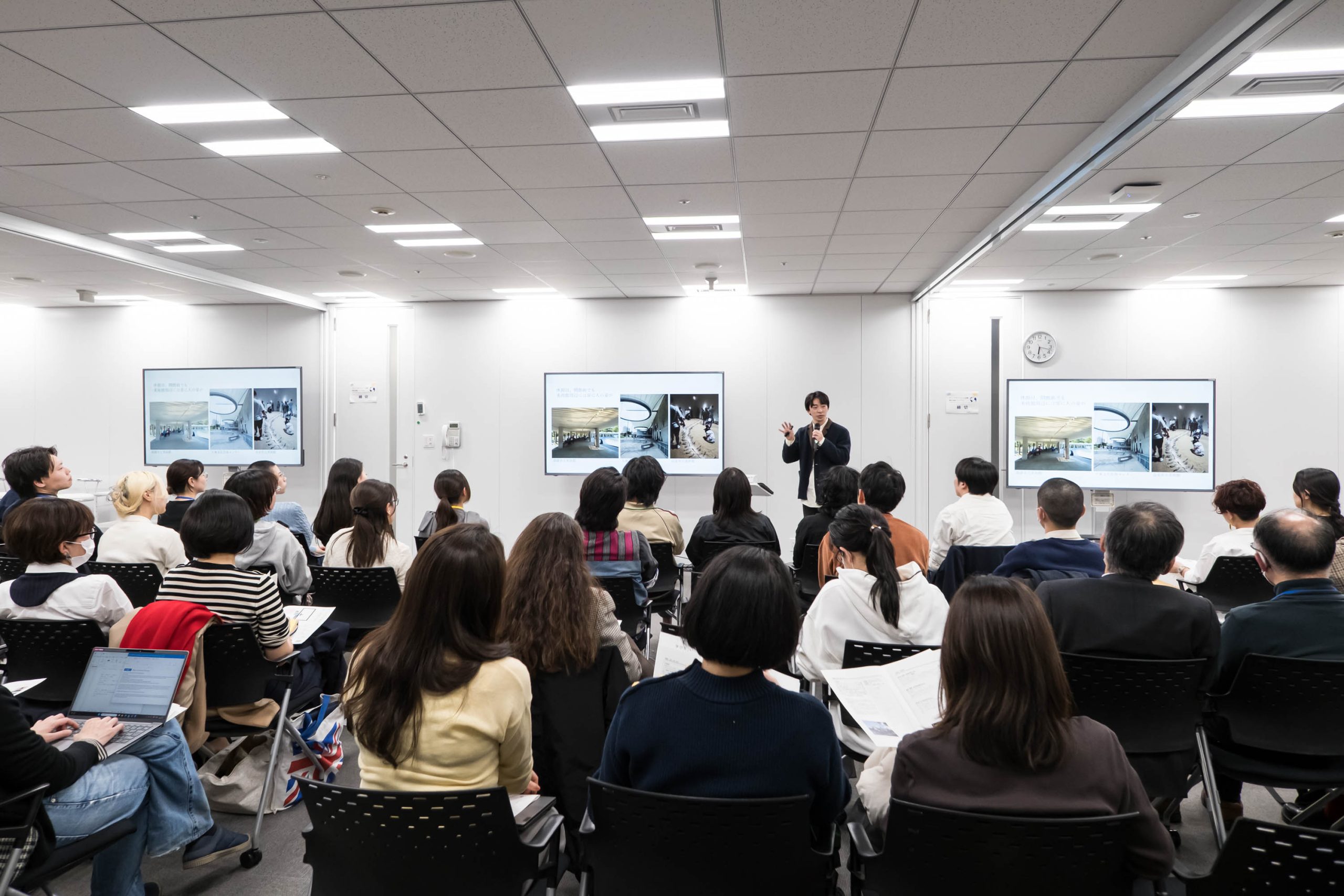
At the debriefing held on March 12, 2026, the participants gathered together to present their achievements at their respective destinations.
In the first part, each participant reported on the purpose of participating in the program and activities at the destination. In the second part, the participants discussed in a roundtable format what they had noticed while working on the assignment, and exchanged opinions on the direction of future activities that they had been able to see only through their experience.
◼️ Part 1 Report on the Activities of the Dispatched Participants
◇Scotland Dispatch to Edinburgh
"Edinburgh International Festival" and "Edinburgh Festival Fringe"
- Length of Placement:
- August 15, 2025 – 22
- Advisor:
- SUDO Chika (Director of Arts, British Council)
[Basic Program]
Visits to the Edinburgh International Festival and Edinburgh Festival Fringe, including receptions organized by the British Council, meetings with festival officials and public authorities, and visits to related facilities. Watched "Military Tattoo" held at Edinburgh Castle, plays dealing with political themes and new ballets.
[Original Program]
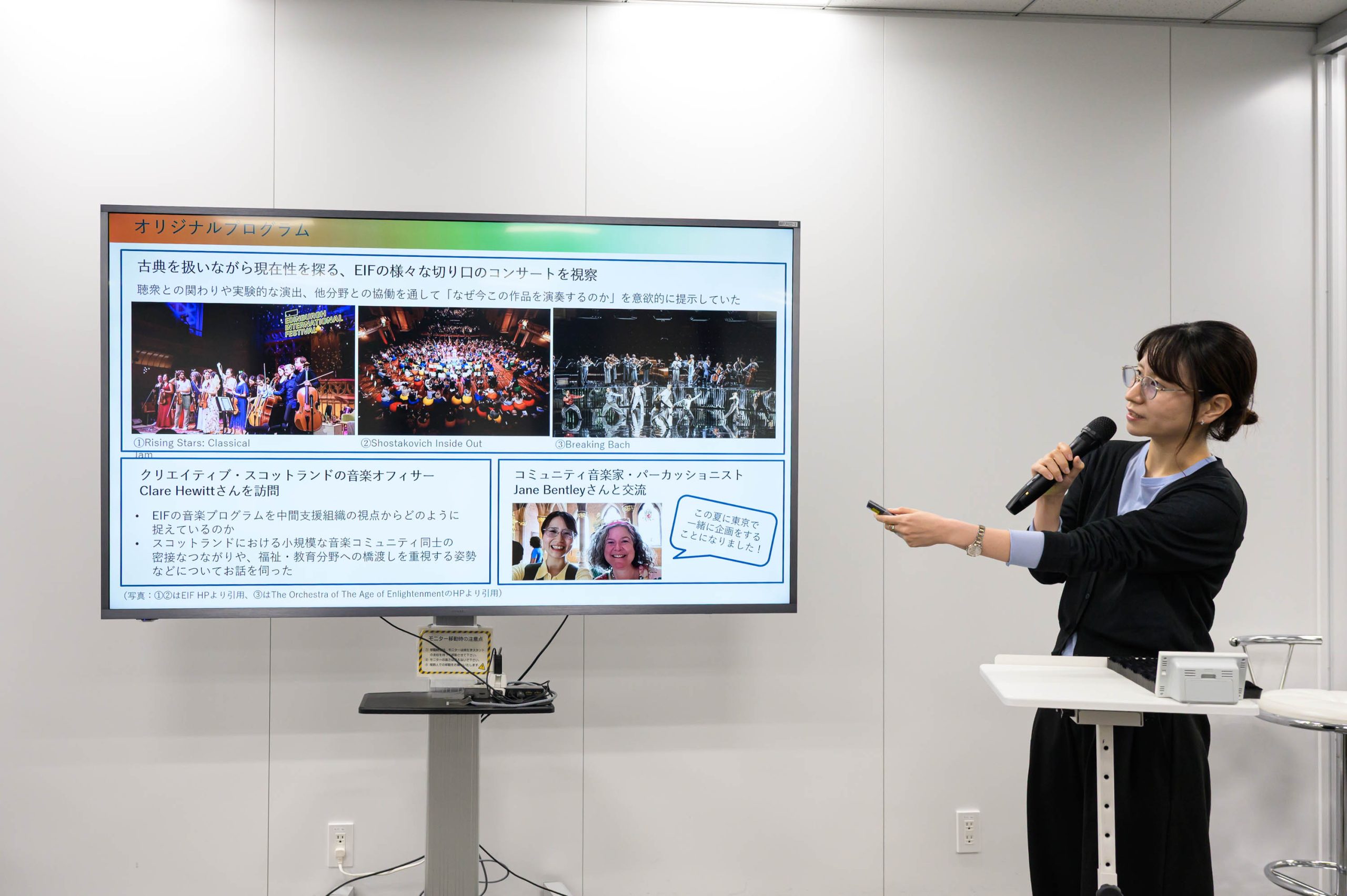
Mina Shinohara [Art Manager]
Since the tour focused on music performances, many of the performances featured classical music and other works from the past, but the question "Why are we playing this piece now?" was consciously presented. I was impressed by the importance placed on conveying the historical background and social context through storytelling. I was also interested in the grassroots practices behind the festival's glamorous stage, as Scotland has many small music communities, and is committed to connecting them with the welfare and education sectors to build lasting relationships with local people.
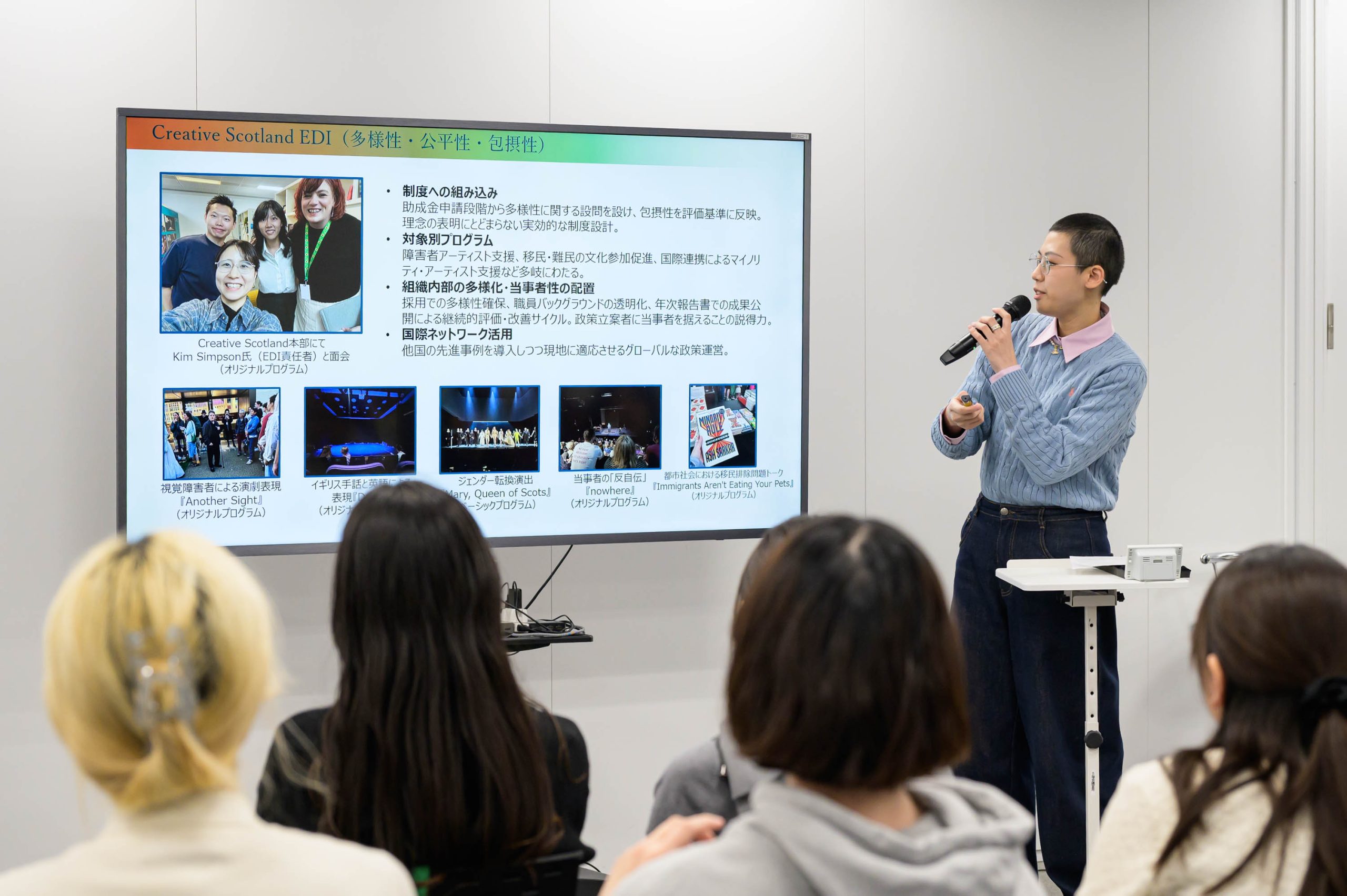
Zhang Yuiyu [Planning composition and production]
The meeting with the head of EDI(Equality, Diversity, Inclusion) at Creative Scotland headquarters was particularly impressive. I think it is wonderful that the philosophy of EDI has been incorporated into the system as it is, including questions on diversity from the grant application stage and support programs for artists with disabilities and immigrants and refugees. And I felt that the system's persuasiveness was enhanced by the fact that there were stakeholders on the side of policy making. In addition, several festivals were held at the same time, and by experiencing the multi-layered festival environment, I was able to relativize my own perspective and gain important learning that I will use in my future activities.
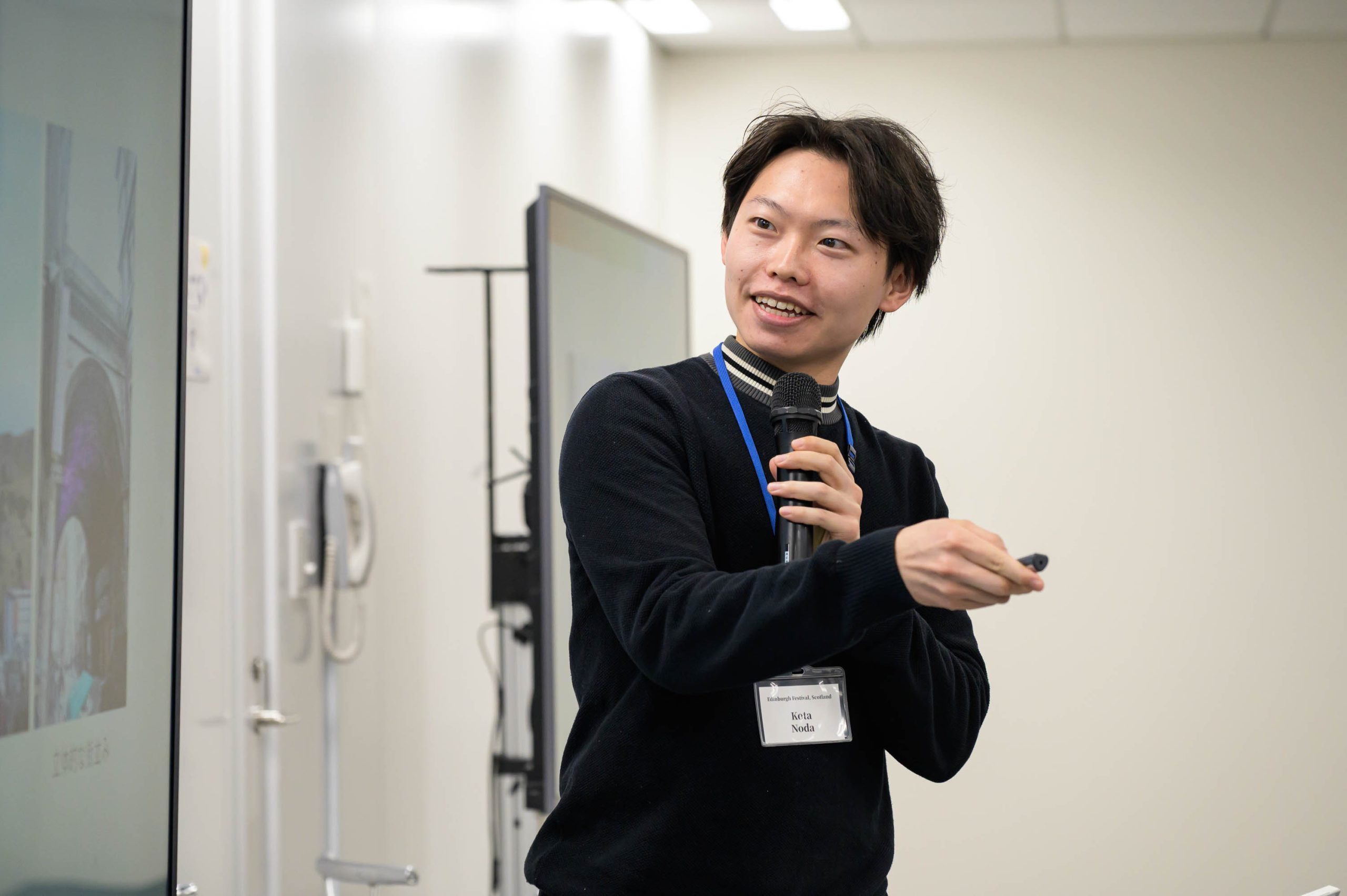
Kota Noda [playwright]
I took part in the mission because I wanted to explore how a festival could be established that would become a cultural resource for the community and change the landscape of the city itself. What I found when I actually went to the places I was dispatched to was that the appeal of the festival is based on the urban environment itself, such as Edinburgh's characteristic highly exploratory urban structure and the magnificent nature surrounding the city. The discovery was not that the festival takes the initiative in conducting outreach activities and involving local residents, but that the festival is formed by the strong voluntary energy of the fringe participants flowing into the city and adding tourists and commercial activities.
◇São Paulo - Inyotin Dispatch in Brazil
"São Paulo Biennale," "INHOTIM"
- Length of Placement:
- September 2, 2025 to 9
- Advisor:
- KAMIYA Yukie (Curator, The National Art Center, Tokyo)
[Basic Program]
They visited "São Paulo Biennale" and "INHOTIM," which is known as the world's largest open-air art museum, and held interviews with people related to contemporary art and tours of exhibitions and facilities. He also visited the São Paulo Art Museum (MASP), the Museum of Contemporary Art of the University of São Paulo, the São Paulo State Art Museum, and the São Paulo State Museum of Contemporary Painting, and interviewed relevant stakeholders.
[Original Program]
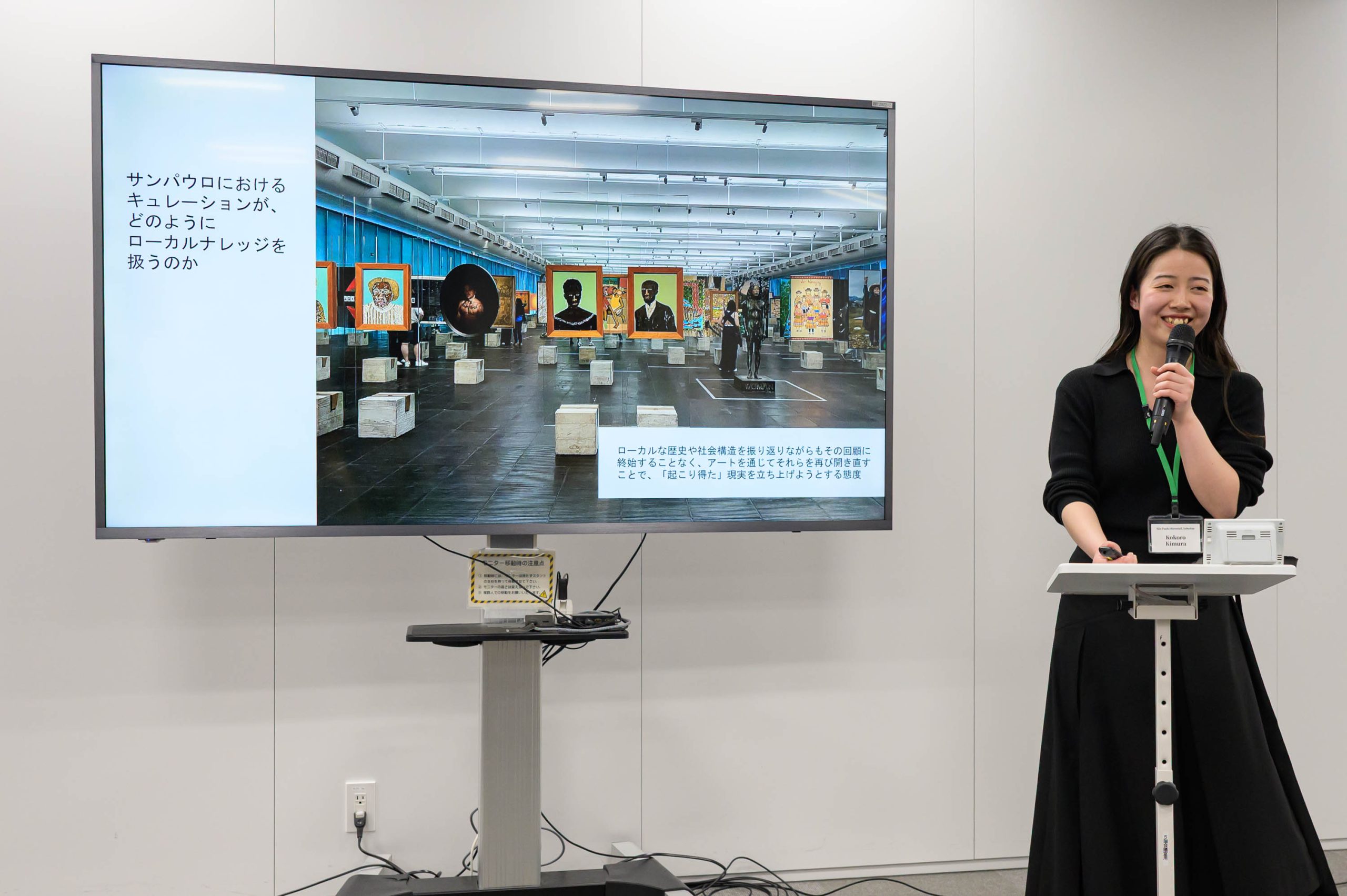
Ms. Kokoro Kimura [curator]
Being interested in feminism, queer perspectives, and decolonial art practices, I wanted to explore how curation at the São Paulo Biennale deals with local knowledge. Many of the exhibits in Sao Paulo not only reflect on local history and social structures, but also reinterpret them and imagine other possibilities and futures that could emerge from them. The decolonist perspective practiced in the art scene in Sao Paulo is not only a framework for analyzing past colonialism, but also has the potential to be used as a new framework for rethinking power relations and history within Japanese society.
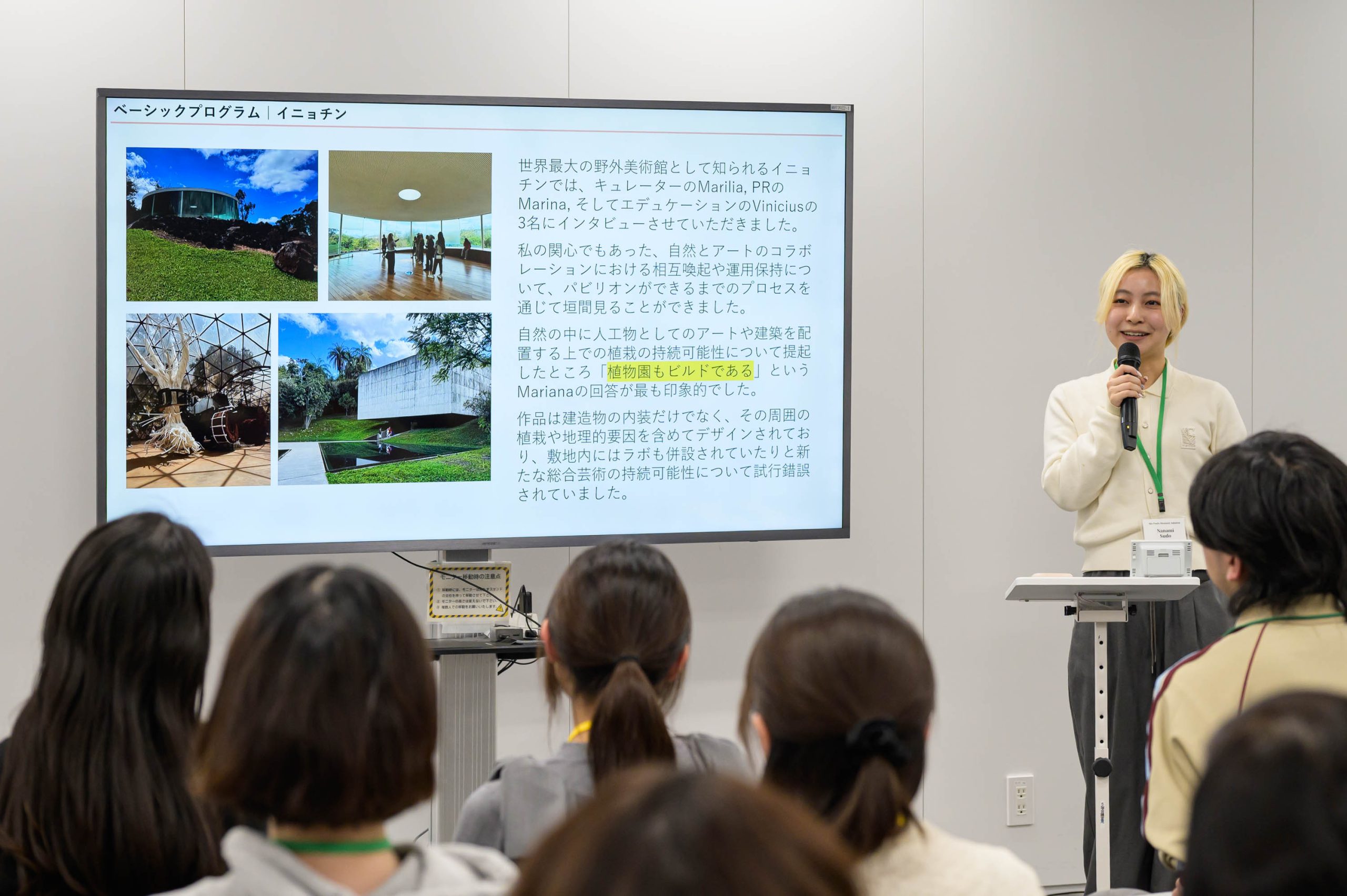
Nanami Sudo [Art Project Manager]
I was interested in the situation of independent spaces, so I visited a gallery and residence space in the Vila Madalena district in the west of Sao Paulo and met with the owners of three facilities. This area is characterized by the close proximity of several residences and galleries and strong horizontal coordination. I was surprised to hear that the owners of many of these centers are artists themselves, and that they are operating as galleries, residences, and community spaces, and that they are not accepting artists through an official open call system, but rather through informal networks through the introduction of acquaintances. We found that the horizontal connection between community spaces is an important foundation for supporting local art activities.
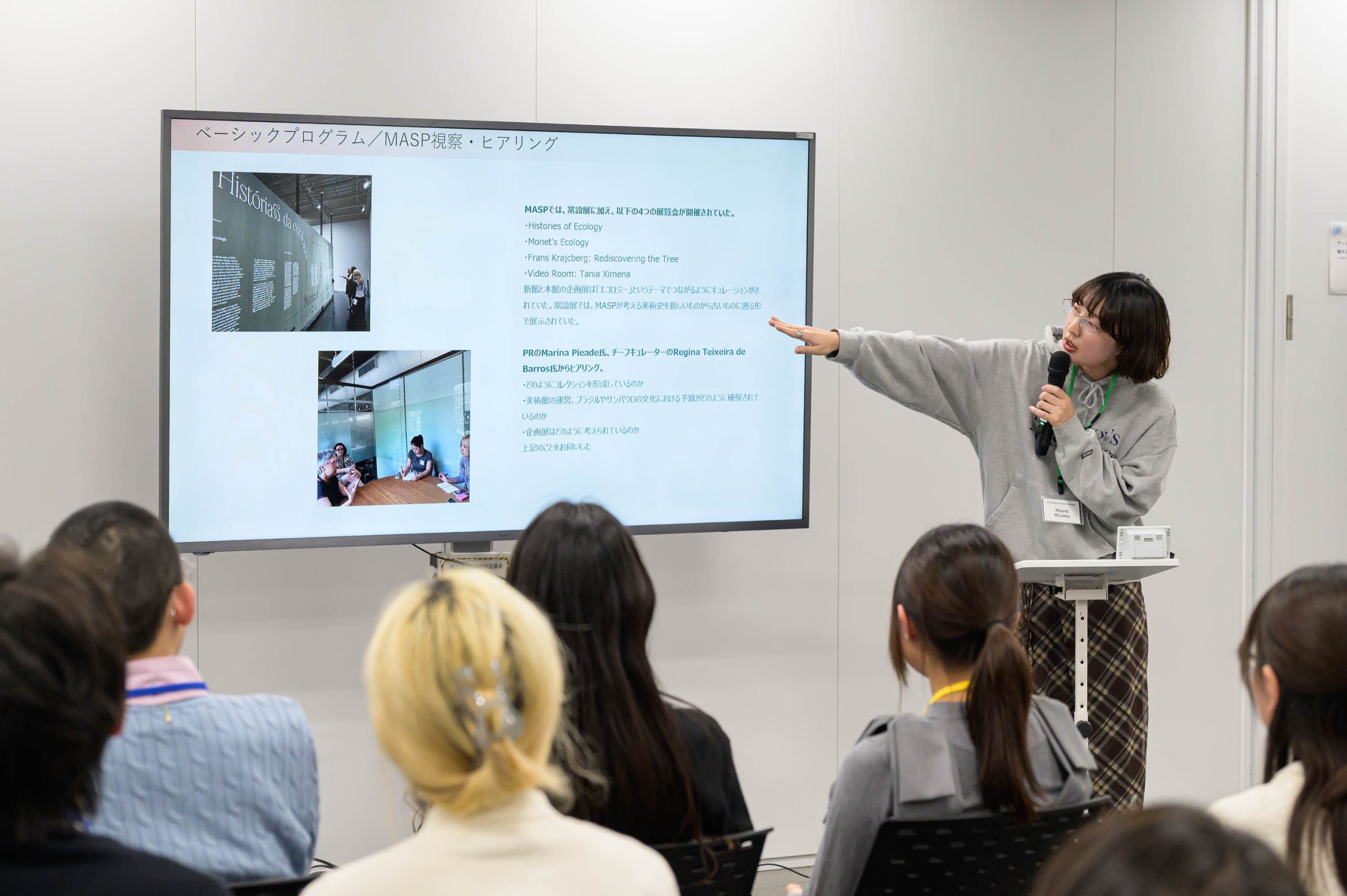
Mai Hiyama [Curator/Art Center BUG]
Regarding the positioning of art museums in Brazil, I was impressed by the difference from Japan. In Brazil, there is a strong culture of donation, and the collection of art museums is supported by donations. In addition, museums are considered to play a role not only in exhibitions but also in local communities as places of cultural education, and it was refreshing to see that they are required to play an educational role and to provide programs that emphasize accessibility. Through this stay, I felt that Brazil has a strong cultural and historical awareness of the Atlantic Ocean. Cultural perspectives differ greatly depending on which region or sea is based on historical relationships, and the difference from Japan's Pacific Rim perspective has given me a new perspective when I think about cultural history and international exchange.
◇Dispatch to Seoul
"Seoul Performing Arts Festival (SPAF)" and "Performing Arts Market Seoul (PAMS)"
- Length of Placement:
- October 15, 2025 – 22
- Advisor:
- ONOE Mariko (Secretary-General, Open Network for Performing Arts Producers (ON-PAM))
[Basic Program]
She participated in the Seoul Performing Arts Festival (SPAF), the largest international performing arts festival in Korea, and the Performing Arts Market Seoul (PAMS), one of the leading performing arts platforms and art fairs in Asia. SPAF watched three official programs and interviewed two Korean producers.
[Original Program]
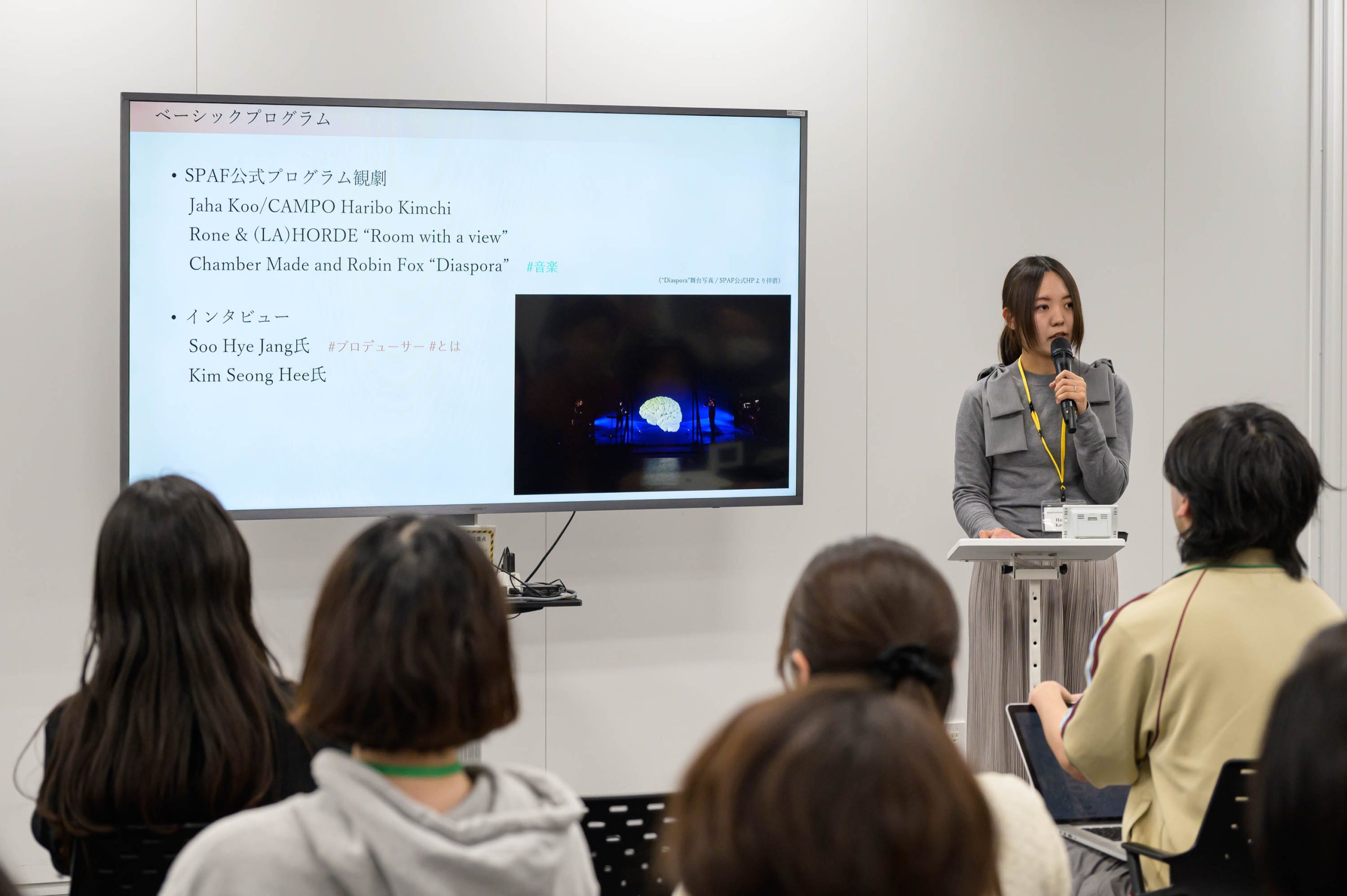
Haruka Kono [stage production]
I had the impression that South Korea was a country with a rich cultural budget, but as I talked with the people involved at the places where I was sent, I realized that some of the issues at the creative sites were not much different from those in Japan. At the same time, we were impressed by the variety of specialized facilities such as the Modu Art Theater, which has a high level of expertise in accessibility, and the Seoul Theater Creation Center, which opened in 2025 with the aim of discovering creators and improving the quality of works, and felt that they supported the foundation of the industry. It was also attractive that there were many festivals and opportunities for young producers and producers to work. It was an opportunity for me to think about my career and the role of producer as I aspire to become a producer in the future.
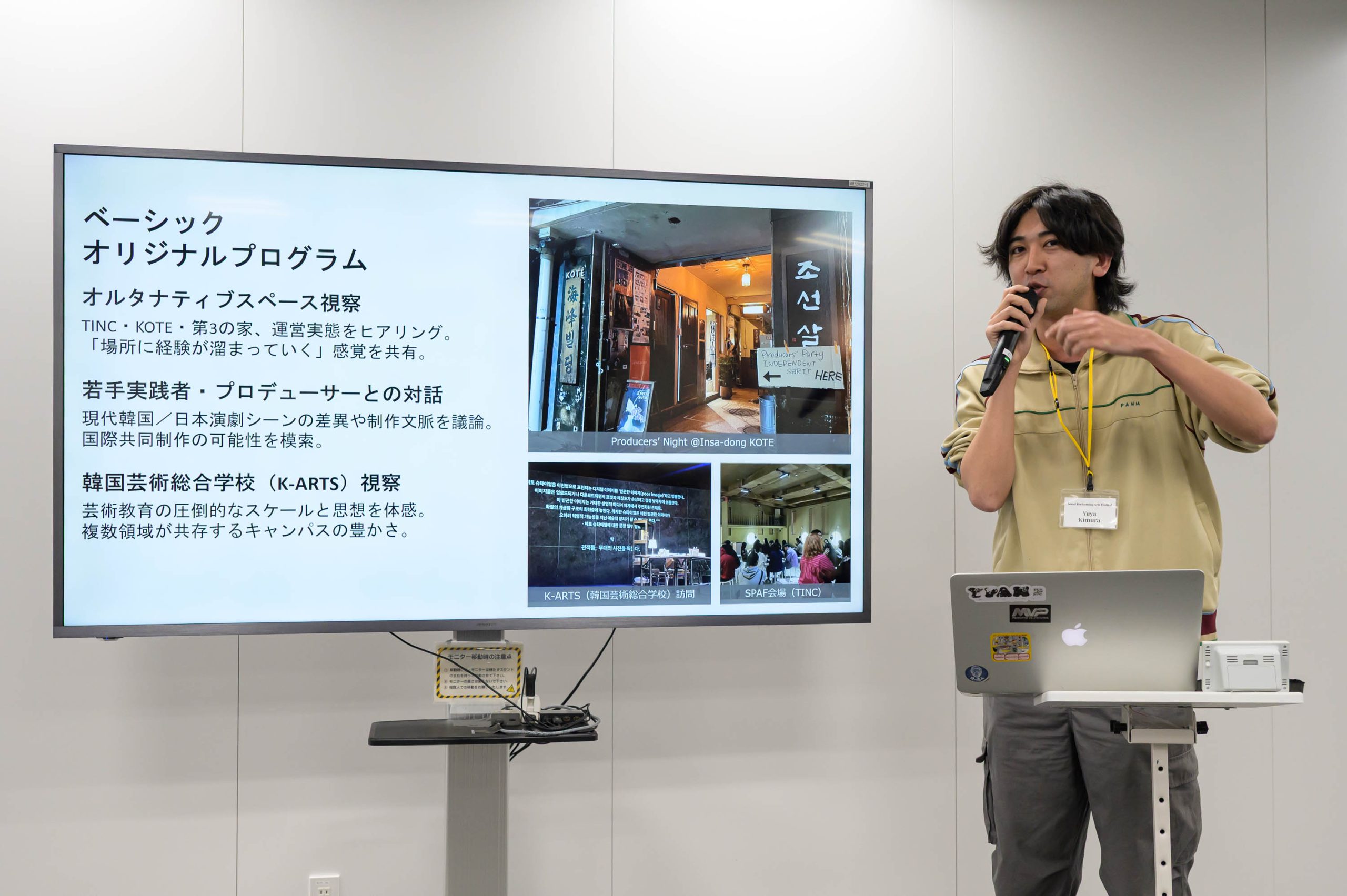
Tomoya Kimura [creators, writers, and space operators]
I always work with an interest in how to create a connection between the city and the performing arts. The tour of alternative spaces was particularly impressive. I was able to share the feeling that a place is not just a functional facility, but a place where people gather and experience is accumulated through a series of dialogues and plans, and the place itself becomes a soil that supports the next creation and practice. This made me reaffirm my determination to continuously open a place where people gather and dialogue is born.
During my stay there, my perspective shifted from the question of "why do we do international co-productions" to the stage of thinking about "how do we put them into practice?" That was a big change for me. In international exchange, we do not reduce each other to a common denominator. Rather, we believe that building relationships with differences remaining will be the driving force for the next round of cooperation.
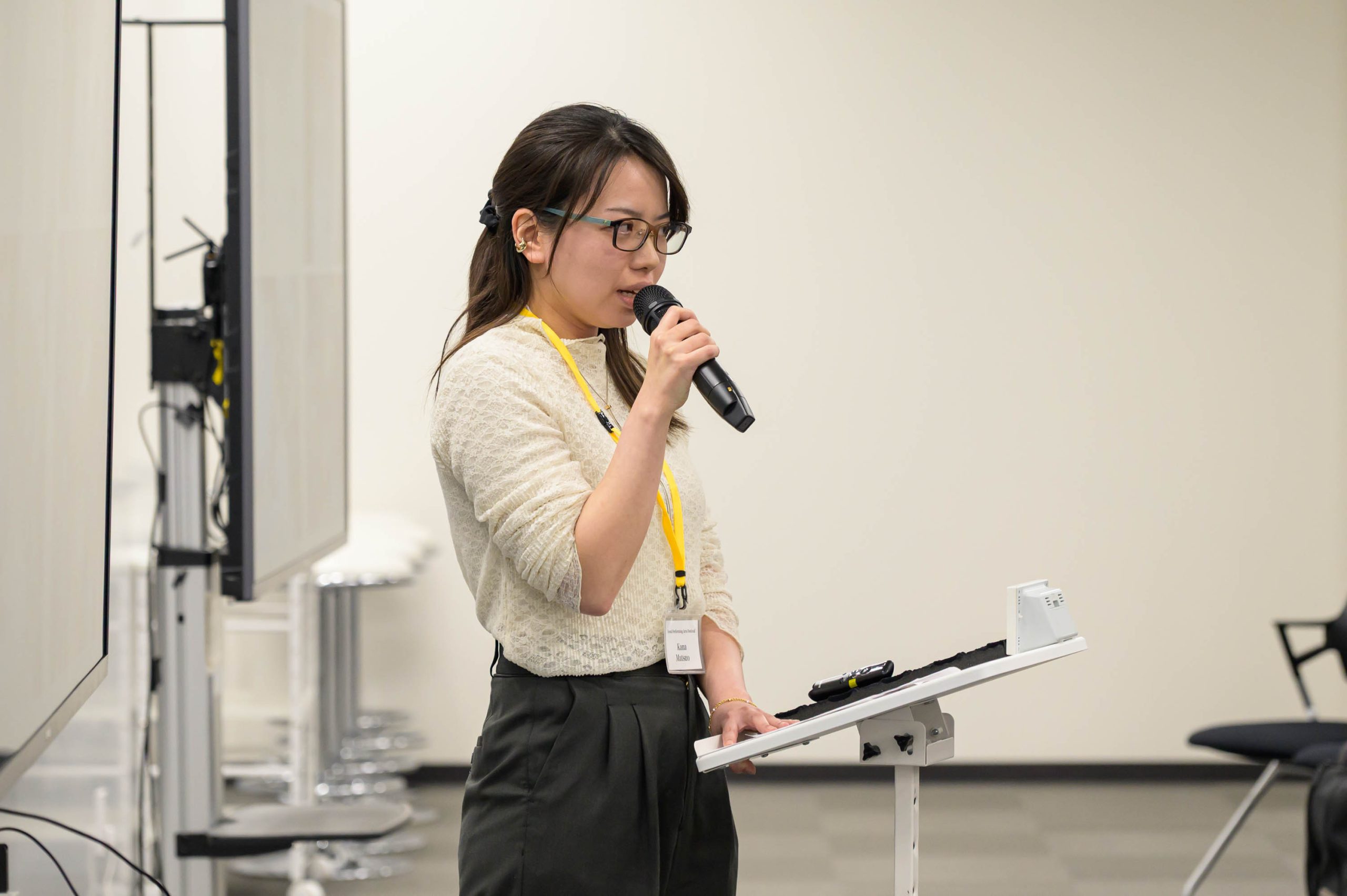
Kana Matsuo [producer]
As for PAMS and SPAF, I wanted to see as many works and pitches as possible, and I also wanted to experience local theater activities outside the festival. They also visited the practice room of Dong Theater Company, a theater company led by Kang Liangwon, who is active as director of Arco Arts Theater, and observed the rehearsal of Mukti. In this work, the issues of immigration and multicultural conviviality, which are issues in Korean society, are described, and I felt that the theme overlaps with Japanese society. Japan and Korea share many social issues and cultural backgrounds, and I think there is great potential for joint production through theater. I hope that through exchange we can build a new creative relationship while recognizing both common problems and differences.
◇Taiwan - Taichung Dispatch
"Taipei Biennale"
- Length of Placement:
- October 30, 2025 to November 6
- Advisor:
- KATAOKA Mami (Director, Mori Art Museum/Director, National Art Research Center)
[Basic Program]
In conjunction with the opening of the Taipei Biennale, one of the most important international biennales in Asia, the group visited major cities in Taiwan, such as Taipei, Taichung, Tainan, and Kaohsiung, visiting various museums and exhibitions, including the pre-opening of Taiwan's first museum and library complex, the Taipei Biennale.
[Original Program]
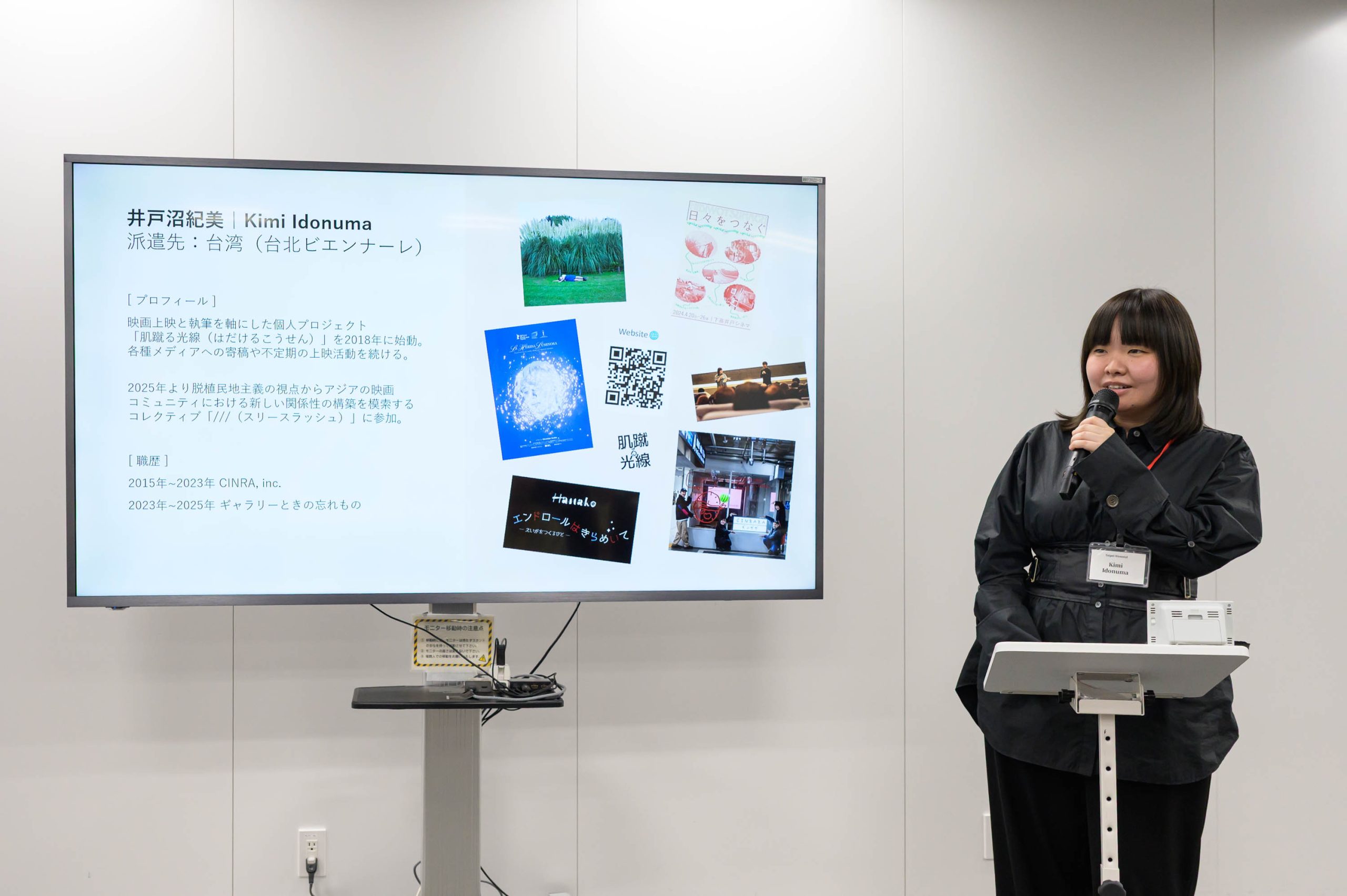
Idonuma Kimi [Curators, writers, editors]
We visited art house-affiliated movie theaters and movie archives and learned that they are engaged in a variety of activities, including film restoration, location support, and the opening of their library. Although the number of facilities that screen art films in Taiwan is not large, they are multifunctional bases that support film culture. We also visited independent film screening organizations in Taipei and Kaohsiung, and although they are small in scale, they interact with domestic and international filmmakers and introduce short films, student films, and other works that are difficult to screen in commercial cinemas. Having been able to visit both large structures such as museums and festivals and small independent spaces, I realized that the parallel existence of both activities is the foundation that supports cultural diversity.
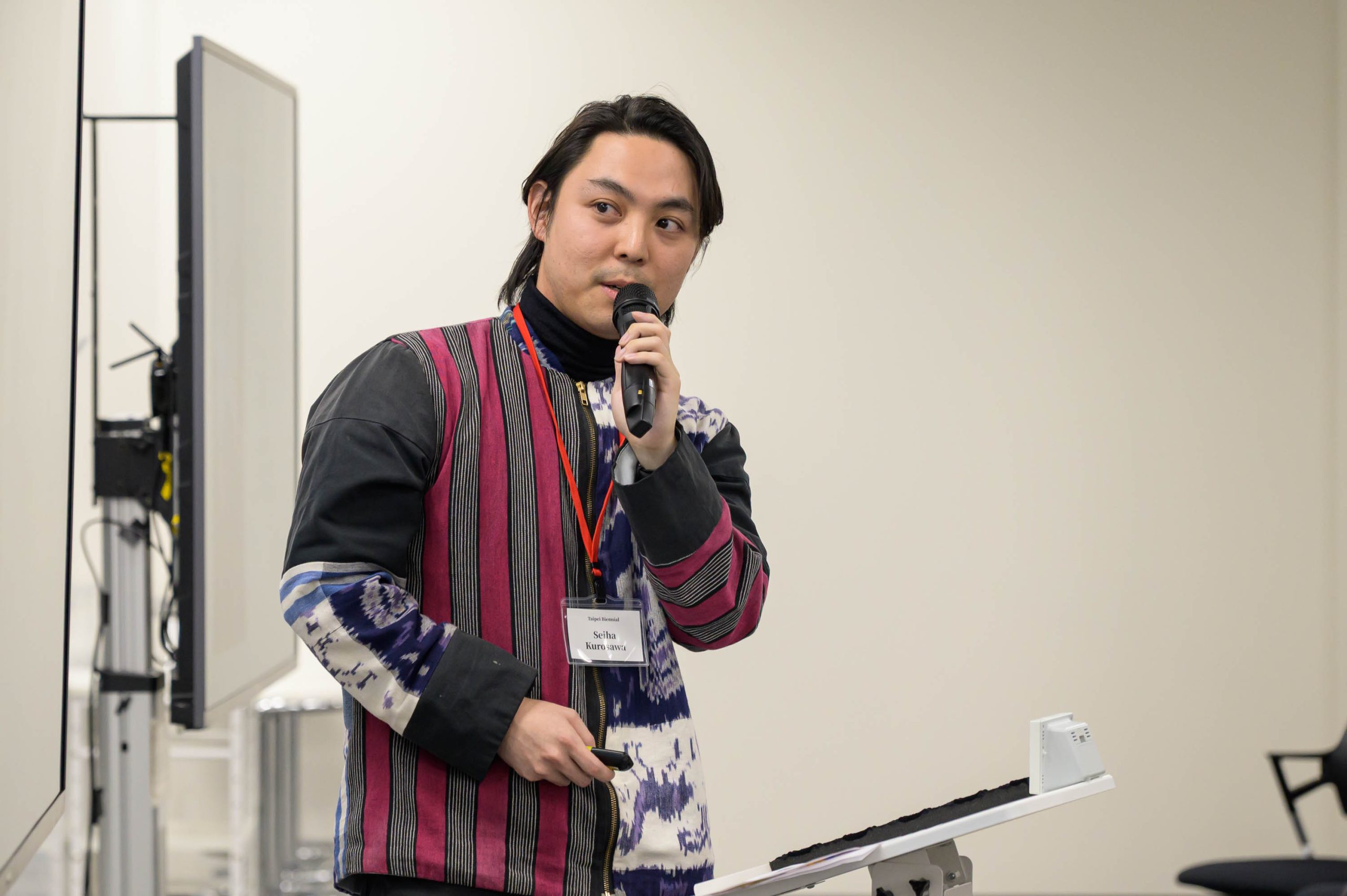
Seiha Kurosawa [Project Manager]
I am a member of the preparatory office for PAN Okinawa, an art center planned to open in Bise, Motobu-cho, Okinawa, focusing on the exhibition of contemporary Asian art. I participated in the event to deepen my understanding of the Taiwanese art scene and indigenous culture, based on the historical relationship between Okinawa and Taiwan. I visited the studios of indigenous artists and participated in workshops in the Taitung region in eastern Taiwan. I was impressed by the gathering of indigenous artists and artists from Hawaiian and other Pacific regions who were discussing culture and identity, and the formation of a network that connects indigenous cultures in the Asia-Pacific region. International contemporary art trends, such as the Taipei Biennale, and practices rooted in indigenous and local cultures coexist in Taiwan's art scene.Although the cultural backgrounds and activities of Taipei and Taitung are very different, I felt that this diversity is an important characteristic of Taiwan's contemporary art.
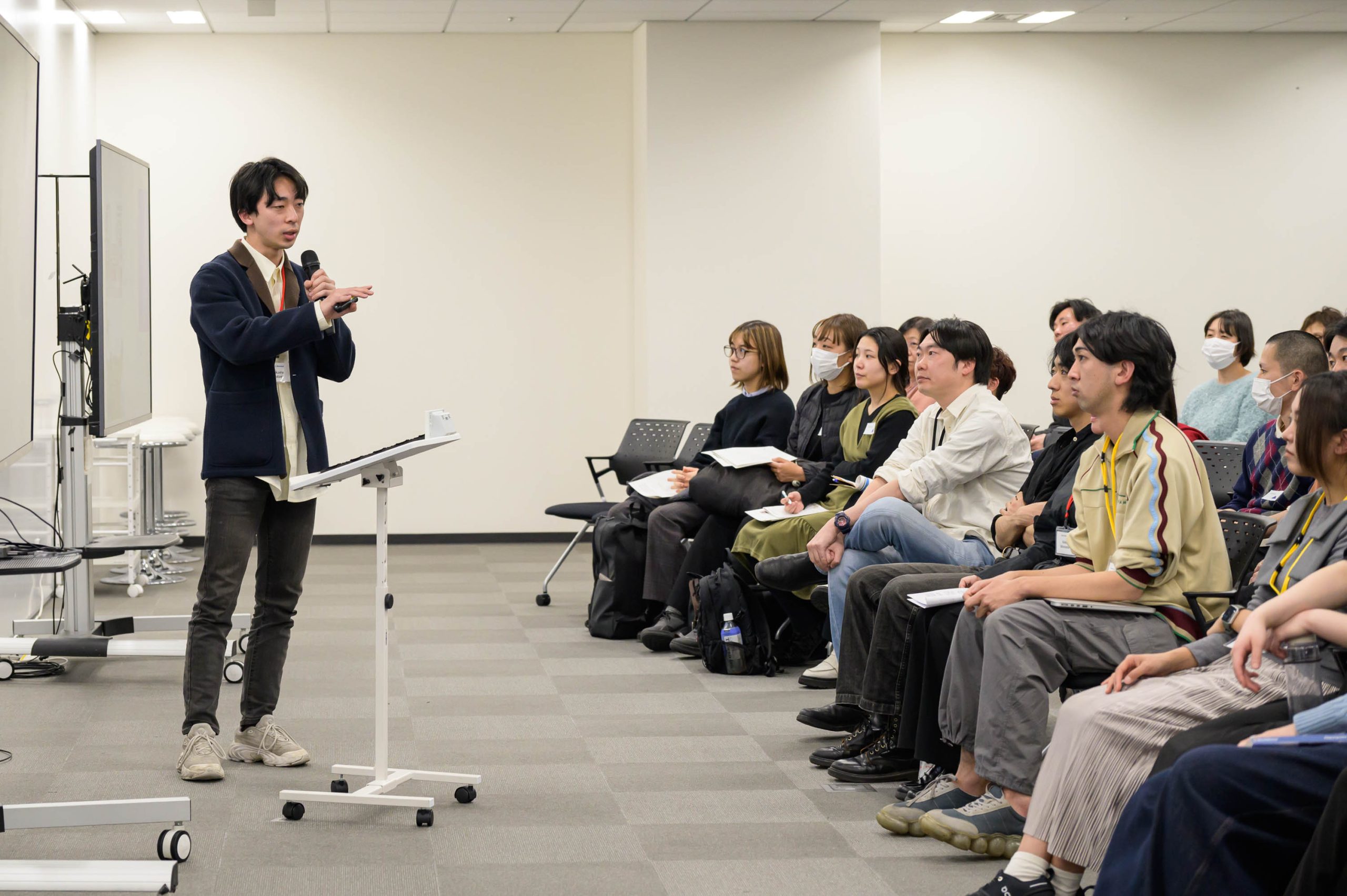
Wata Toshimitsu [Curator, installer, event planning]
As I am involved in the management of private museums, I was particularly interested in the management of museums, funding, and cultural policy. Visiting a variety of places, including private museums and local cultural facilities, I found the museum buildings themselves to be used as public spaces, and it was refreshing to see that they were used in a variety of ways, such as when the museum was closed, for activities such as exercise and dancing. Admission fees were relatively low, and the museum provided an environment where a wide range of people, from children to the elderly, could visit easily. In addition, art was incorporated into public spaces in the city, and I saw a situation where art naturally existed in daily life. I felt a love for the city and art. I also had a good impression of the non-capitalist flow of how to attract people who are not interested in art.
◇Visited Germany to Berlin
"Berlin International Film Festival" and "European Film Market (EFM)"
- Length of Placement:
- February 11, 2026 to February 18
- Advisor:
- Hirokazu Koreeda
[Basic Program]
Participated in the Berlin International Film Festival, a global film festival, and the European Film Market (EFM), a marketplace held simultaneously. During his stay, he mainly engaged in business negotiations and networking with producers, sales companies, and buyers from around the world who gathered at market venues.
[Original Program]
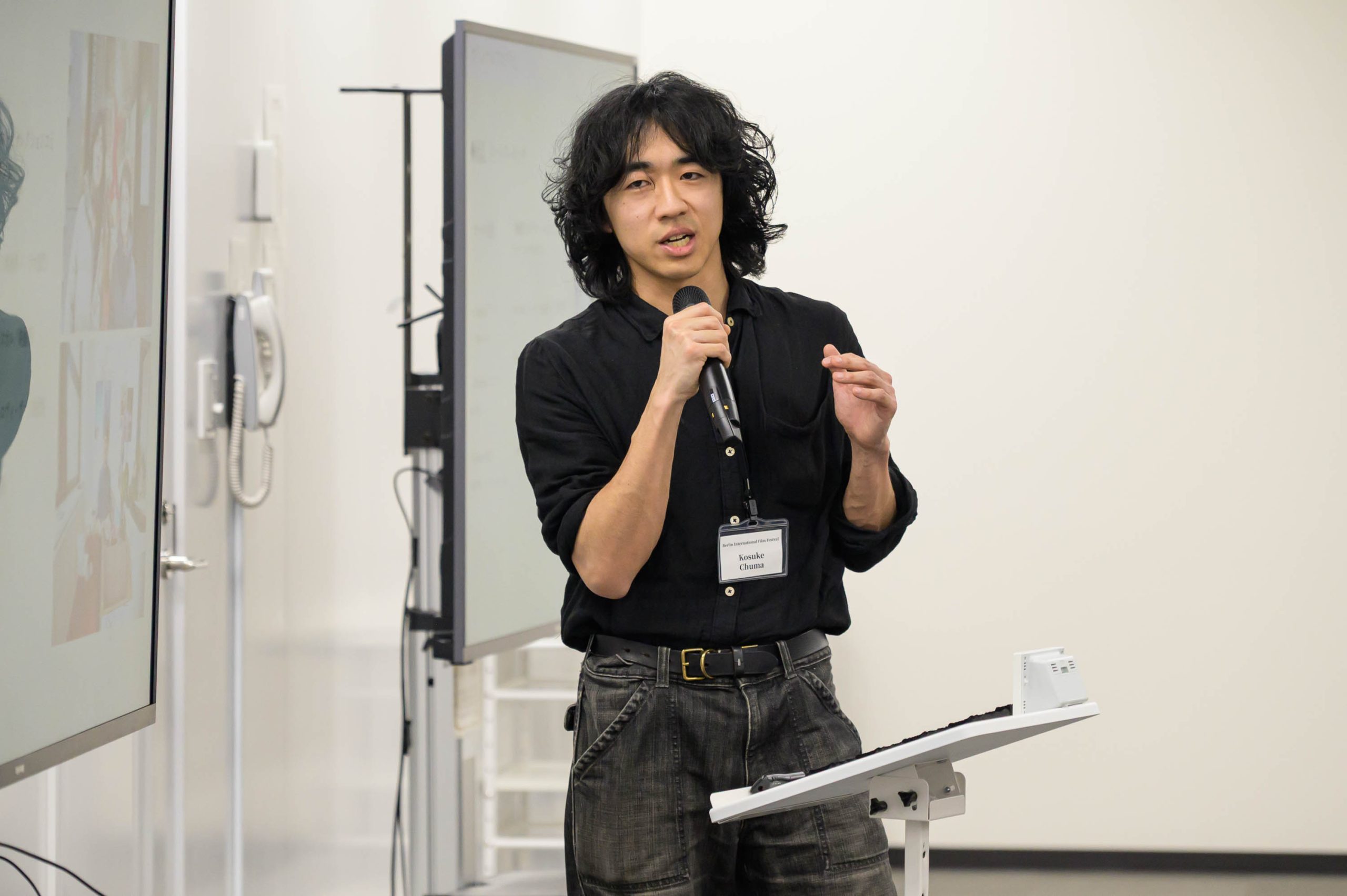
Chuma Kosuke [film producer]
As a producer, I was aiming to make a film out of an international co-production between Japan and Taiwan, and I joined because I wanted to build a network to expand my work to overseas markets. Through film festivals and markets, I was able to connect with sales companies, festival programmers, selection committees, and consultants who had sales channels, and I realized that I could explore the possibility of international distribution and screening of films in the planning stages. I think I was able to experience the real thrill of an international film festival, which is not only a place for films to be screened but also a place for an industrial network of producers, distributors, and festival officials. I also had the opportunity to learn about the history and activities of the queer film community, which made me realize once again that film is not just entertainment but also cultural practice with social and political significance.
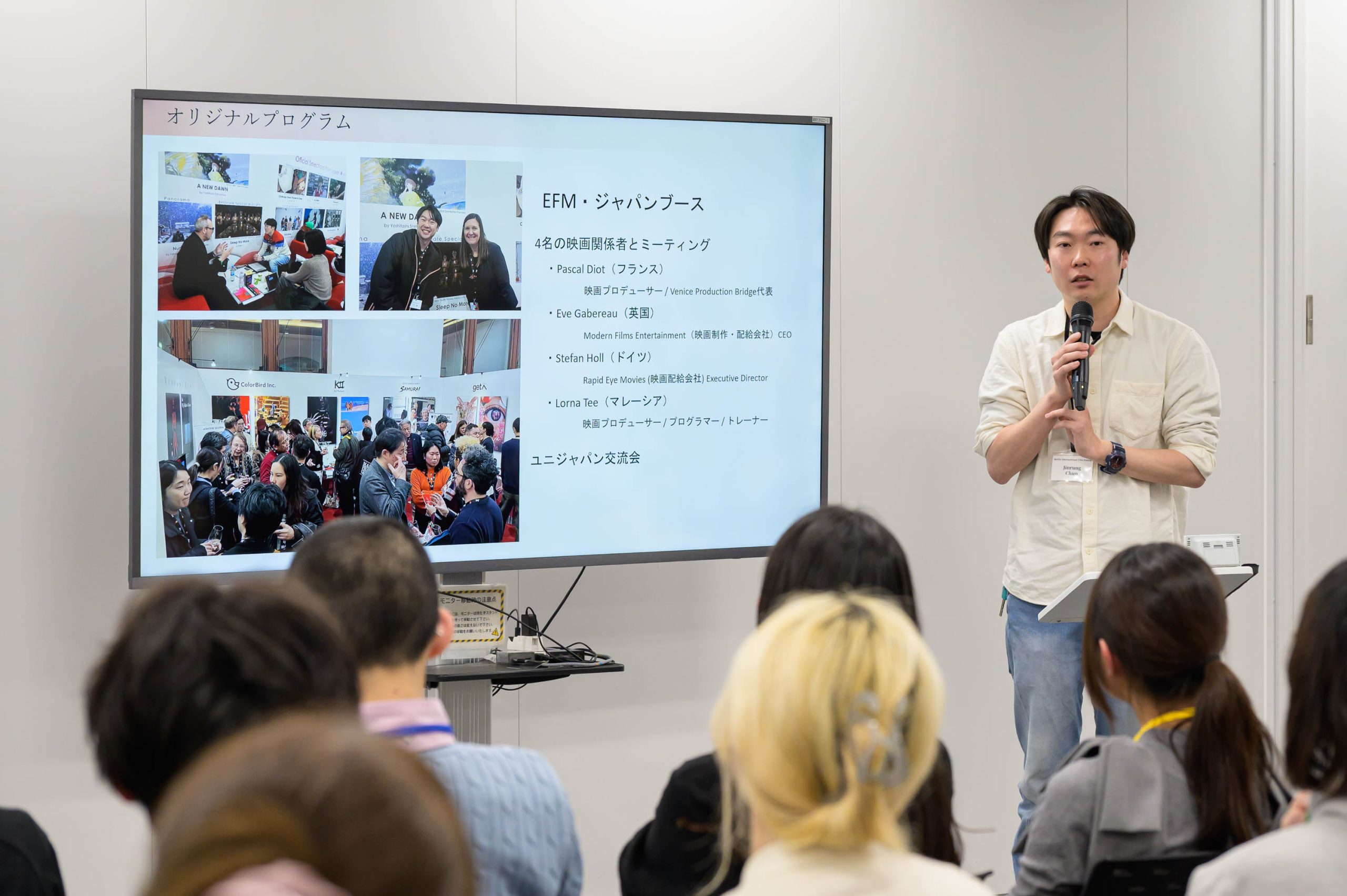
Tatsutaka Zen
While working on a feature film project based on a short film he directed, he participated in the dispatch with the aim of expanding the project's international development and production possibilities. I was able to have a meeting with four internationally active filmmakers and get their advice and comments on the script development stage. The history of Berlin also gave me an opportunity to think about ongoing conflicts and divisions in various parts of the world, and it was an experience that overlapped with the theme of my film. Lines marking the location of the old Berlin Wall remain throughout the city, allowing us to experience the history of division in the past in a cityscape that can now be freely traveled. We were reminded of the importance of depicting the stories of individuals and families that tend to be lost in history as films.
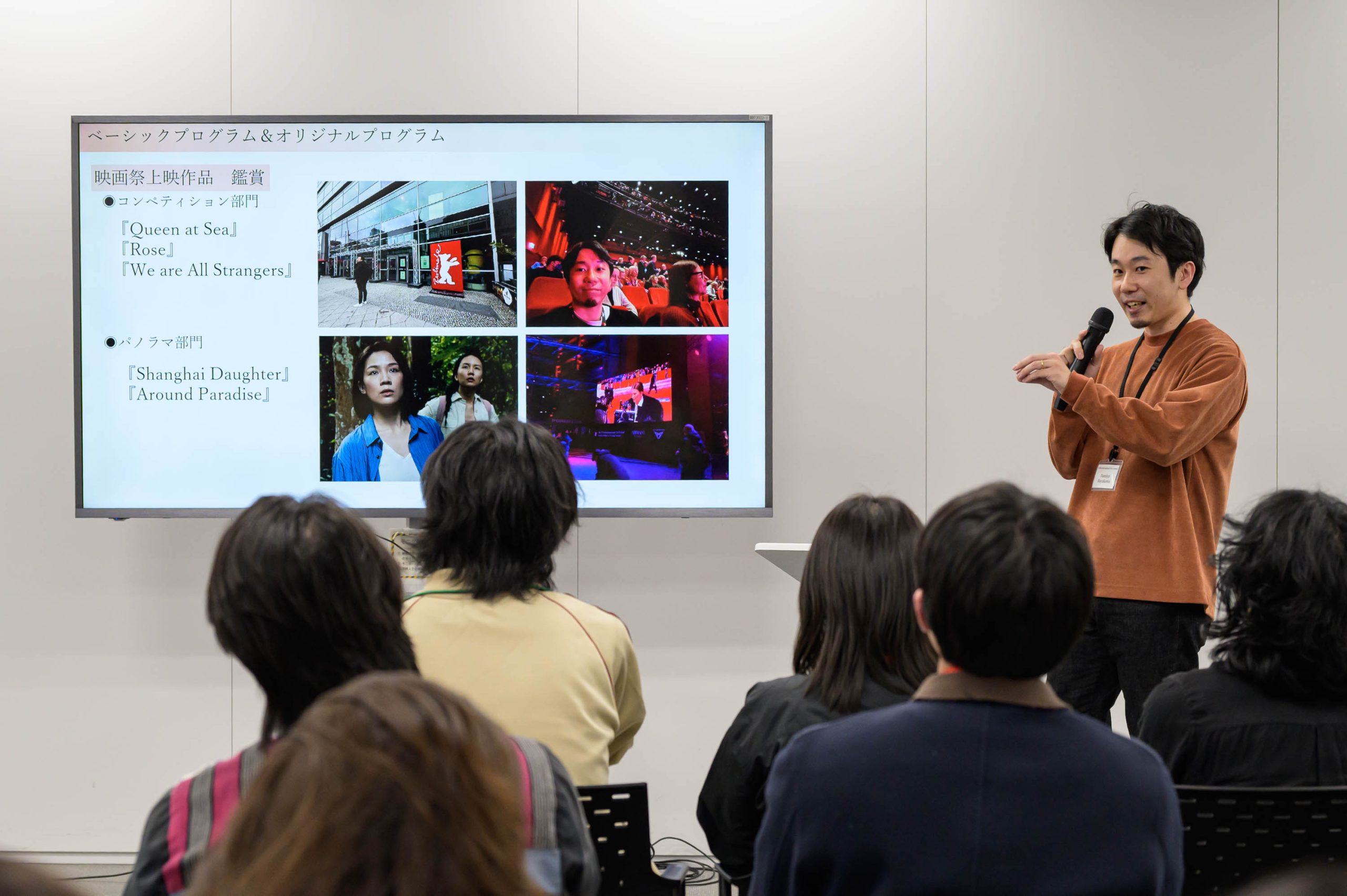
Fumiya Hayakawa [film director]
I am currently developing my first feature film project, and I participated in this program to build a network with European producers and sales companies in order to explore the possibility of developing it as an international co-production in the future. Through participation in "D&I Afterwork," an exchange event hosted by German and American film organizations, and "Taiwan Nights," a gathering of Asian film professionals, as well as meetings with sales companies and producers, I learned the importance of building an international network even for films in the planning stages, and I was also able to receive concrete advice that will be useful in the future production process, such as script development programs and grant programs. I was able to experience firsthand how the Berlin International Film Festival is widely enjoyed not only by film industry professionals but also by the general public, and I was impressed by how the entire city is involved in film culture.
Part 2: Roundtable Discussion
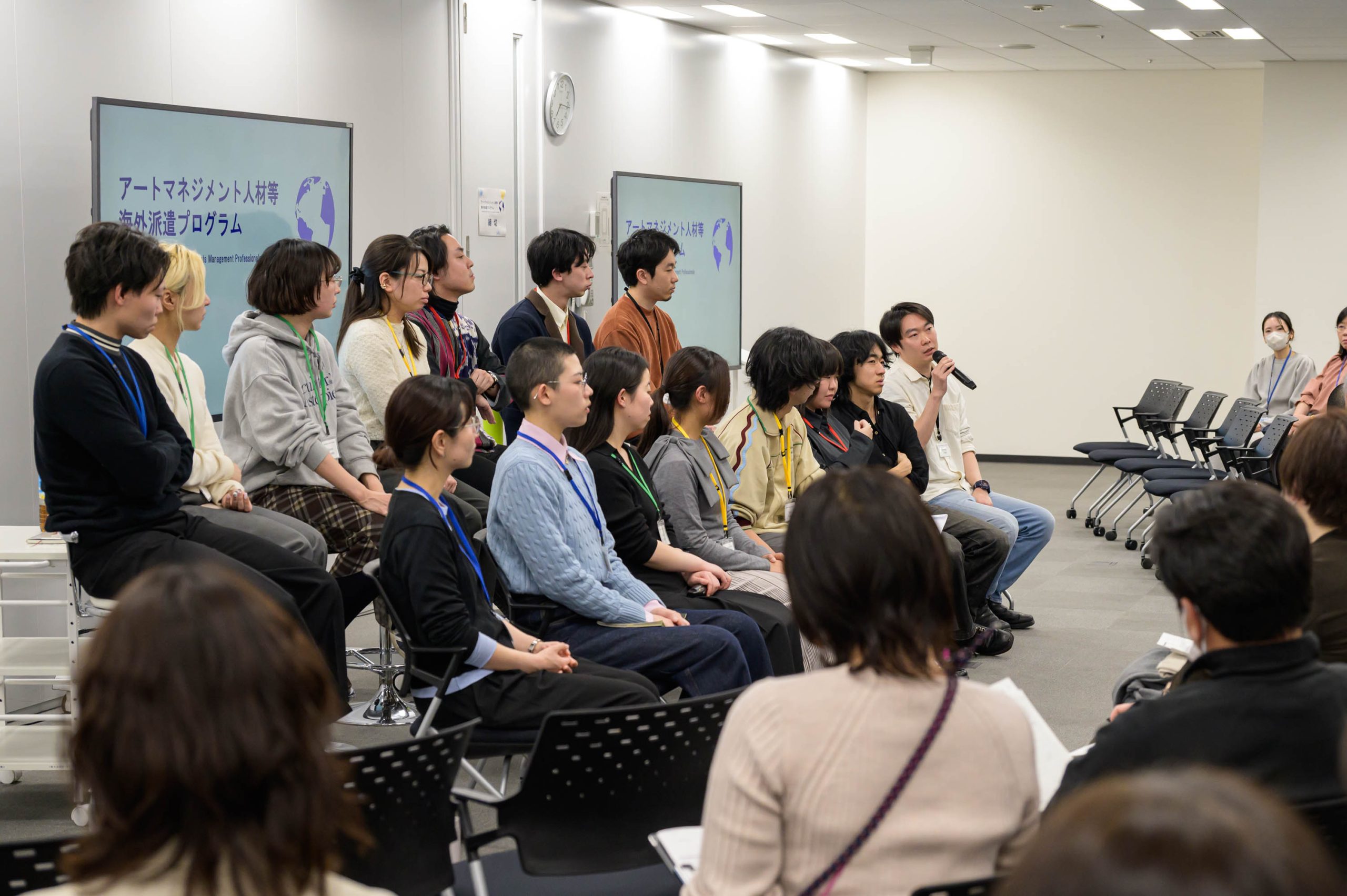
◇Dispatch to Edinburgh, Scotland: Thoughts and insights for future international co-productions Do you have?
Kota Noda: I think that working in Japan with foreigners living in Japan is also an international co-production. It's important to start small, and I think the relationship will expand more and more.
Mr. Zhang Yui: I have been selected as a fellow of the International Forum of "Theatertreffen" this May, and I heard that an artist acquaintance I met at the Edinburgh Fringe will be participating as a fellow, so I would like to do something together.
Mina Shinohara: In the field of music, compared to other fields of art and culture, expression does not depend on language, and at the same time, I think it is possible to take a soft view of international collaborative productions and expand and chew on them.
◇Dispatch to Seoul, Korea: What were some of the things you noticed during your visit that relate to your activities?
Kana Matsuo: Before I was sent to Korea, I looked envied at the country's abundant cultural budget, but when I actually talked with people involved in the places I was sent to, I felt that I could sympathize with many of the issues they faced on an individual level, such as balancing child-rearing and art management work, or balancing making a living and creative activities.
Tomoya Kimura: I felt once again that it is important to think constructively about how to realize what you want to do in the current environment. I would like to continue to interact with the people I met on the occasion of the dispatch as colleagues who share the same awareness of issues.
Haruka Kono: I was overwhelmed by the size of the cultural budget investment in the facility. At Modu Art Theater, in order to create works together with people with developmental disabilities, we are starting to develop people who can support them. I think this kind of investment in the future will accelerate the speed of cultural development in Korea.
◇Dispatch from Sao Paulo to Inyotin, Brazil: What are the prospects for future activities based on the new insights gained during the mission?
Nanami Sudo: I thought that I had to constantly update my own information so that I could share the familiar production environment and industry situation of my country with people I meet in international exchange and present the possibility of collaboration.
Mayu Hiyama: I was impressed that the curator himself demonstrated his responsibility (curatorship) by putting himself in the exhibition performatively. As a curator, I want to think about how I should pursue democracy as well as public service.
Kokoro Kimura: Even if we talk about international exchange and international co-production, more time is needed to realize it in Brazil than exchange and co-production within the Asian region, and I felt that I would like to contribute to raising the resolution of each other's culture and history a little more.
◇Dispatch from Taipei to Taichung, Taiwan: What do you think is necessary for international exhibitions in Asia to spread globally?
Toshimitsu Wata: From the point of view of a private museum, I am skeptical about being too international in setting a theme for an international exhibition. As we become bound by universal issues such as war, the environment, and gender, we may lose diversity. Rather, I think it is necessary to create a way to promote things unique to Japan that cannot be seen or experienced unless you go all the way to Japan.
Kimi Idonuma: In the past, there was always one curator from Taiwan in the Biennale, but I heard that they have changed their policy to expect what will be created by delegating to people outside Taiwan in order to open the exhibition to the world. Indeed, the German curators behind this biennial were all about breaking down walls and creating loose connections. I felt that the exhibition structure without captions was intended to make it possible to view the exhibition from the same standpoint without relying on language.
KUROSAWA Seiha: The Taipei Biennale has a long history, and while I think it has a certain level of quality as an international biennale, I feel that we are now entering a stage where we need to rethink what Asia is. It is important to rethink the depth of Asia itself, not the West. To that end, we can see the depths of Asia by going back and forth between countries and regions and learning things that we have never known before. I think this will lead to exhibitions that originate from Asia.
◇Dispatch to Berlin, Germany: What skills and things do Japanese film talent need to be active overseas?
Chuma Kosuke: I realized that it is important to go to the festival market from the planning stage to find overseas partners and investors. In order to do that, English and presentation skills are necessary as a prerequisite, and it is also important that the project itself is interesting, so I think it is important for the director and producer to work together to improve it.
Takashi Zen: I believe that raising the reputation of art cinema in Japan is a top priority. We need to broaden the culture of enjoying the film industry and art in general to the general public. I'd like to think about measures for that. I expect that if the general public becomes more interested in art films, they can be developed as commercial and business products.
Fumiya Hayakawa: Through this dispatch, I felt that there were many people who were interested and helped me when I passionately appealed my project from the director's mouth, so I think it is important not only for the producer but also for the director to be able to passionately explain his project in his own words.
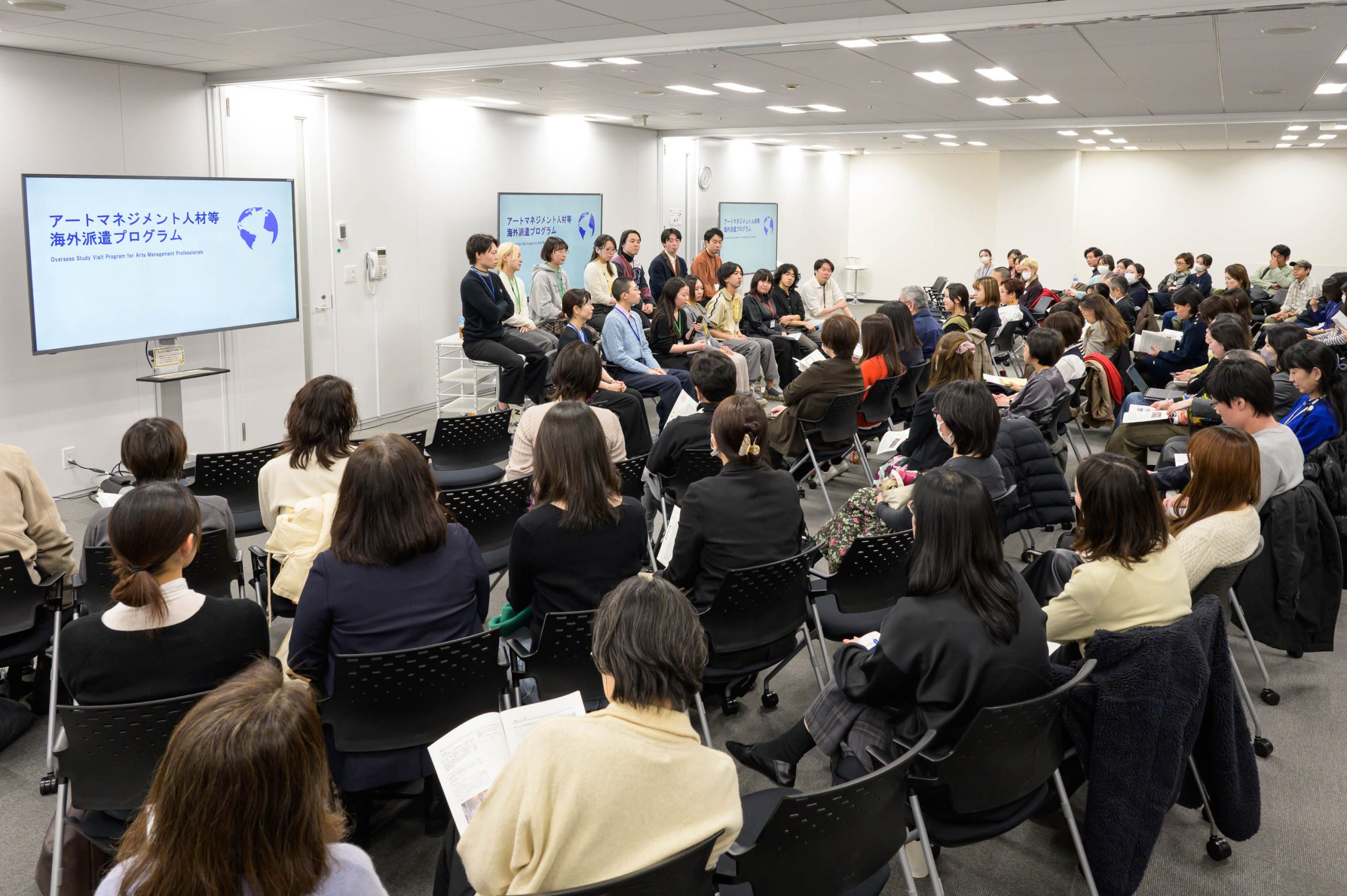
At the end of the second session, Ms. Chika Sudo, Director of the Arts Department of the British Council, who served as an advisor for the dispatch to Scotland, introduced the growing international demand for collaborations with Japanese artists, expressed her expectations for the development of producers and producers who can take on the role of international collaborations, and encouraged the future activities of the participants of the dispatch.
The debriefing session was filled with hints that can be utilized in future activities, such as finding common issues and being inspired by the direction each of them is heading, through sharing experiences with participants from various fields and destinations such as theater, music, visual arts, and film. Although the experience at the place of assignment and the exchange with people in the arts and culture overseas are only opportunities, it was encouraging to see that each person was making an effort to take advantage of the experience and connect it to the next step in their own activities, and that this was reflected in concrete projects and career development. I have high expectations for the future activities of the 15 participants.
[Temporary Participant Profile]
◇Dispatch to Edinburgh, Scotland
Mina Shinohara
Art Manager
Graduated from the Department of Musicology, Faculty of Music, Tokyo University of the Arts. Completed graduate studies at the Graduate School of Global Arts, Tokyo University of the Arts, and is currently enrolled in the doctoral program. Presides over "Achira Kochira," a collective that explores new forms of expression in urban areas, mainly by classical musicians. Since 2024, has served as a coordinator for "Art Access Adachi Otomachi Senju no En," and is also active as a producer/art manager at music and art projects.
ZHANG Yiyi
Planning and production (production)
After graduating from Rikkyo University's Department of Image and Body Studies, she completed her Master's degree at Tokyo University of the Arts' Graduate School of Global Arts and is currently enrolled in the doctoral program. While researching multicultural collaborative theater and community-based practices, she works as a producer and dramaturg. In 2024, she planned and produced the multilingual, multicultural collaborative theater production "The WORLD." In 2025, she planned and created a work-in-progress piece for Tokyo Metropolitan Theatre 's "Tokyo Borderless Theatre Project."
Kota Noda NODA Kota
Director, playwright, producer
In 2019, he founded Gekidan Ningen no Jitoku. Starting with music, he focuses on physicality and produces classical texts based on a modern sense. In 2023, he served as festival director of "Condition no Engeki Festival vol.1-Kabuki" and in 2024 he embarked on a new venture into contemporary issues with his production of The Human Condition, which deals with the Tsukui Yamayurien Incident.
◇São Paulo - Inyotin Dispatch in Brazil
KIMURA Kokoro
Curator
Master's degree in Arts and Society, Utrecht University, the Netherlands. In recent years, he has curated the public program of Art Collaboration Kyoto 2025 and The 5th Floor. He will also work on projects with Indonesian collectives such as MES56.
SUDO Nanami
Art Project Manager
Graduated from Waseda University in 2020. He started working as a freelance editor while at university, producing and managing articles for various media, designing and writing information for exhibitions. Since around 2022, NYAW inc. , Whatever Co., and manage artists and creators for exhibitions and other projects.
HIYAMA Maaru
Curator/Art Center BUG
Joined Recruit Art Center in 2023. Guest curator of Echigo-Tsumari Satoyama Museum of Contemporary Art MonET (2023-2026). His recent curation works include a private exhibition of Ai TANAKA, 'Reverse String' (Echigo-Tsumari Satoyama Museum of Contemporary Art MonET, Niigata, 2024) and a private exhibition of Yosuke AMENOMIYA, 'Ame to Amiya' (BUG, Tokyo, 2023). Designing and managing a program for CRAWL art workers (BUG, 2024-), he is practicing a curation methodology that is not limited to exhibition practice.
◇Dispatch to Seoul, Korea
KAWANO Haruka
Stage Production
Graduated from the Music Information Program of the Music Culture Education Department of the National University of Music. He joined the theater company Nutmic when he was still a student, and worked as a theater company manager and performance producer. Also, as a freelance producer, he is in charge of production and organization of small and medium sized performances and theater festivals.
KIMURA Yuya
Producer, writer, space operator
Co-director of theater collective "Zazi Zoo" and representative of "Kankakusha". Based in the multifaceted space "The City" in Nakamura-cho, Yokohama, he is constructing a circuit of "back and forth" between the city and the performing arts, crossing theater creation, place building and editing.
Kana Matsuo MATSUO Kana
Producer
Graduated from the Graduate School of International Art and Creative Arts, Tokyo University of the Arts, and completed the World Theatres course at Goldsmiths College, University of London. He is the representative director of the NPO Lunar Descent Society. With an interest in the creative process of performing arts, he has been working on recording and archiving theatrical workshops as well as stage performances by Damtype, Masataka Matsuda and Nutomic. Produced works include the musical play "How Was It For You?," the dramatic film Neighbor's, and the documentary film People's Land.
◇Taiwan Dispatch between Taipei and Taichung
IDONUMA Kimi
Curator, Writer, Editor
In 2018, she started her personal project "Hadakekeru Kosen," focusing on film screenings and writing. He continues to contribute articles to various media and to film irregularly. In 2025, he joined the "/// (Three Slashes)" collective, which seeks to build new relationships within the Asian film community from the perspective of decolonization.
Seiha KUROSAWA
Curator, Project Manager
After working at several museums in Japan, he is currently the curator/project manager of PAN Okinawa Preparatory Office. His major exhibitions include "Collection Exhibition 1: It Knows: When Form Becomes Spirit" (2023, Kanazawa 21 Century Museum of Contemporary Art), "Zero and Yayoi Kusama" (2020, Yayoi Kusama Museum), and Thailand Biennale Colato 2021(Co-curators, 2021, in various parts of Nakhon Ratchasima Province).
Toshimitsu WATARI Hikaru
Curator, installer, event planning
Works at the Watarium Museum. Installed and managed works at "Pavilion Tokyo 2021" and "Reborn-Art Festival 2021-22 (second half)." Atsushi Shindo (Senior Researcher, The National Museum of Western Art) and Katsura Yamaguchi (President, Christie's Japan) were invited as lecturers to give a series of lectures on how to interact with contemporary art.
◇Dispatch to Berlin, Germany
CHUMA Kosuke
Film Producer
Has been involved in domestic production of overseas films, dramas and commercials for TWENTY FIRST CITY since 2020. Works include Sunny (2024/A24) and Bullet Train (2022/Sony Pictures). In 2024, he purchased and distributed the movie "Grace." He is currently working on his first feature film production, Polaris Raining Night, co-produced with Taiwan.
CHUN JINRUNG
Film director
Born in Akita City, 3rd generation Korean resident in Japan. In the 2024 academic year, he directed, wrote and edited the short film "Route 7," a Japan-Korea co-production. This film has been shown and won awards at film festivals around the world. Currently, he is planning and developing a feature film with the support of "Film Frontier" sponsored by Uni Japan. He also finished shooting his first commercial feature film with Toei (a Japan-Korea co-production), which is scheduled for release in 2026.
HAYAKAWA Fumiya
Film Director
After graduating from Waseda University, he completed a master's degree in film production at the University of Texas at Austin. In the United States, he worked mainly on films directed by Richard Linklater and other independent films. He moved to Japan in 2024. His short films have been screened at the Academy Award-recognized Guanajuato International Film Festival and the Bogota Short Film Festival. He is currently planning and developing a full-length work, The Void Left.
(Courtesy title omitted)
Overseas Dispatch Program for Art Management Personnel
As Tokyo seeks to become a world-class city of art and culture, it is essential to develop young art management personnel who play a role in connecting Tokyo and the world by producing works that are world-class and disseminating their value and artistry. The purpose of this project is to send highly motivated young people to overseas art festivals for a short period of time, to experience pioneering works and creative sites firsthand, to promote creative activities from a global perspective, to provide opportunities to build and strengthen networks with overseas sectors, and to encourage them to take the first step in international activities.
2025年度 アートマネジメント人材等海外派遣プログラム
公式サイト
Text: Mami Maeda