
Tokyo Cultural Strategy 2030 aims to strengthen its function as an international art hub. One of the most important themes is the development of art management personnel. The "Overseas Dispatch Program for Art Management Personnel," which was launched in FY 2023, aims to provide short-term dispatches for young art management personnel to overseas art festivals and other events, to encourage participants to take the first step in their international activities through local experiences and exchanges with people involved in the arts and culture overseas, and to use this program as an opportunity to deepen ties between Tokyo and the dispatches and build and strengthen networks.
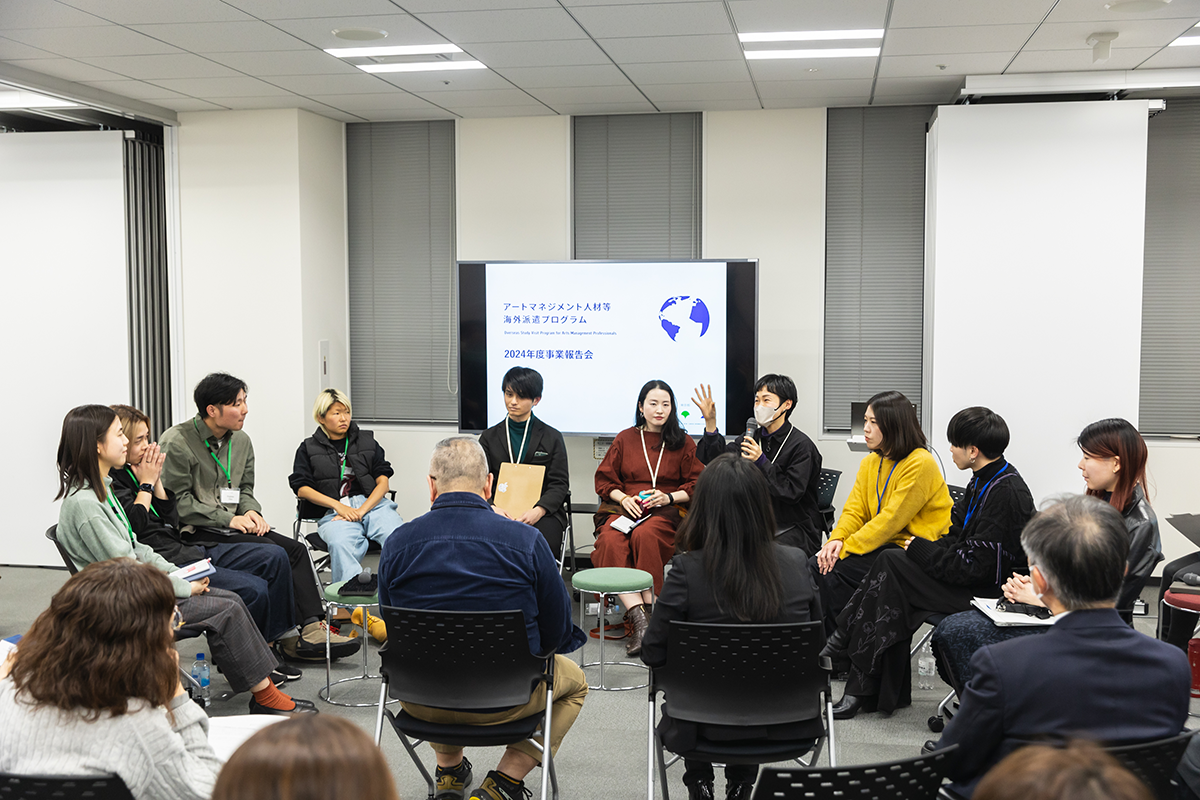
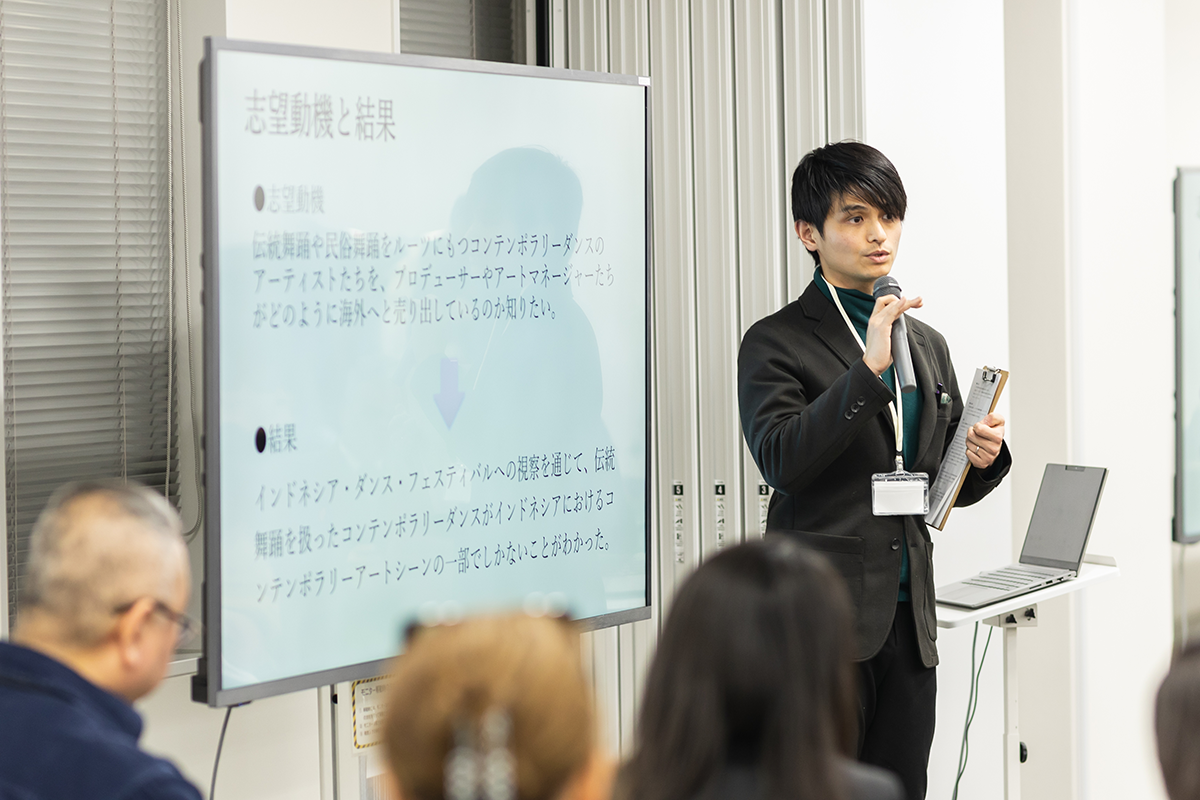
In fiscal 2024, which was the second such event, a total of 10 people participated. 3 people participated in the Venice Biennale, a leading biennale in the visual arts field. In the performing arts field, 3 people participated in the Indonesia Dance Festival (Jakarta), the oldest contemporary dance festival in Southeast Asia, and 4 people participated in CINARS (Montreal), the world's largest international platform.
On February 6, 2025, the participants gathered for a post-deployment briefing. In the first part, each student presented his or her experiences and achievements at the client site. The participants reported on the basic program, which was planned by the organizers and required participation, and on the original program, which was planned, negotiated, and coordinated by conducting research based on their own interests and conducting inspections and interviews with relevant parties. The second part was a roundtable discussion in which the participants deepened their discoveries and insights and discussed their future activities and developments after the dispatch.
◼️第1部 派遣参加者による活動報告
◇Report on Dispatch to Venice Biennale, Milan and Rome
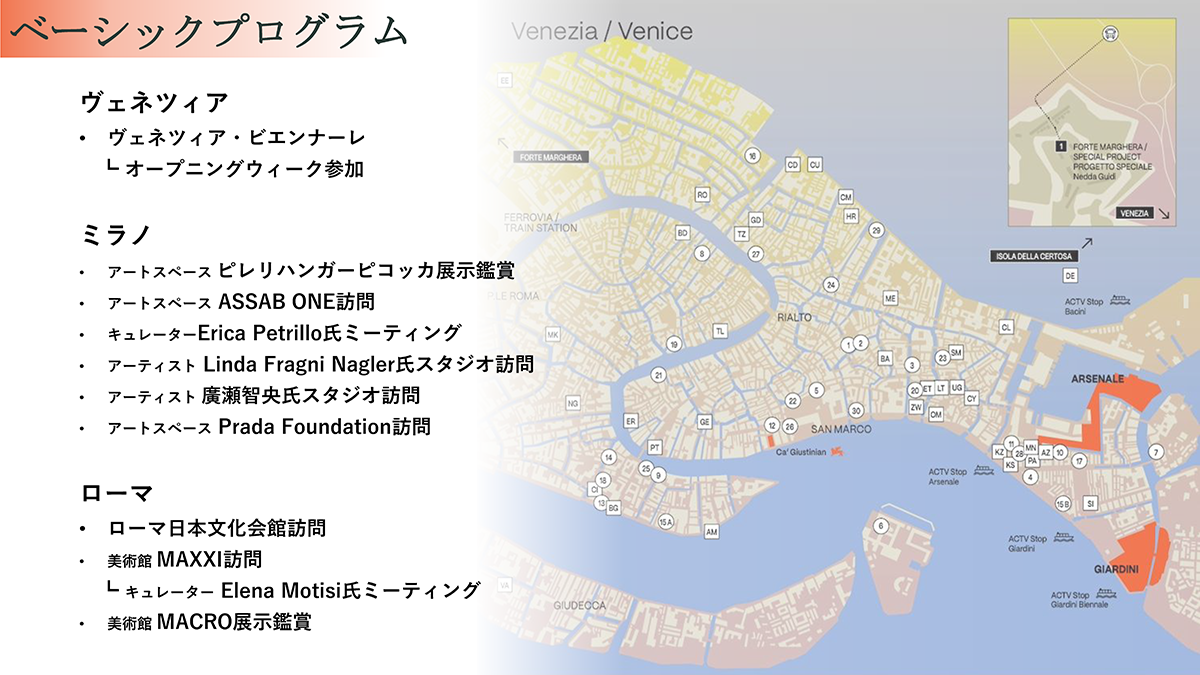
[Basic Program]
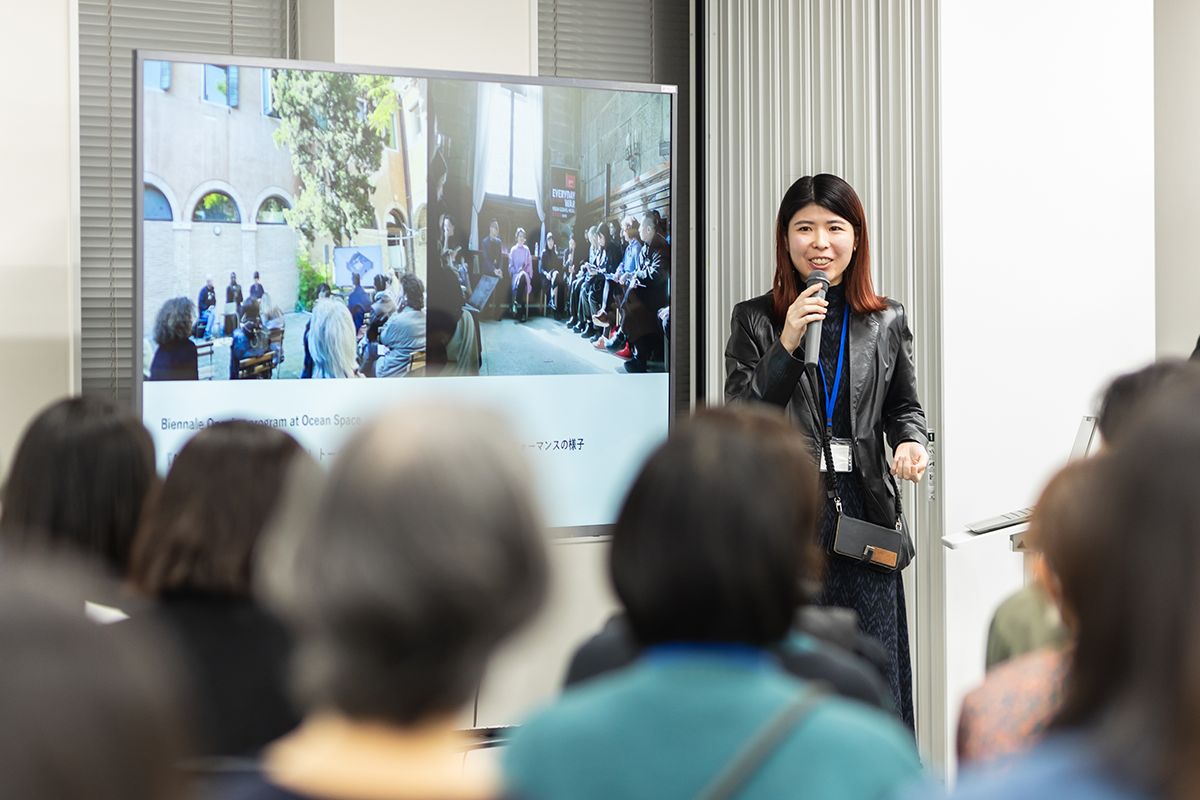
At the Venice Biennale, she participated in the invitation-only pre-opening "Vernissage." There were more programs than I could see during my four-day stay, and I visited each of them. Looking back, it was valuable to be able to participate in the opening week, which was also a stage for international exchange among people involved in art. Also, in Milan and Rome, he visited cultural institutions, viewed exhibitions, interviewed people, and visited ateliers. As she introduced herself many times wherever she went, she learned how to express her interests in English.
[Original Program]
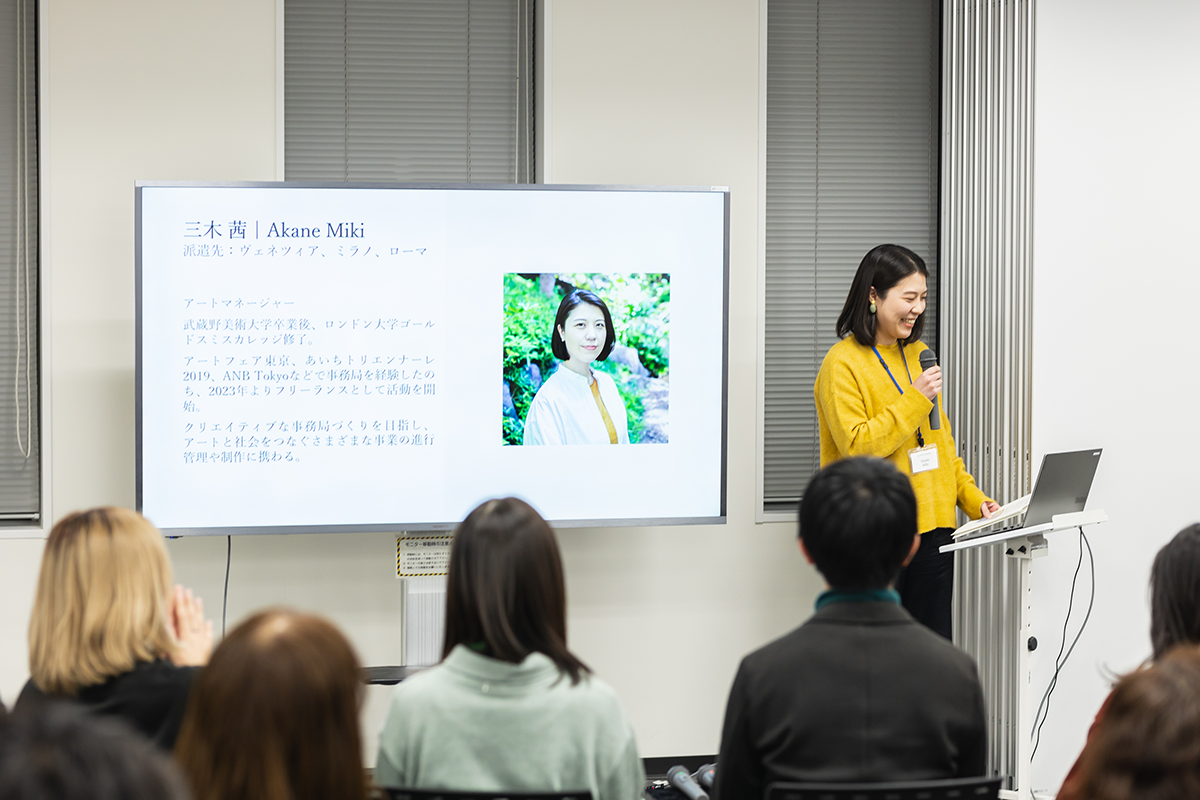
- Akane Miki [Art Manager]:
- At the symposium venue, video works are played in the foyer, and you can interact with them while enjoying a light meal. The idea of the secretariat providing opportunities for participants to interact socially was something I would like to incorporate into my own work. After returning to my country, I had the opportunity to reunite with artists I had seen in Venice, and we had a good time talking about them there, which gave me confidence.
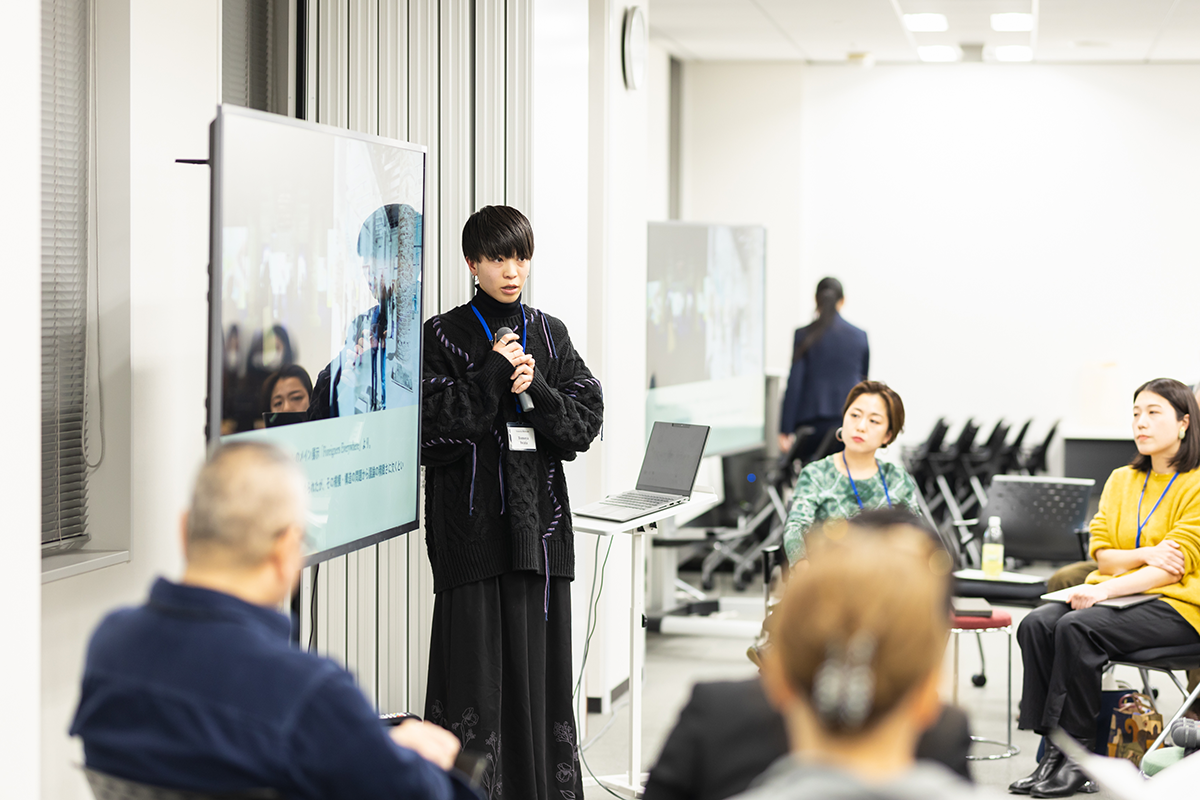
- Tomoya Iwata [curator]:
- I work with the idea of how to incorporate the concept and aesthetics of care into the practice of exhibitions, so it was meaningful to see the possibilities and limitations of this concept and practice, and to be able to have discussions with people involved in art from various countries. With the help of the curator I met at the Kazakhstan Pavilion, I was able to do research on the alternative art scene in Central Asia, which I have been interested in for a long time.
- Ms. Manami Totsuka [Independent Curator]:
- It was helpful to hear about independent activities on the international stage while meeting and interacting with people in the same industry at Vernissage. As soon as I returned to Japan, I was able to cooperate with the people I met at the Lithuanian Pavilion and make the exhibition happen, so I want to continue my international activities by connecting with them.
◇Report on Dispatch to Indonesia Dance Festival (Jakarta) and Drama Reading Festival (Yogyakarta)
[Basic Program]
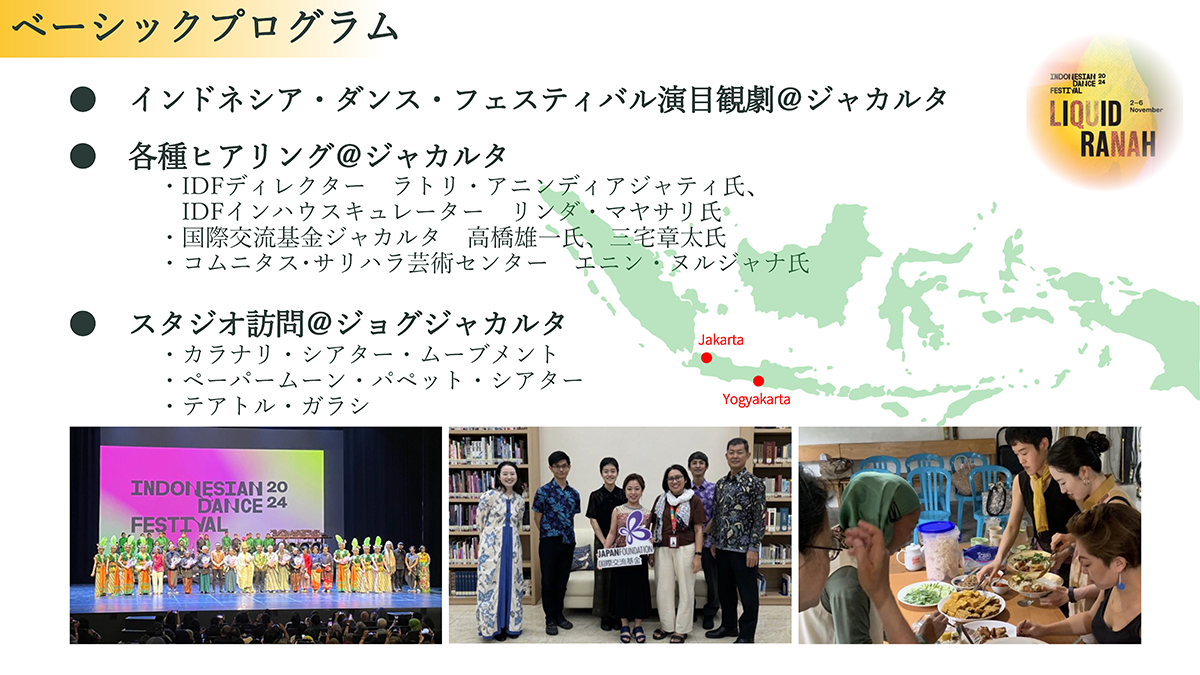
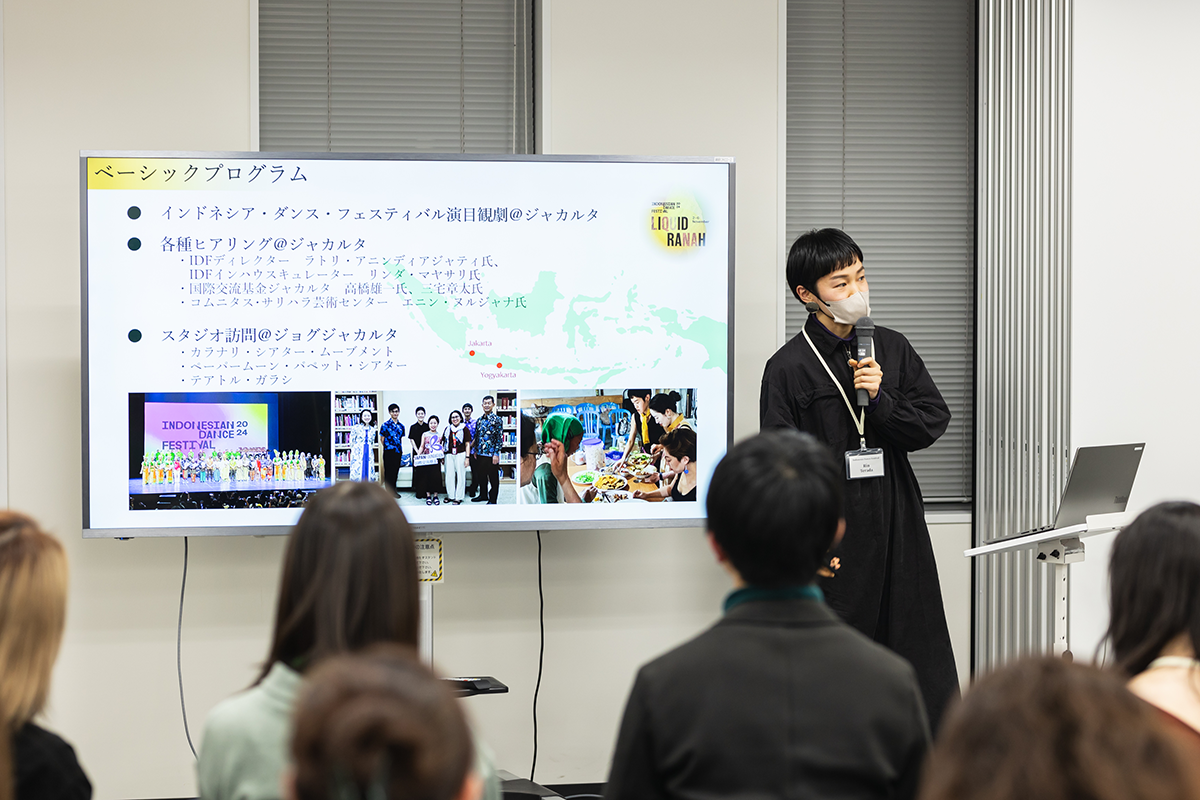
You will experience two festivals: the Indonesian Dance Festival (Hereinafter, IDF), which is strongly conscious of increasing Indonesia's international presence as a place for local artists to connect with the world, and the Indonesian Drama Reading Festival (Hereinafter, IDRF), which is based on the local community and tackles themes faced by local artists. In Jakarta, they interviewed IDF directors and curators, and in Yogyakarta, they visited studios and theaters where local artists and art workers are based. There seemed to be a lot of conversation about each other's activities, and I could feel the friendly atmosphere in the field.
[Original Program]
- Rin Terada [Production, Art Management]:
- The IDF paid attention to the fact that it was focusing on finding and developing human resources. The fact that I was able to imagine the production environment of local artists concretely through this dispatch will be useful for my future work. The adoption of collective curation by the IDF strongly conveyed a sense of mission to represent all contexts and localities, both domestic and international, as Indonesia prides itself on its cultural diversity.
- Monami Kikuchi [Director, performer]:
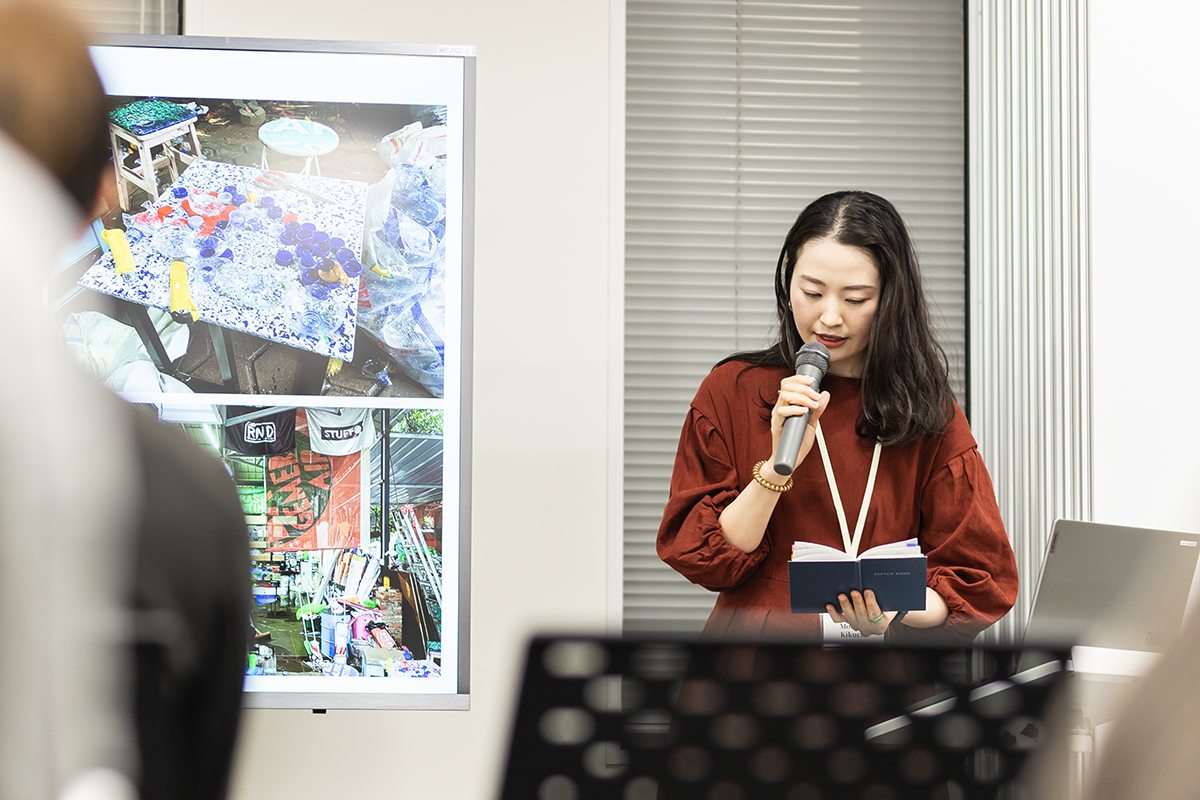
- There is a culture called Nongkrong, which means "get together and spend time together" and the phrase that the art collective is an extension of that culture left an impression on me, and I realized that the culture of Nongkrong is connected to everyday life. I also felt firsthand the formation of the art community in Indonesia and the energy of developing culture and economy.
- Yuta Kuroki [Producers, dancers, directors]:
- I was inspired to see the IDF moving toward international solidarity more than I had imagined. In particular, the lectures for young artists covered topics such as fundraising and solidarity for artists, which were similar to the situation in Japan.
◇Report on Dispatch to CINARS (Montreal)
[Basic Program]
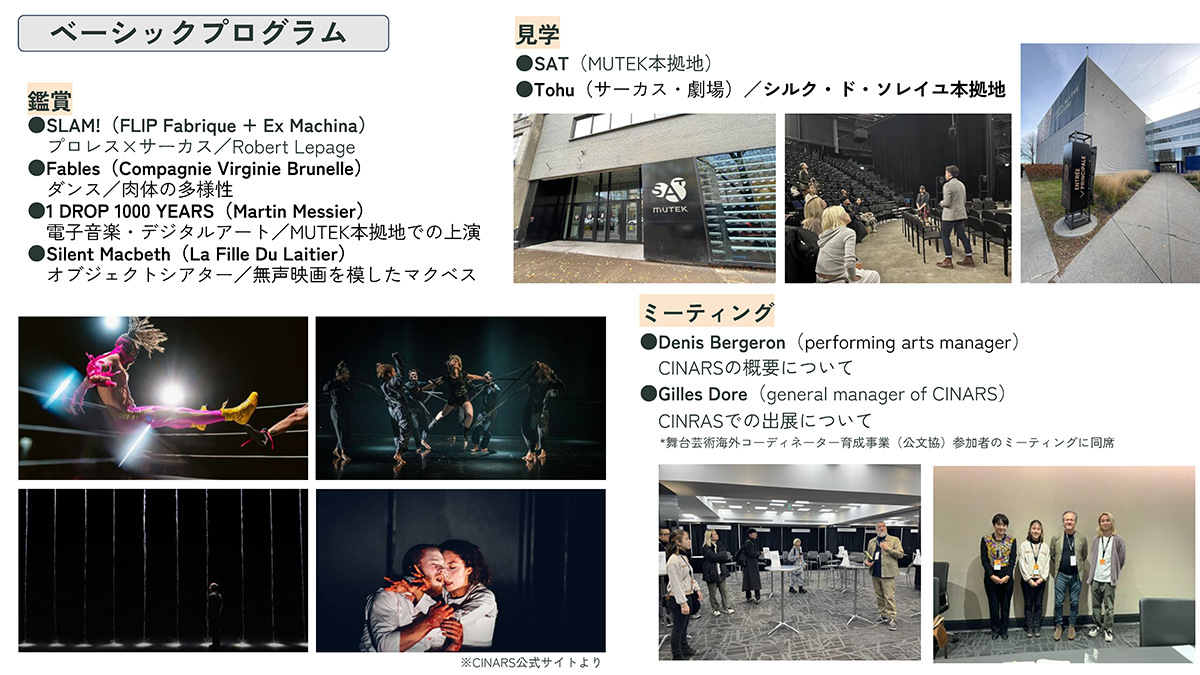
In addition to seeing several performances by CINARS, he visited the home of MUTEK and Cirque du Soleil. We delve into the heart of Montreal's world-class performing arts, including media arts and contemporary circus. In a meeting with the executive director of CINARS, he was encouraged by the reassuring advice that "Take a long-term view and build a relationship over the course of two or three visits."
[Original Program]
- Kentaro Otsuka [playwright, director, and producer]:
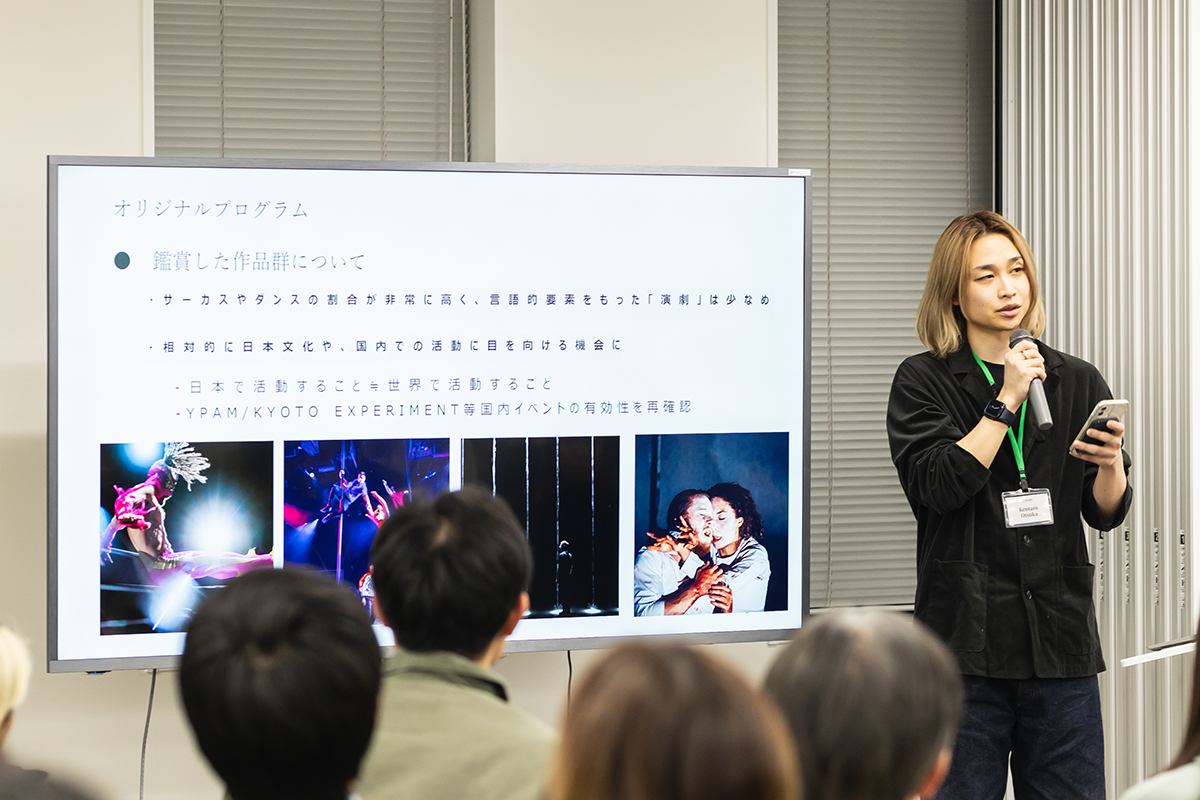
- I had the opportunity to speak with Sonoyo Nishikawa, a stage light artist living in Montreal, and learn about the level of public funding for the physical arts, their understanding of culture, and their high awareness of sustainability. Producers from all over the world visited CINARS, and through this exchange, we were able to understand the challenges and possibilities of sending Japanese works overseas. I also realized that YPAM (Yokohama International Performing Arts Meeting) and KYOTO EXPERIMENT (Kyoto International Performing Arts Festival) are attracting a lot of attention internationally, and I thought that there is still something we can do in Japan.
- Osamu Ono [Art Manager, Admin, Creator]:
- It was impressive that CINARS had many mechanisms for participants to talk to each other in the flow. You can watch the performance while having a drink at the venue, and after the performance, you can enjoy the atmosphere and talk while taking the same shuttle bus back to the hotel. Since the base is the hotel, you can interact casually in the lobby or pool. There are various mechanisms that naturally connect you with the people involved. I felt that it worked effectively for the networking of the participants.
- Nami Kasagawa [Choreographer, staging director]:
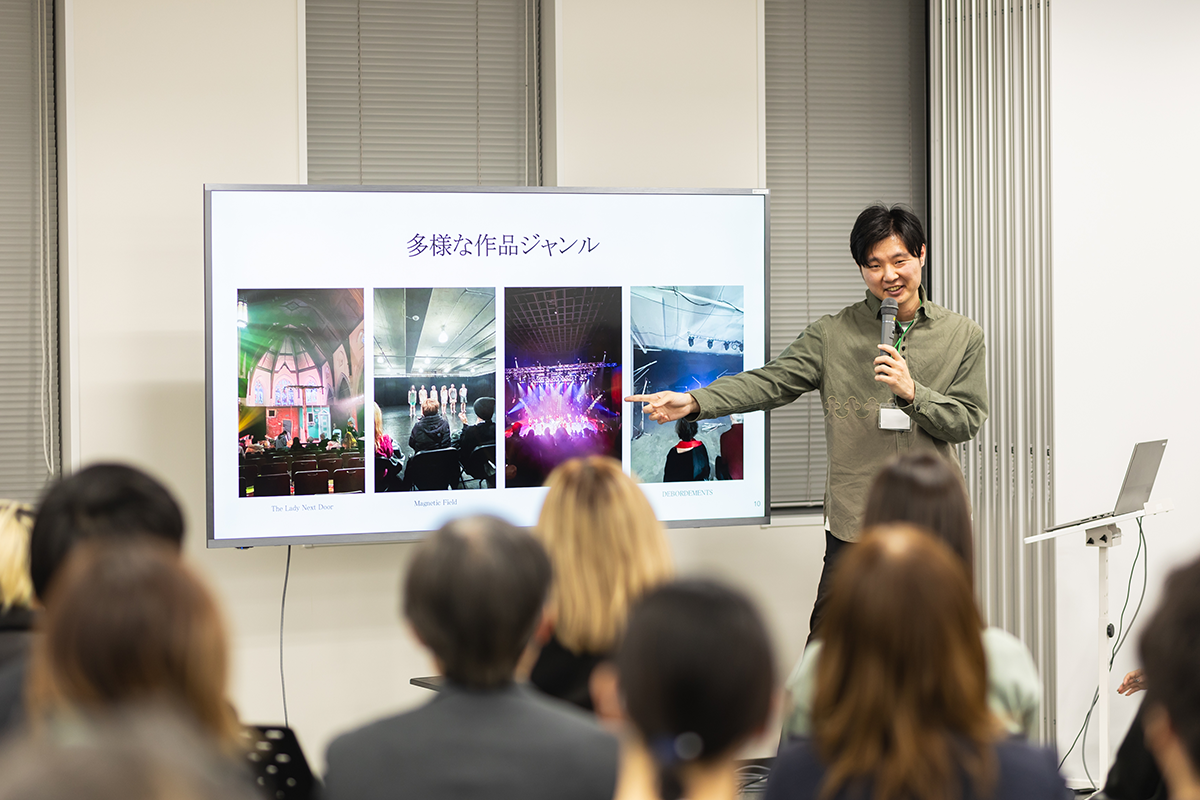
- Every morning at the hotel swimming pool, there were lots of opinions in different languages and it was exciting. After returning to Japan, I was introduced to Cirque du Soleil by my advisor, Mr. Yuki Hisayama, a cultural affairs officer at the Quebec government's office in Japan. At the casting meeting, I was impressed by the well-written labor contract and working environment. I listened with great interest to learn how to improve the situation facing young performers in Japan.
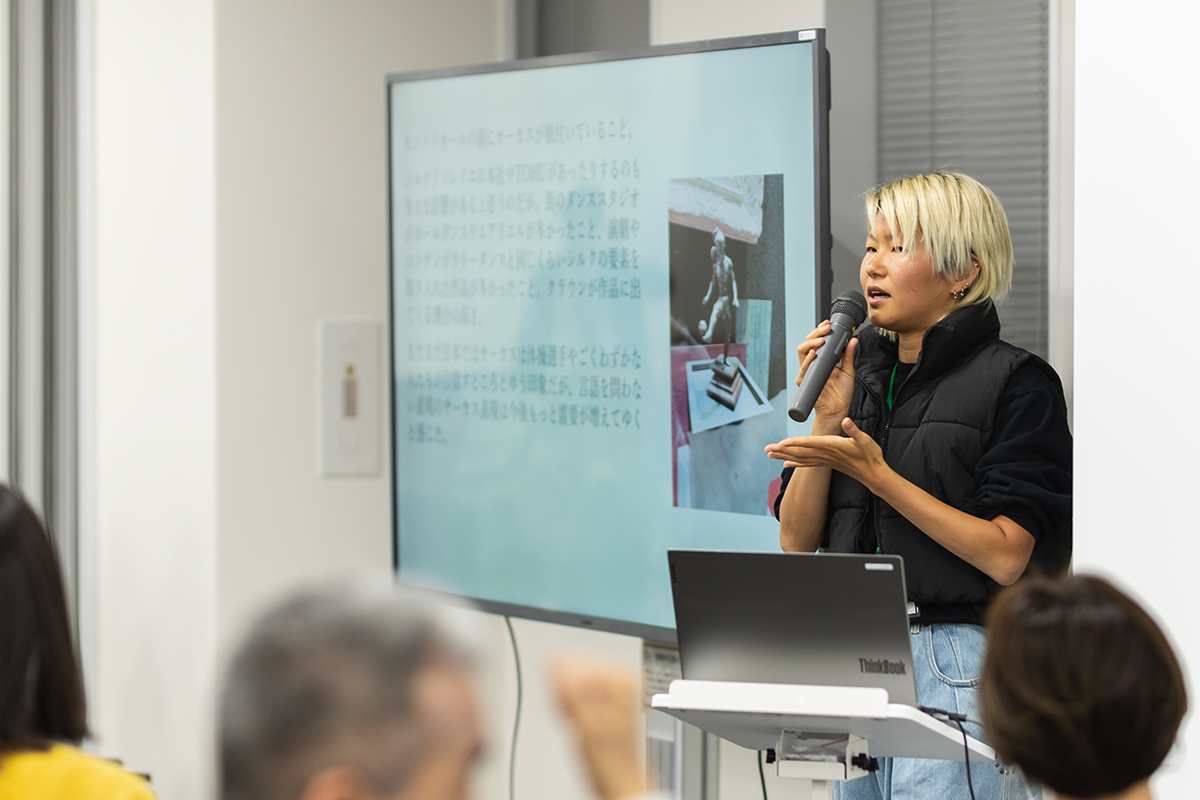
◼️第2部 座談会(ラウンドテーブル)
- Moderator (hereinafter M):
- Thank you for your presentation in Part 1. From now on, I would like to have a round-table discussion, including what we still need to talk about and what we would like to ask each other. First of all, a question for all of you. Based on your experience in this dispatch program, how would you like to work in the future?
*Participants from Venice Biennale (V), Indonesia (I), CINARS (C) - Ohno (C):
- I am proposing that the network design I experienced at CINARS be implemented in my overseas dispatch business.
- Kasagawa (C):
- I want to have a base outside Japan. I want to become a person who can do creative work overseas.
- Kuroki (I):
- I would like to develop existing projects by making use of the new contacts I gained through the dispatch. It would be interesting to connect my specialty of creative activities with disabled people to Indonesia!
- Kikuchi (I):
- My desire to collaborate internationally has become stronger and more concrete. I want to start moving toward realization.
- Terada (I):
- I reaffirmed that human resource development is the axis of my career. I realize that it is important to go out and meet people and visit festivals on an ongoing basis. Also, when accepting invitations from overseas, I wanted to consider whether I was forcing the way of doing things in my country and excluding anyone.
- Miki (V):
- It became clear what I wanted to do because I explained who I was many times. I want to create such a place for young people.
- Iwata (V):
- Having experienced such large-scale events, I have come to see the international activities I want to work on in my alternative space. If I get involved in curating an international exhibition someday, I will be able to make use of this experience.
- Totsuka (V):
- My goal is to continue working overseas.
- Usuda (C):
- I sympathize with your attitude that public relations is communication. I ’ d like to continue to share my experience, keep meeting people, and seek new opportunities to meet people from overseas.
- Otsuka (C):
- I want to create a new model of theatrical activity where success as a show is balanced with the pursuit of what we want to do.
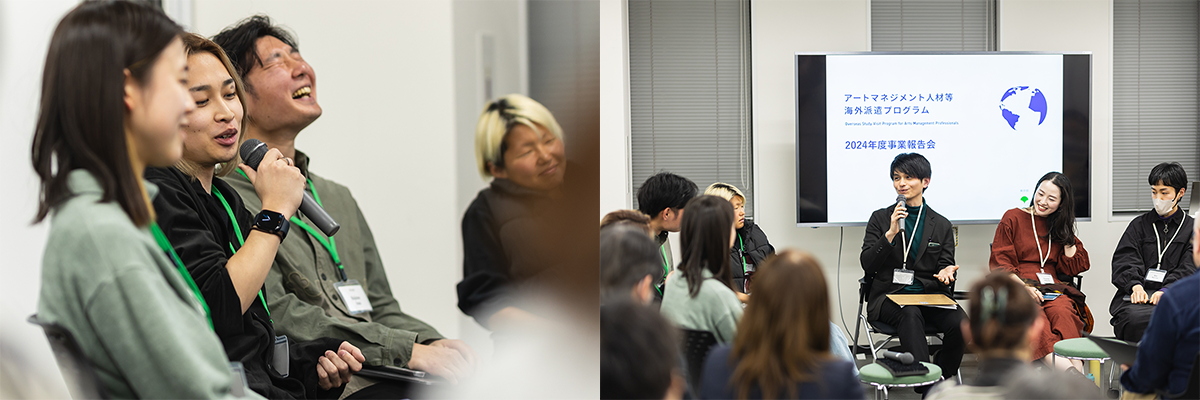
- M:
- What inspired you the most when you were there and what you learned when you were there?
- Kuroki (I):
- With the relocation of the capital, Jakarta is trying to transform itself into a cultural hub, and it was impressive that the festival played a part in this transformation.
- Totsuka (V):
- At the Venice Biennale, I got a glimpse of the hard work of the curators in coordinating the political situation of each country behind the scenes.
- M:
- What do you think is different between Japan and overseas, and what are the good points that you would like to adopt in Japan?
- Miki (V):
- It is not a place of art for the sake of art, but it is very open to various things such as international relations and environmental issues. Talk events and symposiums should be strengthened in Japan. It would be great if the Japanese field could take the time to devote resources to how to deliver the works.
- Kikuchi (I):
- I was impressed by his flexibility in doing what he can do now, and his richness in creating something in the margins. I wish I could be a person who can create space. I wanted to create a place for people of the same generation to learn about the relationship between Southeast Asia and Japan, the historical background of Japan, and its international position.
- Otsuka (C):
- In Japan, subsidies for the performing arts have a strong meaning of compensating for deficits, but if there is a system that leads to development beyond the subsidies, such as investment support for venture companies, I feel that it will be easier to create works that aim to expand internationally, for example.
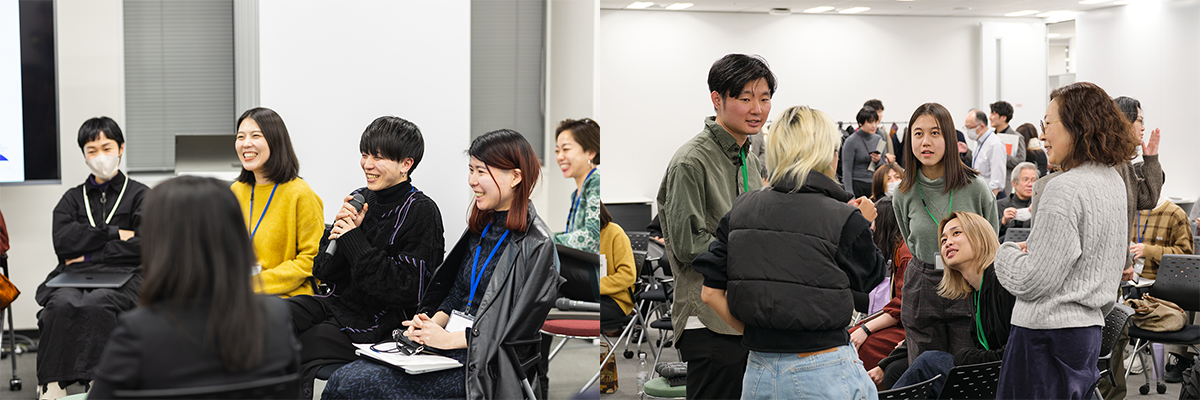
Watched by a packed audience, 10 people passionately talked about their experiences in the places where they were dispatched. What they all have in common is the ability to plan and execute their next actions by honestly absorbing the experiences they had at their places of employment, reaffirming their own awareness of issues and career axes, and making use of the personal connections and information they had gained at their places of employment. I felt that what I gained from this short but intense week was invaluable. It was a debriefing session in which I felt as if the situation in the field was coming out in three dimensions, with words from different viewpoints coming together.
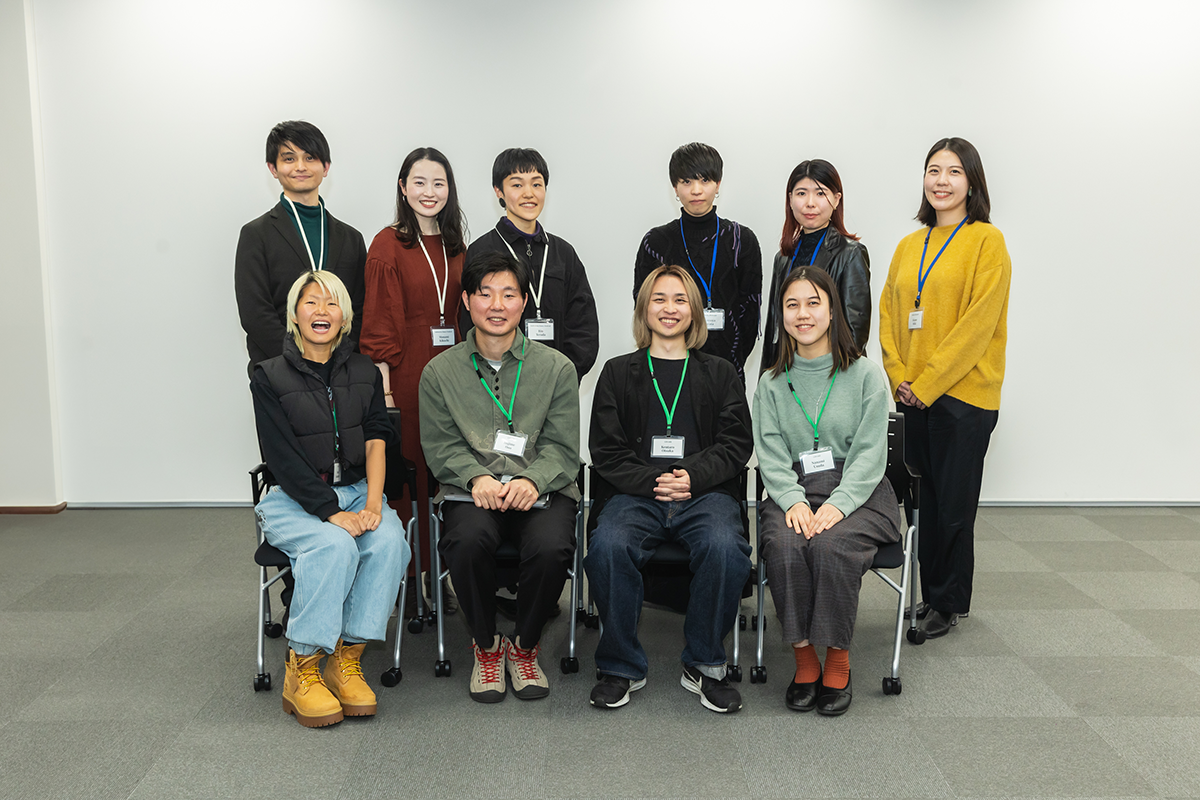
[Temporary Participant Profile]
Dispatch to Venice Biennale, Milan, and Rome
Tomoya IWATA
Curator
Graduate School of International Art and Creative Arts, Tokyo University of the Arts. Since April 2022, he has been the director of the curatorial space The 5th Floor. Participated in international programs and symposiums such as "Gwangju Biennale Academy International Curator Course"(Kwangju, 2024) and "2024 Workshops for Emerging Arts Professionals: New Flows"(Para Site: Hong Kong, 2024).
TOTSUKA Manami
Independent Curator
Has an interest in public space exhibitions and has participated in many site-specific art projects. His major exhibitions include "I can speak" (2020 in Saitama City), a curated exhibition by the curators at the 2020 Saitama International Art Festival, and (2024 - Vilnius, Lithuania). Representative Director of the NPO BARD.
MIKI Akane
Art Manager
After graduating from Musashino Art University, he received a degree from Goldsmiths College, University of London. Has worked as secretariat for Art Fair Tokyo, Aichi Triennale 2019, ANB Tokyo, etc. Since 2023, she has been working as a freelancer, managing and producing various projects that connect art and society. Aiming to create a creative secretariat, he is involved in the management and production of various projects that connect art and society.
◇Dispatched to Indonesia Dance Festival (Jakarta) and Drama Reading Festival (Yogyakarta)
Monami Kikuchi KIKUCHI Monami
Director, Performer
Graduated from Waseda University.
He started his career as an actor and worked as a stage crew and assistant director at a theater. Through fieldwork in Yamagata, Hyogo, Amami, and other places in Japan, he explores the connections between the body and the land, as well as the expressions that have been nurtured by the local climate and lifestyles.
Lived in Indonesia in 2023. (The Japan Foundation) We are interested in cooperation that transcends countries, cultures, and fields, and in creating "places" where various people can gather.
KUROKI Yuta
Producer, dancer, director
He completed Tokyo Metropolitan Theatre Professional Human Resources Development Course in 2020. Since then, he has been working as a freelancer in Tokyo Metropolitan Theatre 's Social Coexistence Project. In addition to collaborating with Indonesian artists since 2018, he is also involved in community projects in the mountainous areas of his hometown, Miyazaki Prefecture, and is engaged in activities with a variety of people rooted in the local community.
Rin Terada TERADA Rin
Production, Art Management
Graduated from Tokyo Gakugei University, Faculty of Education, Education Support Course (Class E), Expression Education Course. After acting as a student and studying in London, he joined syuz'gen as a new graduate. Since then, he has been in charge of human resource development projects and contemporary theater production. Since 2021, he has been in charge of the production of the Tokyo Arts Festival Farm, a human resource development project for the Tokyo Arts Festival, and in 2024 he was in charge of the production.
◇Dispatch to CINARS (Montreal)
Naami Usuda USUDA Nanami
Public Relations for Performing Arts
After working for an intermediary support organization that supports public relations for the performing arts industry, writing articles to promote performances and managing social networking sites, etc., she began working as a freelancer in 2023, and in addition to her usual public relations work for the arts, she has also been involved in marketing for other industries. In 2024, he started the Geijutsu no Karachi, a collective of people interested in performing arts. We continue to implement initiatives that lead to customer creation.
OTSUKA Kentaro
Playwright, director, producer
Director of the Ahahi Theater Company. Graduated from Waseda University, Faculty of Letters, Drama and Video Course. He was selected as a Saison Fellow of the Saison Cultural Foundation from 2022 to 23. Selected for Mitsui Mirai Challengers Audition (Culture Creation Division) in 2024.
Sou Ono ONO Hajime
Art Manager, Admin, Producer
Studied theater production and direction at Oberin University, and then began to work with theater companies of the same age mainly in Tokyo. He worked as an administrator for public works while contracting for the management of a theater group.
Currently, she works as the secretariat of the SOIL Project organized by the Emergency Performing Arts Network.
KASAKAWA Nami
Choreographer, Staging Director
Began acting in junior high school and studied at a drama department in Turkey while in college. He started dancing after graduating from university. He studied under modern dancer Aokuon MORISAWA. After working as an assistant under Uran Hirosaki and Yuko Masuda, she is currently working as a choreographer, dancer and staging director.
Overseas Dispatch Program for Art Management Personnel
As Tokyo seeks to become a world-class city of art and culture, it is essential to develop young art management personnel who play a role in connecting Tokyo and the world by producing works that are world-class and disseminating their value and artistry. The purpose of this project is to send highly motivated young people to overseas art festivals for a short period of time, to experience pioneering works and creative sites firsthand, to promote creative activities from a global perspective, to provide opportunities to build and strengthen networks with overseas sectors, and to encourage them to take the first step in international activities.
Photo by Yuki Nakayama
Reporting and text by Mami Maeda
text by Mami Maeda
Writer and translator. Born in 1992. Interviews and writes about theater, architecture, and traditional culture. After graduating from the Department of Architecture at the University of Tokyo, he earned a master's degree from the same university's Graduate School of Interdisciplinary Information Studies. His research topic is "Theatre and Urban Development." Since 2017, he has worked as a construction consultant, developing public facilities and planning urban development overseas. He is a trainee (theatrical production) for the Arts Academy Tokyo Metropolitan Theatre Professional Human Resources Development Training Programme in 2021. He has been a mecenat writer for the Corporate Support of the Arts Council since 2022.