


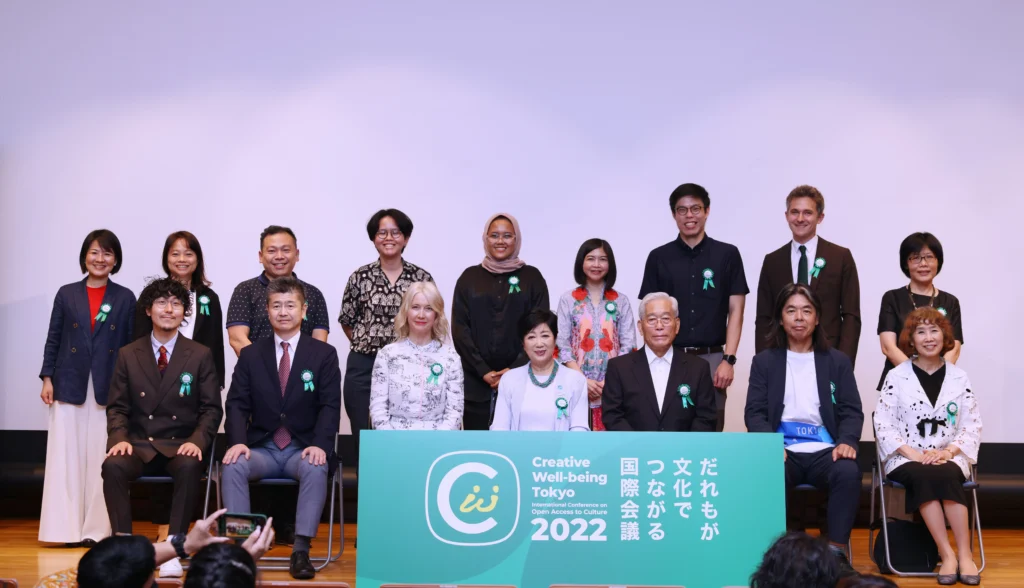
Aiming to realize a symbiotic society through art and culture, 2022 Year 6 Month 28 from the day 7 Month 7 An international conference was held until An international conference where everyone can connect through culture". In order to share the social inclusiveness created by the characteristics of arts and culture such as diversity and mutual understanding, and initiatives that emphasize functions that enable people to enjoy well-being, which are spreading around the world, and to promote new collaborations, we have organized [international conferences], [showcases (exhibitions)], [short-term intensive camps], and [networking]. 4 There are two programs 10 days.
In this report, we will focus on the "International Conference" (Venue: Tokyo National Museum), the main program of this conference.
[Keynote Lecture] Featuring Speakers Attracting Attention from Various Fields
The [International Conference] is:Keynote lectures, plenary sessions, and breakout sessionsAll12sessions on well-being, diversity, inclusive design, accessibility, and connection.5Two themes will be discussed.
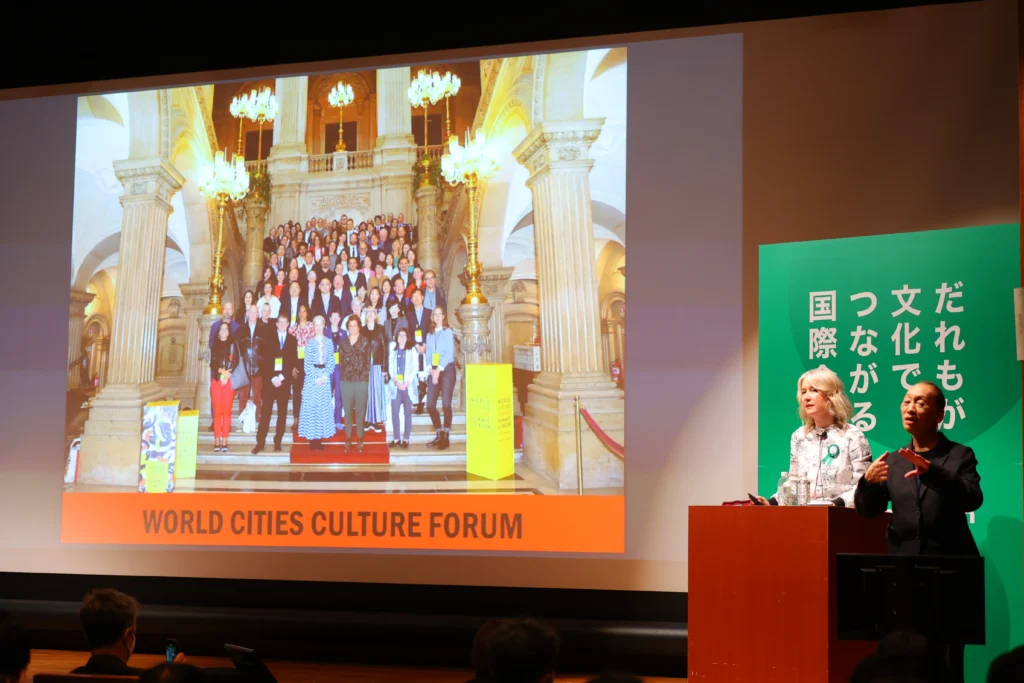
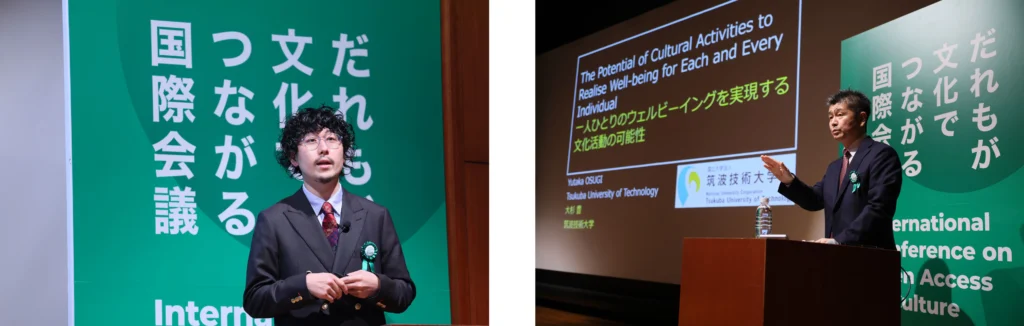
Right after the opening ceremony, three speakers took the stage: Justin Simons, Deputy Mayor for Culture and Creative Industries of the City of London; Yutaka Osugi, Professor at Tsukuba University of Technology Research and Support Center for Higher Education for the Disabled, specializing in sign language linguistics and deafness; and Takaya Matsuda, President and CEO of Heralbony.
Justine Simons, a leading voice in London's cultural and creative industries policy, delivered a powerful message: "Culture, as a catalyst, has the power to connect people to each other and lead to change. It can be a core of renewal in public spaces after the COVID-19 pandemic."
【 Pre-session 】 A bold attempt at social inclusion in Asian cultural institutions
In the pre-session, Ms. Sawako Inaniwa, Senior Researcher at the National Museum of Art, Tokyo; Ms. Chi-Chi Lin (Assistant Director, Community & Viewing, National Gallery Singapore), Curator of Public Service and Education at the National Taiwan History Museum; and Ms. Alicia Teng from Singapore were invited to speak. This conference is based on the global SDGs and the social inclusion initiatives and challenges that are spreading in Asian cultural institutions.
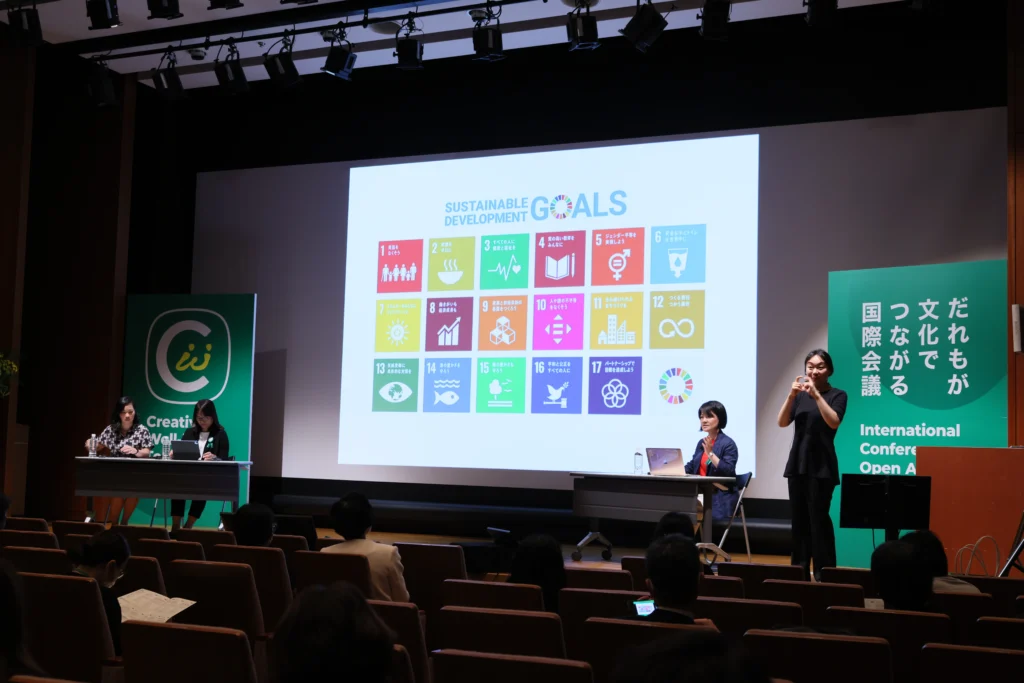
First, Ms. Inaniwa, the moderator, explained the relationship between "well-being" and "social inclusion" and cultural institutions.
""Well-being" refers to a state of good physical, mental, and social well-being, in which each individual is respected, opportunities for learning are secured, and a positive attitude toward life is maintained. However, because we live in relationship with society, our state of well-being is created through relationships. This requires a state in which everyone can participate in society with peace of mind, regardless of differences. Such a state is called "social inclusion." As public spaces open to all, including those in difficult circumstances, cultural institutions are also required to examine and discuss historical, social, cultural and scientific questions, and to promote respect for human rights and gender equality."
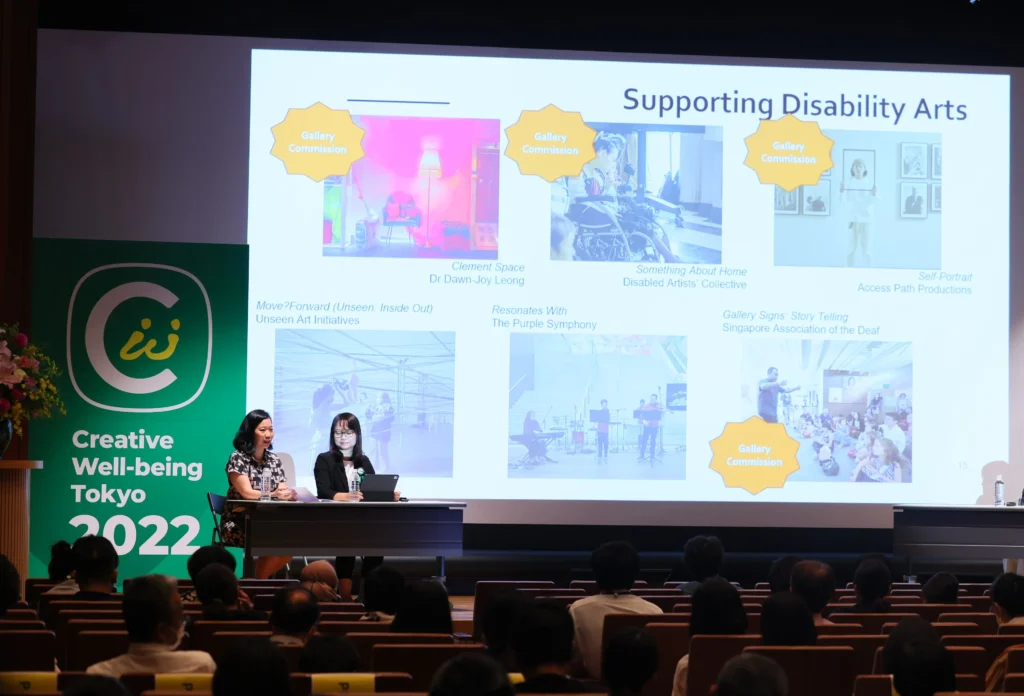
As concrete examples, Ms. Lin from the National Taiwan History Museum and Ms. Teng from the National Gallery Singapore reported on various practices, including comprehensive accessibility without barriers such as disability or language. In particular, the National Taiwan History Museum's program on diversity and democratization, which connects the elderly with the museum, was groundbreaking. I heard that they are also developing health promotion and lifelong learning in cooperation with hospitals and research institutes.
Inaniwa introduced the "Tobira Project," a communication program through art at his previous job at Tokyo Metropolitan Art Museum. "Modern museums are shifting to a mindset where the exchange and co-creation of knowledge with viewers is important. Citizens are actively participating, and we are trying to give back to society the new meanings discovered through dialogue," he said.
What all three had in common was the principle that "A museum is a place where people can think about and discuss what is happening in society in a safe manner." Convinced that the modern museum is changing, I have high expectations for the sessions of the plenary from the following day.
[Plenary session: 5 sessions] Thinking about arts, culture and diversity from a wide range of themes
The International Conference (Plenary Conference), the main program of this conference, was held for two days from Sunday, July 3.
In Session 1 of the plenary session, under the theme of "What is the well-being of people brought about by art and culture?" Yukiko Uchida served as moderator, followed by discussions with Yuko Nakamura, a film director and author, and Peter Sow, a director of performing arts and artistic production at ART: DIS in Singapore.
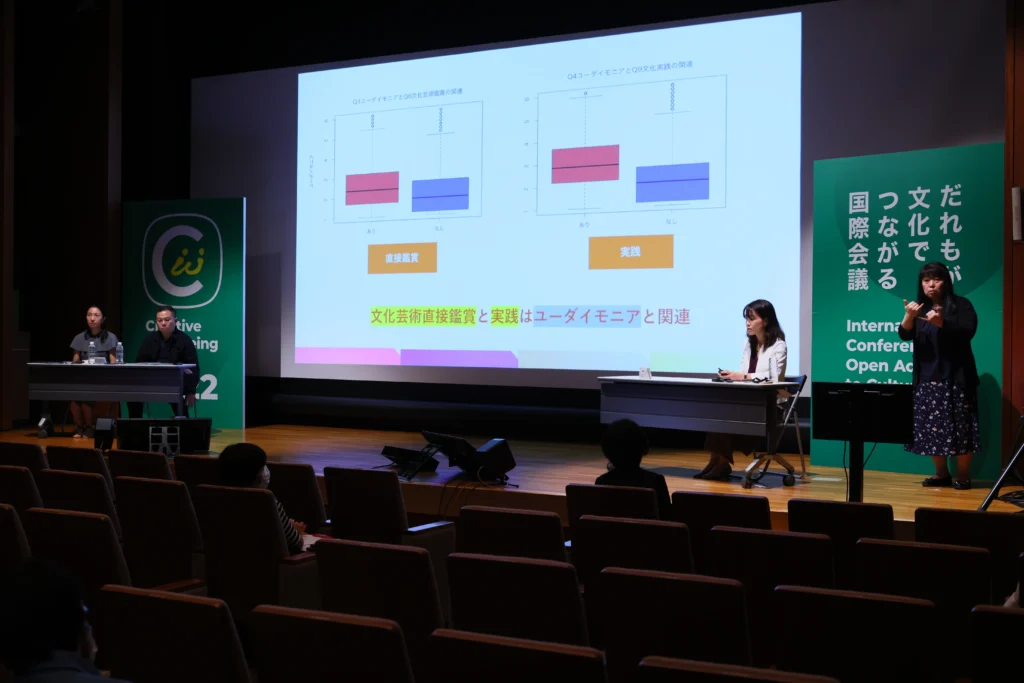
"Well-being is not only about your own way of life, but also about how you can keep your family, friends, and the city and country you live in in good condition." Uchida said. He then talked about the results of research showing that appreciation of cultural arts and practical activities are linked to eudaimonia, a sense of meaning and value in life.
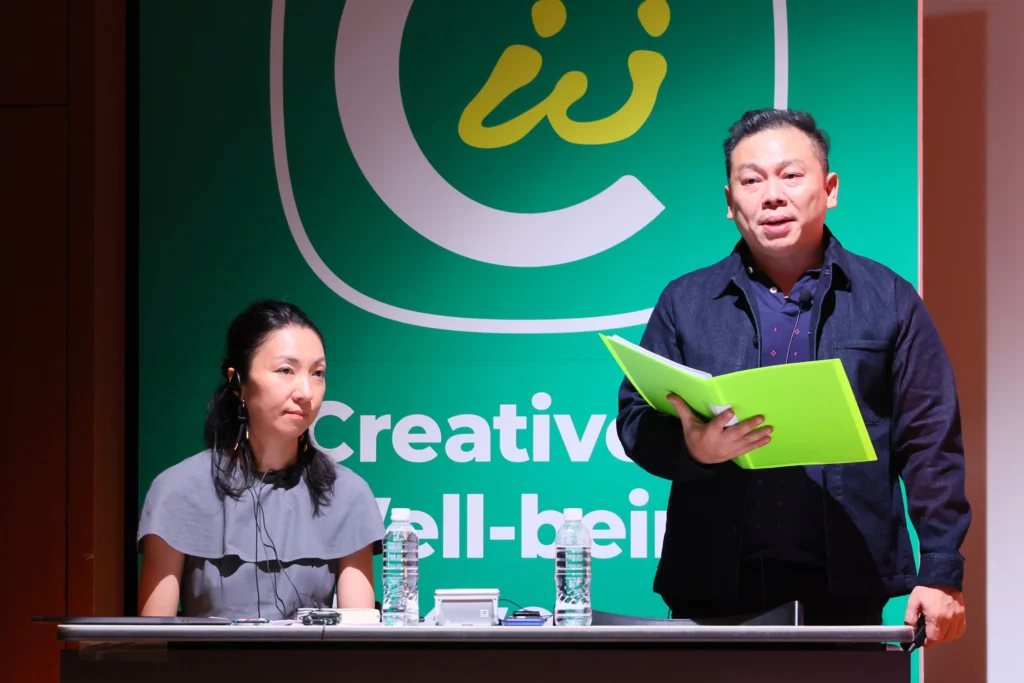
Sow of ART: DIS supports the development of artists, partnerships with society, and employment so that people with disabilities can lead positive lives through art. Sow, who also collaborates on performances with people with disabilities, suggested creating an ideal world on stage, and then gradually influencing reality from the audience.
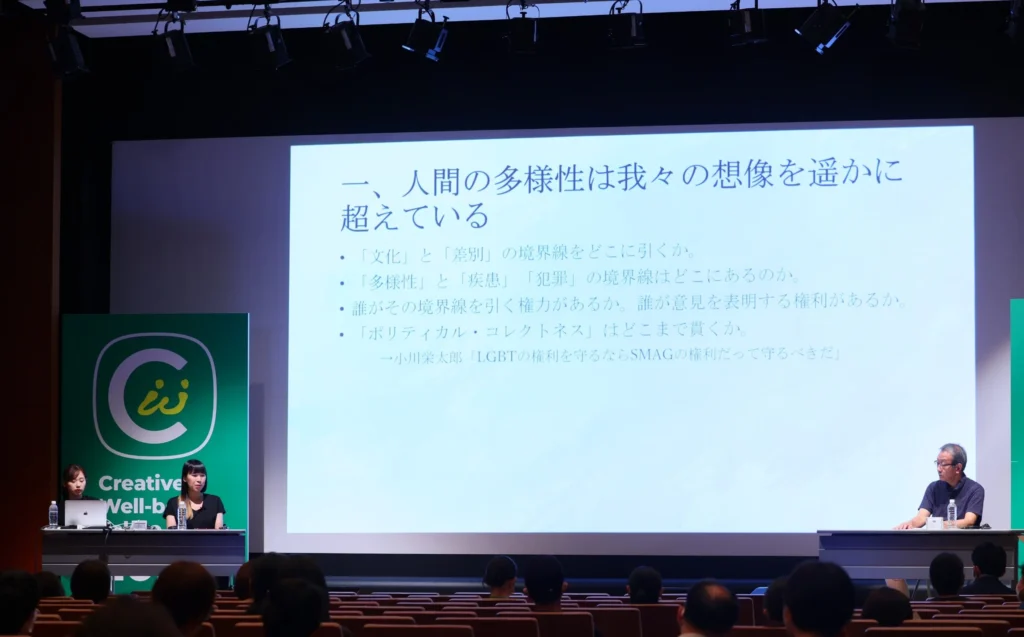
In Session 2 of the plenary session, Koichi Iwabuchi (Professor, Department of Sociology, Kwansei Gakuin University; Director, Research Center for Coexistence with Diversity) served as moderator, and Lee Jinbong, a Japanese-Chinese bilingual writer and translator who won the 165 Akutagawa Prize in 2021 for his novel about sexual minorities and foreigners living in Japan, and Lee Jong-ok, a painter and artist who works from the perspective of a third-generation Korean resident in Japan, took the stage. Under the theme of "Dialogue with Diversity: Inclusion and Collaboration of Diverse Differences and the Possibility of Cultural Relations," the participants considered the power of creative expression in literature and art from each perspective.
(Note: In Session 2, Lectures and interview articles by Geon Li Feng are posted on this website. I do. )
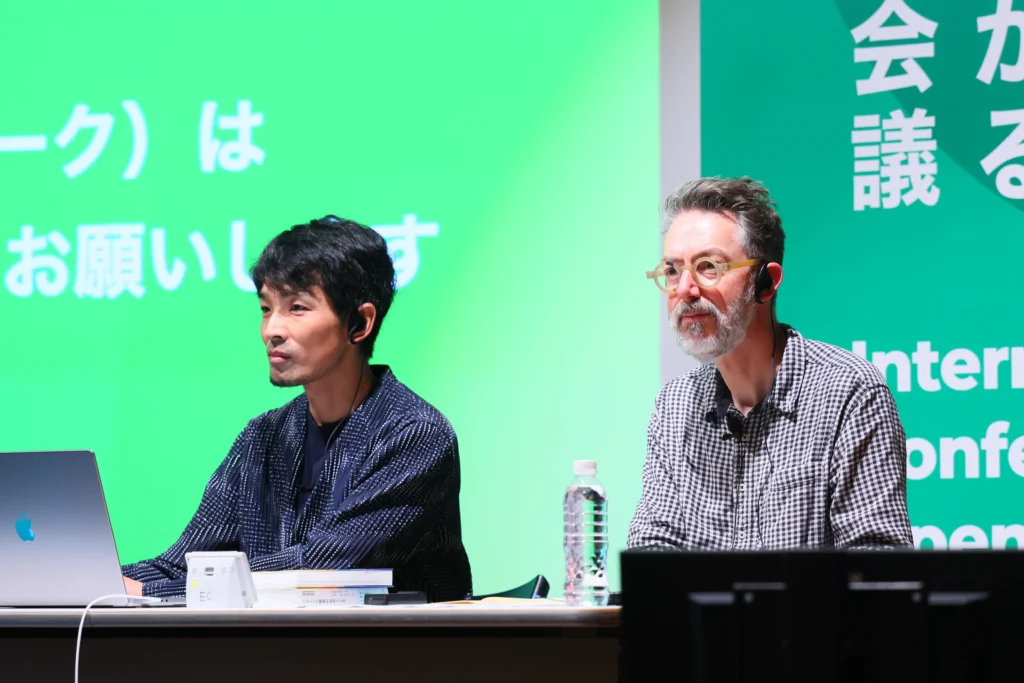
In Session 3 of the plenary session, under the theme of "How does inclusive design drive culture?" Graham Prine, professor at the University of Dundee, author of the book When Design Meets Obstacles, joined Yoshito Ogata, author of Convivial Technology, and Yutaka Osugi, moderator of the session. He talked about how "inclusive design," which embraces people with disabilities and co-creates from the process, is changing society's sense of values and improving employment and communication, as well as the various possibilities that come from design.
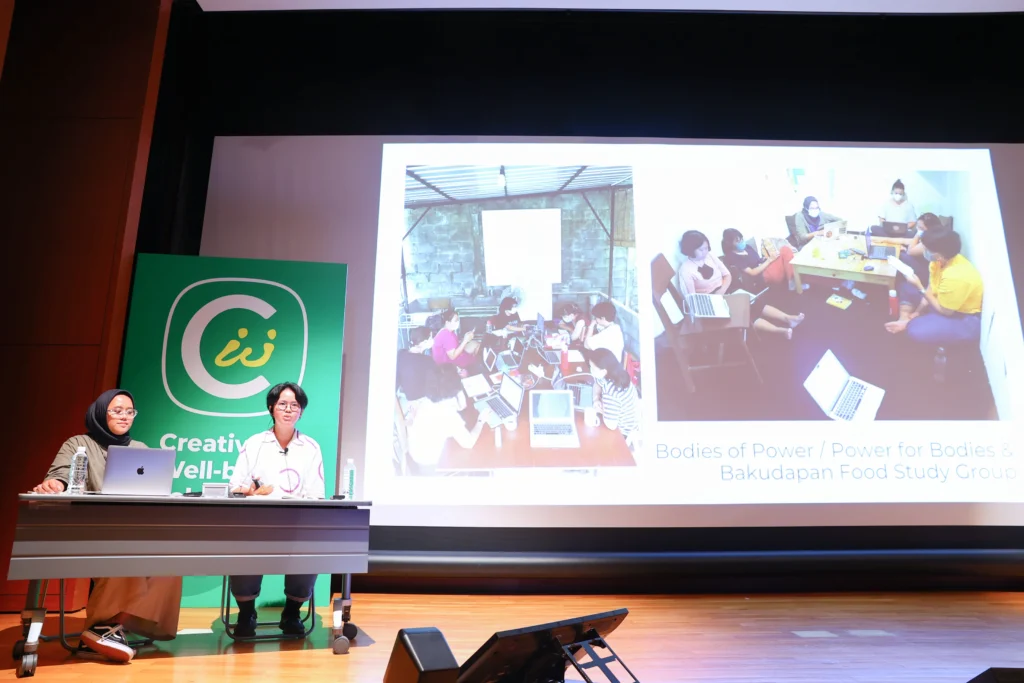
In Session 4 of the plenary session, Ms. Nisa and Ms. Ghatari Surya Kusuma, who took the stage under the theme "Creating Connections: Our Cultural Ecosystems," reported on examples from overseas. "Struggles for Sovereignty: Land, Water, Farming, Food (SFS)," a platform in Indonesia that connects multiple researchers and institutions to which they belong, carries out activities to pass down the culture, art, food, agriculture, environment, etc. of indigenous peoples who were deprived of their lands to other lands. Nisa, who was stuck in a mold of anthropological thinking, says she was liberated by art.
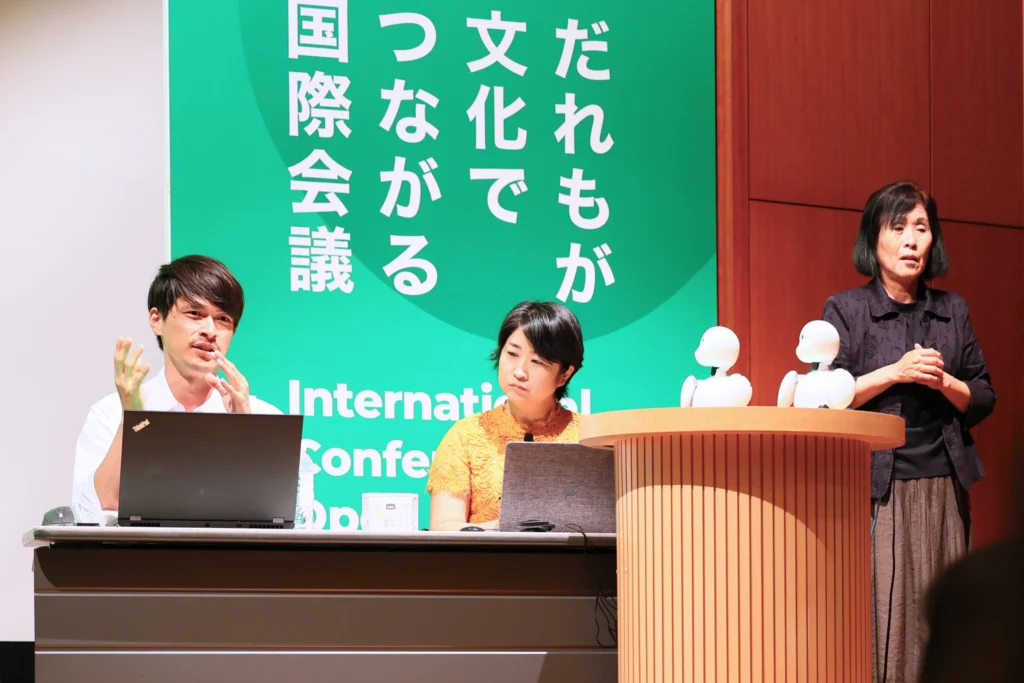
"Plenary session 5 Under the theme of "Pioneering Social Issues and People's Values through Technology and Creativity," Tetsuya Konishi, who has developed various products with inclusive design such as open source prosthetic arms and wheelchair for athletics, and Meiza Suzuki, who promoted the project of, and the alter-ego robot “OriHime "took the stage. Sechan Yui, a "pilot" who remotely controls a robot to serve customers, also participated online and expressed her joy at being able to find work from home and broaden her range of social participation.
[Roundtable] "Social prescription" of cultural facilities connecting individuals and society
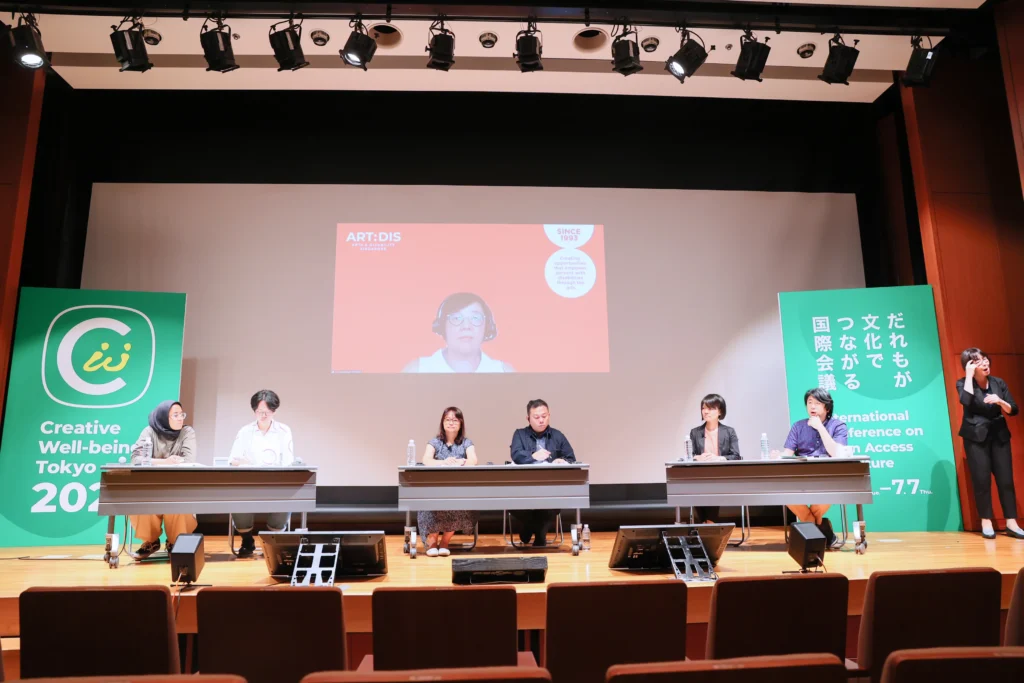
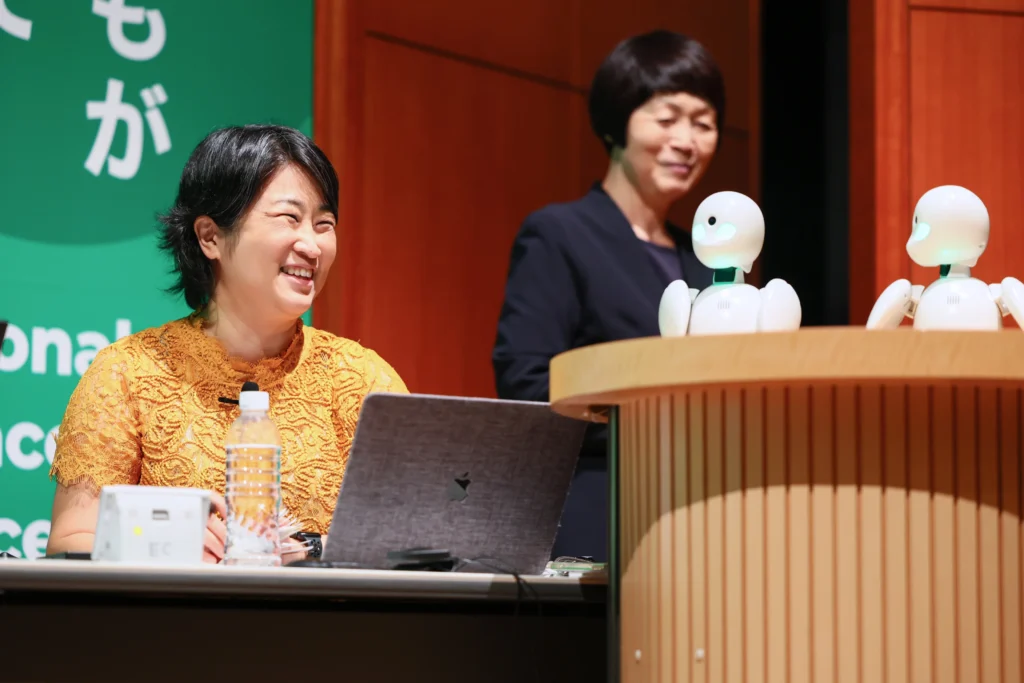
Finally, as a summary of the 5 sessions over 2 days, a round table was held with all committee members. Tatsuya Ito (Adjunct Professor, Center for Social Cooperation, Tokyo University of the Arts) served as moderator, and Maureen Goh (ART: DIS Executive Director) participated online from Singapore. The discussion gradually turned to "social prescriptions," which originated in England. "Social prescription" refers to the practice of cultural institutions to "prescribe" connections between individuals and society as a means of improving the quality of life. Through works and materials that are social resources, we need to expand the means by which everyone can equally access learning so that we can achieve "well-being" (good state) in terms of both introspection and social reform.
"I was empowered to hear energetic examples of Asian cultural institutions" says Inaniwa. "Different countries have different challenges and approaches, but we can learn from each other" Linh says. Goh agrees, "The power to create the future is in our hands." Care, culture and art are all necessary for people to live. The conference closed with participants sharing their visions for the future in order to realize well-being and social inclusion.
Reporting and text by Yuri Shirasaka